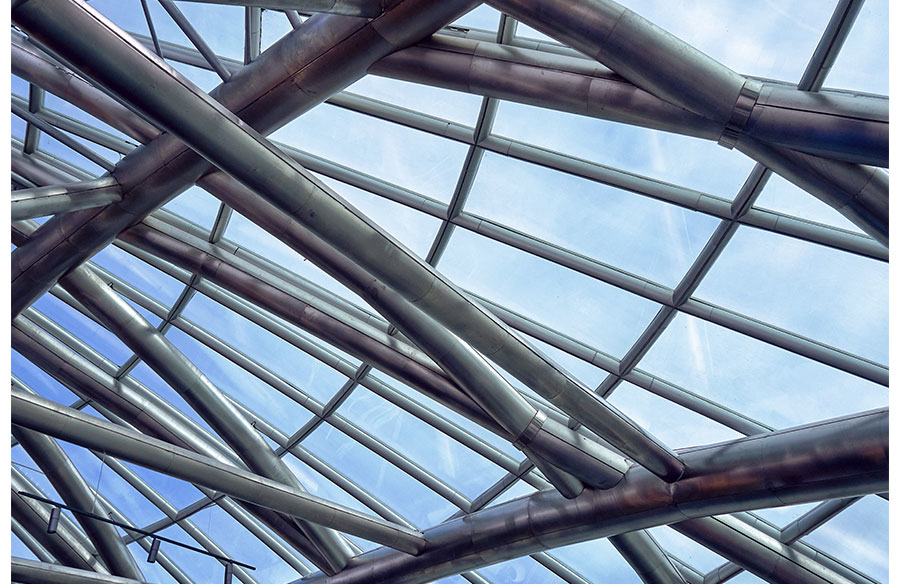
In the Middle East, the modern home is evolving beyond bold architecture and expansive glazing. Today, true innovation lies in what’s beneath the surface: material intelligence. As sustainability becomes inseparable from luxury, aluminium is emerging as a cornerstone of future-ready residential design. Lightweight yet strong, endlessly recyclable and engineered for extreme climates, sustainable aluminium is quietly reshaping how homes in the region are built, lived in, and valued.
The Material Shift: Why Aluminium, Why Now?
The construction sector remains one of the world’s largest contributors to carbon emissions, largely due to energy-intensive materials and linear “build–use–discard” models. This reality has accelerated the push toward circularity, where materials are designed to be reused rather than wasted.
Aluminium stands apart because of its “infinite” lifecycle. Unlike many construction materials, aluminium can be recycled repeatedly without losing quality or performance. What was once a soda can or ladder can be reborn as a high-performance window frame, this is the essence of post-consumer scrap in action.
Equally important is the distinction between embodied carbon (emissions from material production) and operational carbon (emissions during a building’s use). In regions where cooling demand is extreme, both matter. High-performance aluminium systems reduce energy consumption over decades, making material choice as critical as energy-efficient equipment.
The Middle East Challenge: Sustainability in Extreme Climates
Designing sustainably in the Middle East means confronting heat, solar gain, and long cooling seasons head-on. Buildings must act as thermal shields, limiting heat transfer and reducing reliance on HVAC systems. Aluminium systems with advanced thermal breaks play a decisive role here, achieving low U-values that significantly improve envelope performance.
At the same time, regional architecture celebrates openness: floor-to-ceiling glazing, panoramic views, and seamless indoor–outdoor living. This creates an apparent paradox between aesthetics and environmental responsibility. Aluminium resolves it. Its structural strength supports large spans of glass with slim profiles, enabling transparency without compromising performance.
These technical needs align with national ambitions. Initiatives such as UAE Net Zero 2050 and Saudi Vision 2030 are accelerating demand for low-carbon materials, pushing the market toward innovation rather than compromise.
Case Study: TECHNAL Middle East and the Circular Revolution
A tangible example of this shift can be seen in TECHNAL’s approach to sustainable aluminium in the region. Through the Hydro CIRCAL benchmark, TECHNAL systems are manufactured using aluminium containing at least 75% post-consumer recycled content, dramatically lowering embodied carbon compared to the global average for primary aluminium production.
Crucially, sustainability does not dilute design intent. Systems such as Soleal and Lumeal maintain ultra-slim sightlines, hidden frames, and fluid transitions between interior and exterior spaces. The result is architecture that feels light and refined, while quietly carrying a much smaller carbon footprint.
The Pillars of the “Technal Home”
At the residential level, sustainable aluminium expresses itself through measurable performance pillars. Thermal performance is achieved through multi-chamber profiles and high-efficiency thermal breaks that slow heat transfer in harsh climates. Acoustic comfort is enhanced through precision engineering, addressing the growing challenge of urban noise in dense cities.
Looking forward, aluminium systems are also becoming platforms for smart integration. Frames are now designed to discreetly house sensors, automation components, and motorised shading, proving that sustainability and digital living can evolve together rather than in parallel.
The Architect’s Perspective: From Efficiency to Wellness
Beyond numbers and specifications, aluminium influences how spaces feel. Its strength enables larger apertures, increasing daylight penetration and supporting healthier circadian rhythms for occupants. In a region where people spend significant time indoors, access to natural light is a wellness factor, not a luxury.
Architects increasingly describe buildings as an “urban mine”, temporary repositories of valuable materials rather than future waste. This cradle-to-cradle philosophy reframes homes as part of a long-term material ecosystem, where today’s windows become tomorrow’s resources.
Conclusion: The New Vernacular of the Desert
The future Middle Eastern home is not defined solely by form or finish, but by the invisible carbon calculations behind every façade and frame. Sustainable aluminium has become a new vernacular of the desert, one that balances performance, beauty, and responsibility.
By advancing circular production, thermal excellence, and design freedom, TECHNAL is helping shift regional housing from symbolic luxury to responsible luxury. In doing so, aluminium is no longer just a material choice, it is a statement about how the region intends to build its future.