Data center engineers face a constant battle against time and heat. While management debates allocating capital budgets for new infrastructure, the engineering team is responsible for ensuring everything continues to work on the ground. This often means maintaining legacy uninterruptible power supply (UPS) systems well past their prime. When the original manufacturer stops supporting such assets, finding a partner with the technical depth for component-level repair and preventive maintenance is a primary objective. This guide explores providers capable of extending the reliability of aging power infrastructure.
What Qualifies as Legacy UPS Equipment?
Legacy is a technical classification in the data center world, more than a reference to age. A UPS system enters this phase when it reaches specific milestones in its support life cycle, typically designated by the original equipment manufacturer (OEM).
End-of-life (EOL) generally indicates that the manufacturer has stopped producing a specific model or part. Sales stop, but support usually continues. End-of-Service-Life (EOSL) is the critical threshold for an engineer, at which the OEM stops offering firmware updates, ceases production of replacement parts or closes technical support channels.
The implications of EOSL are immediate, as proprietary components like DC bus capacitors, logic boards and specific power modules become difficult to source. This increases a facility’s risk profile. A simple component failure that once required only a standard swap can now require sourcing refurbished parts or finding a third-party expert who understands the system architecture down to the board level.
Despite these risks, removing a legacy UPS is not always feasible. The process involves significant downtime and extensive capital outlay, not to mention complex electrical rework. Maintaining the existing system allows facilities to maximize the utility of their current footprint. With the right maintenance protocol, a legacy UPS can continue to provide clean and reliable power for years, well after the OEM has walked away.
Top 10 Companies for Servicing Legacy UPS Equipment
Ten companies stand out for their technical capability to support multi-vendor environments. This list of the best 10 providers focuses on providers with verifiable expertise in component-level troubleshooting, extensive supply chains for discontinued parts and a track record of extending the mean time between failures (MTBF) for aging systems.
1. Nationwide Power
 Nationwide Power is a premier independent service provider focusing on the technical realities of maintaining critical power. Its business model serves the engineer who needs to keep an older system running, rather than the salesperson trying to replace it. It supports all major UPS brands and models, particularly those targeting the outdated and legacy units that OEMs sometimes refuse to service.
Nationwide Power has a massive proprietary inventory of legacy components. When an OEM declares a control board obsolete, this company often has tested and refurbished units on the shelf. Its Critical Power Professionals have an average of 20 years of field experience, meaning they have likely seen and fixed the specific failure modes common to older APC, Vertiv or Eaton units. Its 24/7, 365-day national coverage ensures a qualified technician can be on-site to troubleshoot a DC bus overvoltage or a static switch failure at any time.
2. Mitsubishi Electric
 Mitsubishi Electric maintains a highly-regarded service division for its own hardware. Its EverPower service contracts are designed to support equipment throughout the entire product life cycle. For engineers running Mitsubishi gear, using its factory service team guarantees access to proprietary diagnostic software and firmware that third parties might not possess.
Its technical advantage lies in its intimate knowledge of the system topology. Mitsubishi technicians have direct access to the engineering data that built the unit, enabling precise calibration of complex internal faults. Because the company prefers to support its own brand, its commitment to long-term reliability makes it a top choice for facilities already using Mitsubishi architecture.
3. Fuji Electric
 Fuji Electric is known for engineering UPS systems with comprehensive internal components and often uses high-grade capacitors that outlast industry standards. Its service approach highlights this durability. It focuses on renewal maintenance, which involves replacing specific aging sub-components to restore the unit to near-factory specifications.
This is good news for data center engineers, as Fuji Electric offers detailed preventive maintenance plans that monitor component degradation. Its technicians are trained to identify specific thermal signatures and waveform irregularities that typically precede a failure. Such a predictive approach enables facility teams to plan downtime for repairs.
4. Secure Power
 Secure Power has a strong network of partnerships across the power industry, with technical teams cross-trained on a vast array of global manufacturers. This breadth makes it an ideal partner for data centers operating a mix of UPS brands and vintages. Its service model emphasizes operational flexibility and rapid response.
Its technical scope includes comprehensive health checks that go beyond typical visual inspection. Its technicians perform functional testing of the entire power train, from the rectifier input to the inverter output. This type of assessment is crucial for legacy systems, as it can pinpoint drifting calibration settings or weakening components that a superficial run-through might miss.
5. GDF Technologies
 GDF Technologies specializes in the Powerware line of legacy equipment, which remains a staple in many older data centers. Its technicians are skilled at handling the unique failure modes of robust but aging systems.
GDF’s strength lies in its ability to conduct board-level diagnostics. Instead of simply swapping out entire modules, its technicians can often identify the specific failed part on a circuit board. This capability is vital when dealing with legacy setups that lack replacement modules. Its distribution network also ensures that when a part is needed, it can be sourced and delivered quickly to minimize mean time to repair.
6. AC & DC Power Technologies
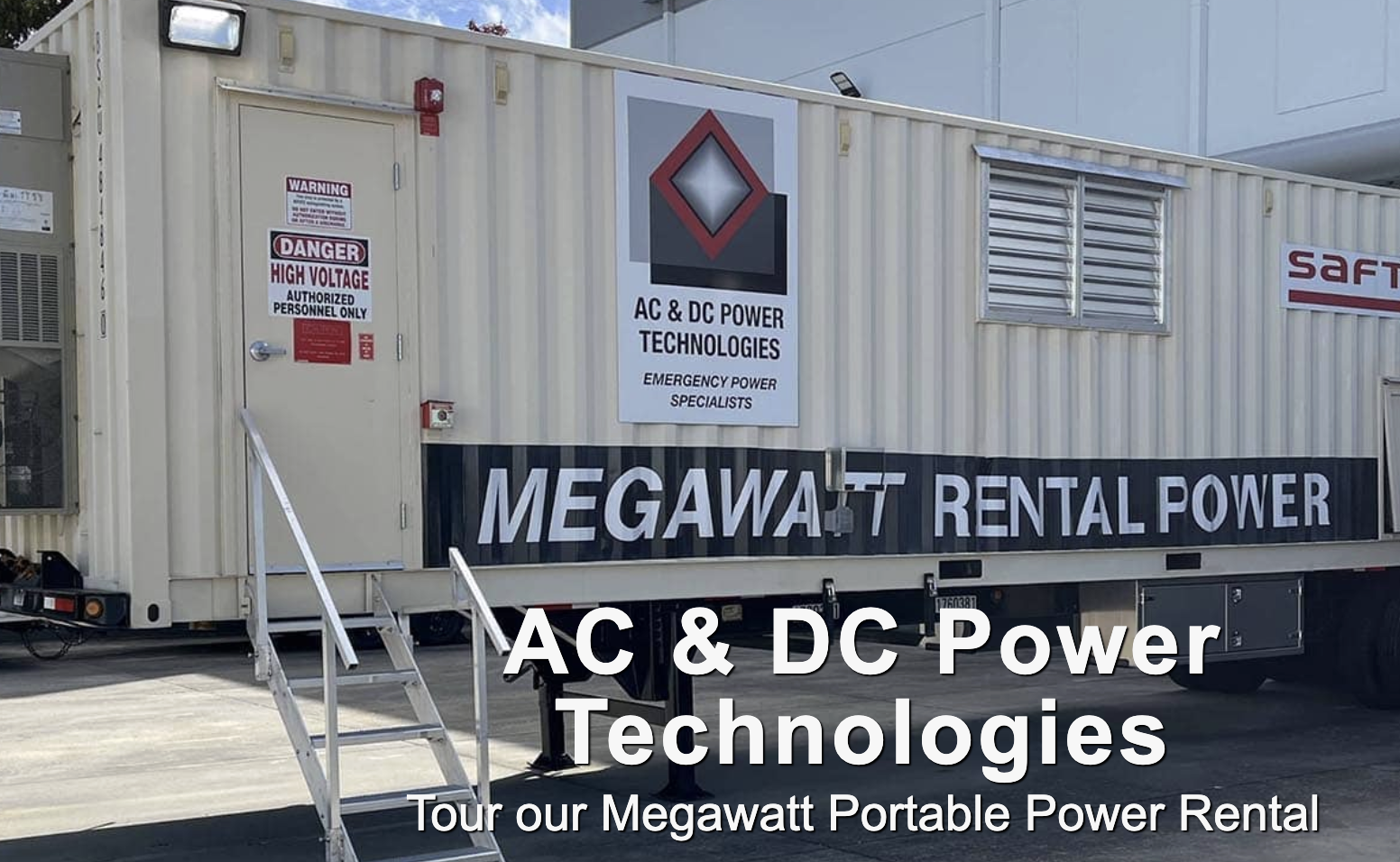 AC & DC Power Technologies positions legacy equipment support as one of its core engineering services. It recognizes that many industrial and commercial facilities rely on older infrastructure that is mechanically sound but requires special attention. Its team handles the full scope of power systems, from UPS units to associated switchgear and battery banks.
AC & DC Power adheres to IEEE and NERC testing and maintenance guidelines, ensuring that even older equipment can meet modern reliability standards. By offering services such as load banking and circuit breaker testing, it provides a holistic view of the power chain and enables engineers to spot weak points or bottlenecks that could compromise the UPS.
7. Power Protection Products
 Power Protection Products offers a service designed to extend the life cycle of critical power assets. Its equipment revitalization service, for one, is a targeted refurbishment program where technicians replace components most prone to aging and effectively reset the clock on the UPS itself.
This capability is valuable for engineers managing a budget that does not allow for a full system replacement. By swapping out the DC bus capacitors and AC filter capacitors before they dry out and fail, Power Protection Products prevents the common causes of catastrophic UPS damage. Its customized contracts also let facility teams choose the level of refurbishment that matches their risk tolerance.
8. Universal Power Solutions
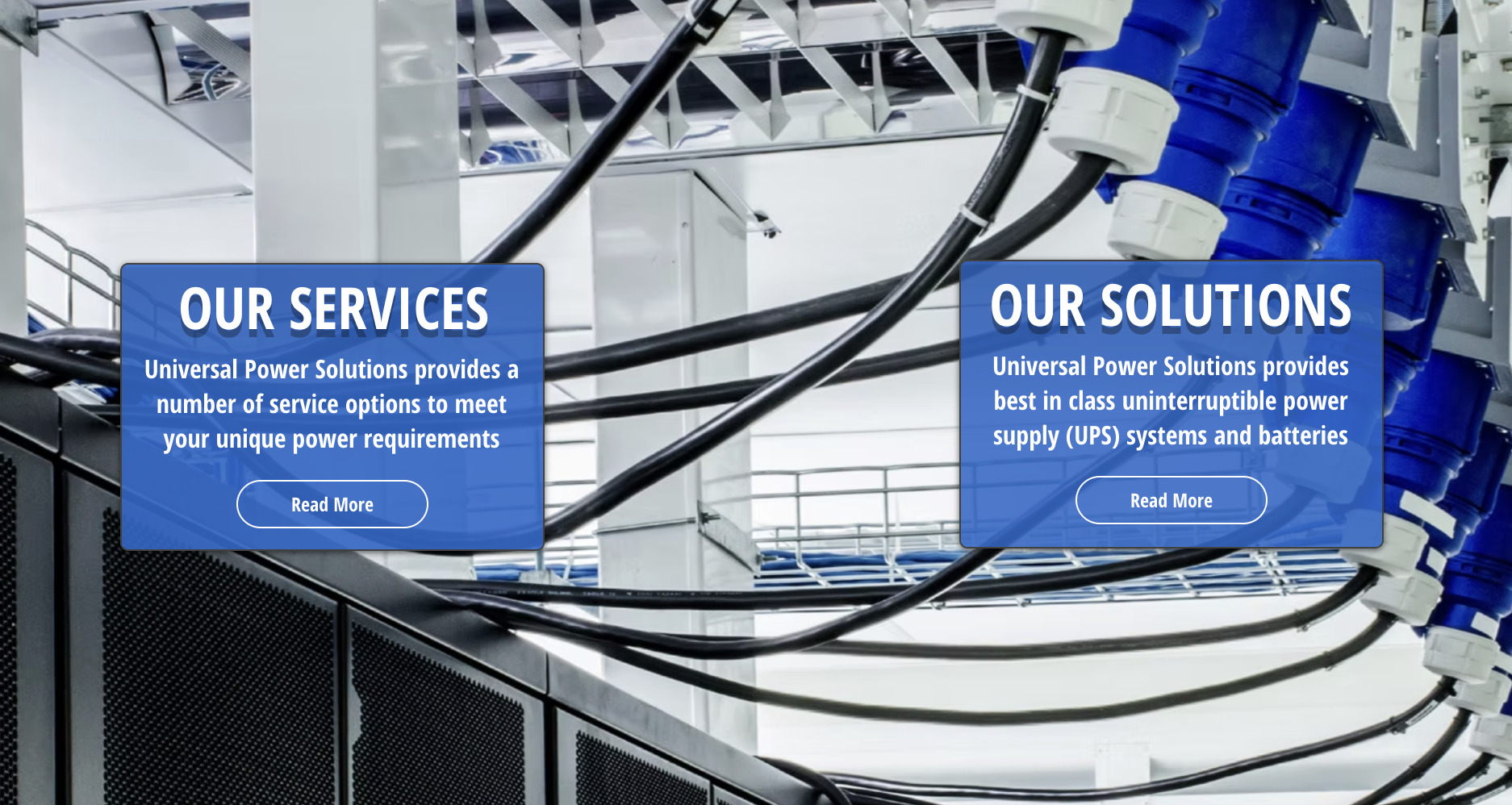 Universal Power Solutions is a key provider known for its extensive list of supported brands. A notable technical niche is its support for legacy Gamatronic systems. These modular systems have specific maintenance requirements and finding qualified technicians to service them can be challenging for facility managers.
Beyond its niche brand support, Universal Power Solutions brings advanced diagnostic tools to the field. It uses thermal imaging during routine maintenance work, enabling the detection of loose busbar connections or overheating transistors before they cause a hard failure. This proactive hot spot identification allows engineers to address issues during scheduled maintenance windows.
9. GenServe
 GenServe is known for its massive team of field engineers and technicians. While it is considered a giant in the generator space, its critical power division has deep expertise in UPS maintenance. Its technicians are trained to service all major UPS brands, making it ideal for large-scale operations with geographically dispersed sites.
GenServe’s large fleet allows it to dispatch a qualified engineer quickly. It also maintains a rental fleet, which can be deployed to support the critical load if a legacy unit requires extensive offline repairs or a total rebuild.
10. Critical Infrastructure Group
 Critical Infrastructure Group provides equipment maintenance services and is also an expert in asset recovery and complex decommissioning. When a legacy system finally becomes unviable due to a lack of parts or efficiency losses, the provider can manage the safe shutdown and removal.
During the transition from legacy to modern infrastructure, they offer rental UPS systems to bridge the gap. This is a critical service for engineers planning a replacement project. It allows the facility to remain protected while the old unit is decommissioned and the new one is being installed. CI Group manages the risk during the most vulnerable period of a power system upgrade.
Comparing the Legacy UPS Equipment Service Providers
Here’s an at-a-glance summary of the 10 best providers’ featured offerings.
| Company | Primary Focus | Technical Strength |
| Nationwide Power | 3rd party maintenance | Component-level repair, parts inventory |
| Mitsubishi Electric | OEM maintenance | Proprietary diagnostics and firmware |
| Fuji Electric | OEM maintenance | Component durability analysis |
| Secure Power | 3rd party maintenance | Functional power train testing |
| GDF Technologies | 3rd party maintenance | Board-level diagnostics |
| AC & DC Power Tech | 3rd party maintenance | IEEE/NERC standards compliance |
| Power Protection Products | 3rd party maintenance | Capacitor and fan refurbishment |
| Universal Power Solutions | 3rd party maintenance | Thermal imaging and gamatronic support |
| GenServe | 3rd party maintenance | Rapid dispatch and rental fleet |
| CI Group | Asset management | Decommission and bridge rentals |
Key Services That Extend the Life of a Legacy UPS
Keeping a legacy UPS online demands a strict maintenance schedule that targets the specific components known to degrade over time. The following services are the technical pillars of a successful life extension strategy.
Preventive Maintenance
A standard visual check is not enough for a 10-year-old UPS. Effective preventive maintenance for legacy gear must be invasive, including the thermal scanning of all bolted connections to detect torque relaxation caused by thermal cycling. Technicians should perform full system diagnostics and analyze event logs for intermittent alarms that may precede a failure.
Proactive Component Replacement
Capacitors and fans are consumable items. DC bus capacitors, which smooth the rectifier output, will dry out and lose capacitance over time. If they fail open, the DC bus becomes unstable, and if they fail short, they can damage the insulated-gate bipolar transistors. A competent service provider will implement a schedule to replace capacitors and cooling fans before they drift out of tolerance.
In-Depth Battery Management
Technicians should perform impedance testing on each jar to detect increases in internal resistance. Load banking can verify that the battery string can truly support the critical load for the required runtime. This type of test also checks intercell connection integrity to ensure that a loose strap does not cause a high-resistance failure during a discharge event.
Emergency Repair and Parts Sourcing
When a legacy system breaks down, the mean time to repair is often dictated by parts availability. A service provider must offer 24/7, 365 emergency response with expert technicians. It must have access to a supply chain of refurbished, tested and hard-to-find parts. Since OEMs stop stocking components after EOSL, a third-party maintenance provider’s inventory is often the only path to recovery.
The Advantage of Third-Party Maintenance
For the engineer responsible for uptime, third-party maintenance (TPM) providers often offer a more flexible and technically aligned solution than the OEM.
The OEM Model
An OEM focuses on manufacturing and selling new hardware. Its service teams are excellent during the warranty period, but their incentives can shift as equipment ages. Once a unit reaches EOSL, an OEM service contract often becomes prohibitively expensive or limited in scope. The solution is usually a quote for a new machine, which does not solve the immediate problem of a dropped load.
The TPM Model
TPM providers exist to service the equipment that is already out there. Its profitability depends on its ability to fix the part and maintain operational stability. TPMs invest in training staff on multiple platforms, so they can troubleshoot the entire power room.
Core Technical Benefits
The shift to a TPM allows for a single-pane-of-glass view of maintenance. Instead of juggling multiple contracts, a facility can rely on a single partner, simplifying vendor management and ensuring a consistent standard of work across the facility. TPMs are also more likely to offer creative solutions, such as sourcing refurbished parts to keep a critical system online while budget approval for a replacement is ongoing.
Future-Proof Your Power Infrastructure
Managing legacy UPS requires a clear understanding of failure modes, component life cycles and the potential partner’s specific capabilities. Whether the strategy is to extend the life of current systems through component-level maintenance or to keep a unit operational until the next budget cycle, having the right service provider is critical. This way, data center engineers can ensure their critical loads remain protected, regardless of the age of their machines.