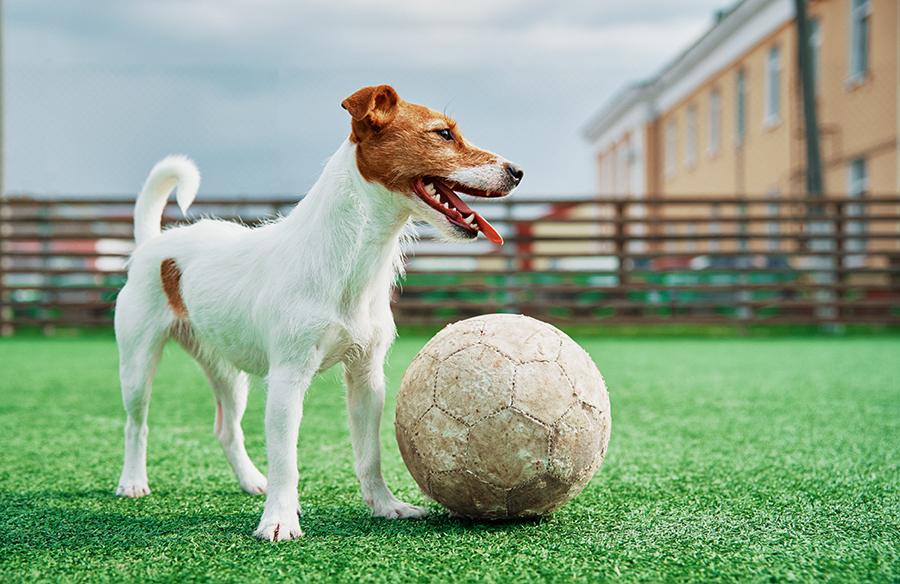
Dogs don’t treat the backyard gently. They dig, sprint, roll around, and claim every corner as their own. For homeowners, that translates to a recurring cycle of muddy paws, brown urine spots, and patches of grass that never quite recover. It’s exhausting, and most lawn fixes are temporary at best.
The real cost of natural grass isn’t always obvious until you add it up. Reseeding, fertilizers, pest control, lawn treatments — it all accumulates. And even a well-maintained yard won’t hold up against a dog with serious energy. Homeowners who want something that actually lasts often turn to pet-specific artificial turf systems, like those offered by Natura Turf, built to handle the kind of daily abuse that sends natural grass into early retirement. Getting the product right from the start matters more than most people realize.
Why Artificial Turf Works Well for Dogs
It’s not about looks. Artificial turf solves real, recurring problems that come with keeping dogs in a yard. It holds up under heavy traffic, stays consistently green regardless of the season, and won’t develop bare, compacted paths where dogs repeatedly run the same route.
There’s also a safety angle worth considering. Many common lawn chemicals, including pesticides and fertilizers, are genuinely hazardous to dogs. The American Kennel Club has noted that exposure to lawn treatments is a frequent cause of accidental pet poisoning, with effects ranging from skin irritation to more serious health problems, and switching to artificial turf cuts that risk entirely.
Key Benefits of Artificial Turf for Dogs
Artificial turf simplifies day-to-day life for pet owners by reducing the common challenges that come with maintaining natural grass. It creates a cleaner, more predictable outdoor space that’s easier to manage year-round.
No Mud, No Mess
Muddy paws after rain are a near-universal complaint among dog owners. Natural grass saturates quickly, and from there it’s tracked across floors, into furniture, and onto laundry. Artificial turf drains fast. Most systems are built with permeable backing designed to move water through efficiently, so the surface dries out in a fraction of the time it takes a natural lawn to recover. That alone significantly changes the day-to-day experience.
Durability Under Heavy Use
Here’s the thing about high-energy dogs: they’re not hard on grass occasionally. They’re constantly hard on it, running the same lines, digging in the same spots, wearing down the same patches until there’s nothing left. Artificial turf fibers are built to take that kind of repeated stress without matting or losing shape. A properly installed system lasts 10 to 15 years with minimal maintenance — compared to natural grass, which may need reseeding 2 or 3 times a year in an active-dog household.
Safe and Non-Toxic Materials
Quality pet turf is manufactured without lead, heavy metals, or toxic compounds. The better products are made from polyethylene, a soft, non-toxic material that’s comfortable underfoot for dogs of all sizes. Third-party safety certification is worth looking for when comparing products.
Temperature is one area where some turf systems fall short. In direct sunlight, certain surfaces heat up faster than natural grass. That said, newer systems have started addressing this with heat-reducing infill or thermally engineered backing materials. If your dog is regularly outside during summer afternoons, it’s a question worth asking before you commit to a product.
Easier Cleanup and Hygiene
Cleanup on artificial turf is genuinely more manageable. Solid waste gets handled the same way it would anywhere else. Liquid waste drains through the backing rather than pooling in the soil, eliminating nitrogen burn and compaction damage that occur when dogs repeatedly use the same patch of grass. A rinse and occasional application of a pet-safe enzyme cleaner keeps odors in check.
Some systems include antimicrobial infill that slows bacterial growth between cleanings. It’s a small detail, but it makes a noticeable difference over time.
What to Look for in Pet-Friendly Turf
Not every artificial turf product is built with dogs in mind. Drainage capacity is the most important spec to check. Beyond that, pile height, fiber material, and infill type all affect a surface’s performance and longevity under pet traffic. A pile height of around 1 to 1.5 inches tends to clean more easily and hold its shape better than longer options. Crumb rubber infill has largely fallen out of favor for pet applications; silica sand or organic infill options are generally considered the better choice for both comfort and safety.
Professional installation also carries more weight than people expect. A well-prepared base, with proper drainage layers and secure edging, prevents shifting, buckling, and premature wear.
Long-Term Value for Pet Owners
The upfront cost is higher than seeding or sodding. No point pretending otherwise. But factor in what you’d spend over five years on lawn care, water usage, fertilizers, and reseeding, and the numbers tend to shift. Most homeowners find the investment pays off within a few years, sometimes sooner, depending on how many dogs they have and how active they are.
The yard stays presentable. The dogs stay comfortable. You stop spending weekends managing a lawn that’s fighting a losing battle. That’s a reasonable trade.