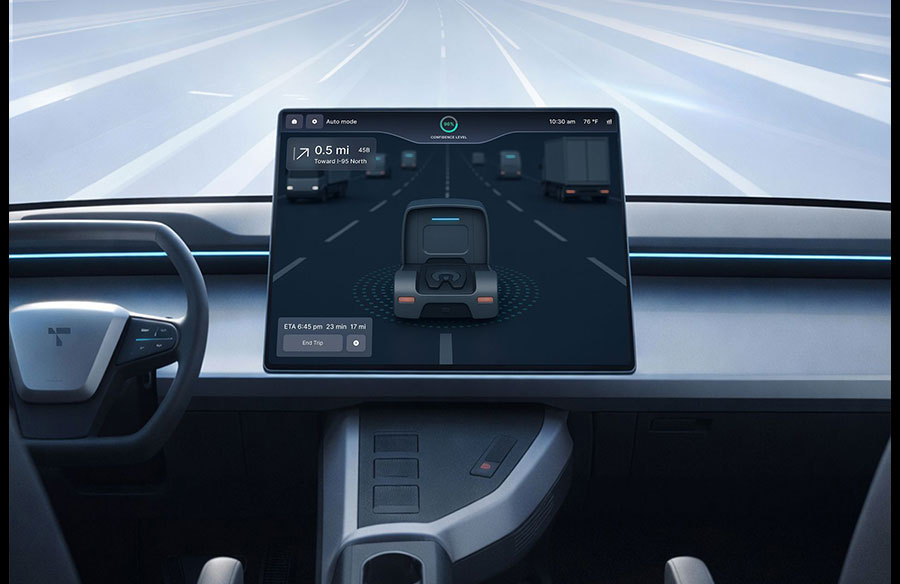
Product and UX designer Yingjie Li recently completed her judging work for the A’ Design Award & Competition, bringing her experience in enterprise product design, AI-driven user experience, and human-centered digital systems to the international design evaluation platform. Li’s jury service follows her own recognition as an award-winning designer, including her achievement as part of the winning team for TrackAI, which received the iF Design Award 2026 in the User Experience / Vehicle / Mobility UX category.
In an era when design is increasingly asked to do more than solve visual problems, the role of the designer has expanded into a broader public conversation about technology, accessibility, trust, and human experience. Digital products now shape how people learn, work, communicate, make decisions, and interact with complex systems. As artificial intelligence and enterprise platforms become more deeply embedded in daily life, the question is no longer simply whether a product works, but whether it can be understood, trusted, and meaningfully used by people.
It is within this evolving design landscape that product and UX designer Yingjie Li has emerged as a thoughtful and influential practitioner. Recently, Li completed her jury service for the A’ Design Award & Competition, applying her professional expertise in human-centered digital systems, enterprise UX, and AI-driven product design to the evaluation of international design works. Her role as a juror reflects recognition of her professional judgment beyond her own design practice and places her among design professionals entrusted with assessing the quality, originality, usability, and impact of submissions.
Li’s judging work follows a series of significant professional achievements. Most recently, she was recognized as part of the winning design team for TrackAI, which received the iF Design Award 2026 in the User Experience (UX) / Vehicle / Mobility UX category. The iF Design Award is widely regarded as one of the most prestigious international design honors, and Li’s participation in an award-winning project demonstrates the strength of her design thinking in a highly competitive global context. TrackAI, developed for the mobility and vehicle UX field, reflects the growing importance of intelligent, user-centered digital experiences in transportation and emerging technology environments.
Li’s judging authority is built upon a distinguished career at major technology companies, including Docusign, Cisco, Microsoft, and ByteDance. Across these industry leaders, she has focused on translating complex systems into clear, effective digital experiences. Her portfolio spans AI-enabled internal tools, enterprise software, data-driven platforms, and large-scale user-facing features. This breadth of experience provides a robust foundation for evaluating entries through multiple lenses: information architecture, technical feasibility, business value, and human impact.
Currently at Docusign, Li drives important product and user experience initiatives that address some of the most urgent questions facing enterprise technology today. In designing internal AI and workflow platforms, she has led efforts to improve feature discoverability, strengthen trust in AI outputs, and help employees adopt new tools with confidence. Her design approach emphasizes that AI products must be transparent, understandable, and grounded in real user needs. This perspective is particularly relevant at a time when organizations are rapidly adopting AI systems but still struggle with usability, trust, and responsible implementation.
Her work also reflects a sophisticated concern for scale. In enterprise environments, a single design decision can affect thousands of professionals, including sales teams, engineers, and legal experts. Li’s experience has trained her to think beyond visual presentation, evaluating how information moves through a system and how design can reduce friction across massive organizational workflows.
“Good design should help people understand complexity,” Li said. “Whether the product is an AI platform, an enterprise workflow tool, or a mobility experience, the designer’s responsibility is to create clarity. Serving as a juror gave me the opportunity to look at design from a broader international perspective and to recognize work that solves meaningful problems with care, and intelligence.”
Li’s jury service for the A’ Design Award & Competition is significant because judging is itself a form of professional recognition. Design jurors are asked to evaluate the work of others, apply field-specific standards, and make informed decisions about quality and merit. For a product and UX designer, this responsibility requires more than personal taste. It requires the ability to assess whether a design responds to real user needs, whether its structure supports use, whether the experience is coherent, and whether the solution contributes something valuable to its field.
The completion of this jury work marks another milestone in Li’s career. As an award-winning designer and international juror, she occupies a dual role within the design community: a creator of recognized excellence and an authoritative evaluator of emerging talent. This dual perspective strengthens her voice as a leader who understands the demands of execution, the importance of research, and the responsibility designers carry when shaping technology for people.
Li’s trajectory also reflects a broader change in the design profession. Product and UX designers today are increasingly central to conversations about AI adoption, digital trust, data interpretation, accessibility, and ethical technology. The most influential designers are no longer limited to interface production. They help define product strategy, guide cross-functional teams, clarify complex systems, and ensure that technological progress remains connected to human experience.
Through her jury service for the A’ Design Award & Competition and her recognition through the iF Design Award-winning TrackAI project, Yingjie Li continues to demonstrate the depth and relevance of her expertise. Her work shows how product design can bridge technology and human needs, turning complex systems into experiences that are more intuitive, responsible, and impactful.
As digital products continue to influence the future of mobility, enterprise operations, artificial intelligence, and everyday decision-making, Li’s career reflects the expanding role of design itself: to make innovation understandable, to make technology more human, and to ensure that progress is measured not only by what systems do, but by how meaningfully people can use them.
To learn more about the award-winning TrackAI project, visit the official iF Design Award Gallery.
This article is authored by Christine Taylor.