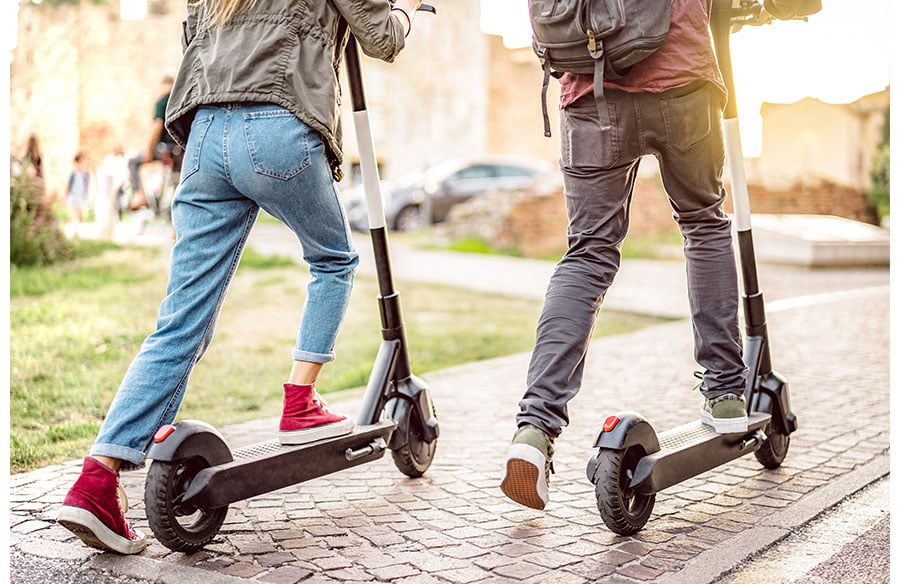
Urban transportation is changing rapidly. Congestion, rising fuel costs, and environmental concerns are forcing commuters to rethink how they travel. In this shifting landscape, the city commuter electric scooter has emerged as a surprisingly serious alternative to traditional transport. What once looked like a novelty gadget is now becoming a legitimate mobility tool. But are electric scooters truly viable for daily commuting?
The answer depends on how—and where—you commute.
The Urban Commute Problem
Cities were not designed for the number of vehicles they carry today. Rush hour traffic wastes time, burns fuel, and increases stress. Short trips, ironically, are often the most inefficient. Driving a car two or three miles can take longer than expected due to parking, congestion, and traffic lights.
Electric scooters target exactly this gap.
Most urban trips fall within a 2–6 mile range, which sits comfortably inside the operating sweet spot of modern electric scooters. Instead of sitting in traffic, riders can often move through bike lanes, shared mobility paths, or quiet side streets.
For many commuters, the result is simple: shorter travel time and less frustration.
Cost: A Major Advantage
From a financial perspective, electric scooters are hard to beat.
Owning a car involves fuel, insurance, maintenance, parking, and depreciation. Even public transit can add up with daily fares. In contrast, an electric scooter typically costs pennies per charge.
A typical commuter scooter consumes around 250–500 watts, meaning a full charge costs only a few cents depending on local electricity prices. Over a year, the operating cost is almost negligible compared to cars or motorcycles.
Maintenance is also minimal. With fewer moving parts than combustion engines, the main upkeep usually involves tires, brakes, and occasional battery care.
For commuters looking to reduce transportation costs, scooters offer exceptional efficiency.
Speed and Real-World Performance
One common misconception is that scooters are slow. While entry-level models top out at around 15 mph, commuter-focused scooters often reach 20–28 mph, which is surprisingly competitive in city traffic.
In dense urban areas, average car speeds during rush hour frequently drop below 12 mph. When factoring in parking time and traffic delays, scooters can actually become the faster option for short routes.
Range has also improved dramatically. Many modern scooters now offer 20–40 miles per charge, more than enough for daily commuting.
For someone traveling five miles to work, charging may only be required every few days.
Portability Changes the Game
One of the biggest advantages of electric scooters is portability.
Unlike bicycles or motorcycles, most commuter scooters fold in seconds. Riders can bring them inside offices, apartments, or public transit. This flexibility solves the “last mile” problem that often limits other transportation methods.
For example, a commuter might take a train for most of the journey and use a scooter for the final mile to the office. Instead of waiting for buses or rideshares, the rider maintains full control of the journey.
This hybrid mobility model is where scooters truly shine.
Environmental Impact
Electric scooters also offer environmental benefits.
While they are not completely carbon-neutral, their energy consumption is extremely low compared to cars. Even when electricity comes from mixed energy sources, scooters still produce significantly lower emissions per mile.
For cities trying to reduce pollution and traffic congestion, micro-mobility options like scooters represent a meaningful step toward cleaner transportation.
That said, sustainability depends partly on battery lifespan and responsible manufacturing. High-quality scooters with durable components have a much smaller environmental footprint than cheap, disposable models.
Safety and Infrastructure
Despite their advantages, electric scooters are not perfect.
Safety concerns remain one of the biggest barriers to widespread adoption. Riders share roads with cars, bicycles, and pedestrians, and infrastructure is not always designed for micro-mobility.
Cities that invest in protected bike lanes and shared mobility corridors tend to see better safety outcomes. In places where scooters must compete directly with heavy traffic, the risk increases.
Helmet use, rider awareness, and local regulations also play a critical role. As scooter adoption grows, urban infrastructure will likely evolve to support safer integration.
Weather and Practical Limitations
Another challenge is weather.
Scooters perform best in dry conditions. Rain, snow, and icy roads reduce traction and visibility, making commuting less practical in certain climates.
Carrying capacity is also limited. While small backpacks work well, scooters are not ideal for transporting groceries, large bags, or heavy equipment.
For many commuters, this means scooters function best as part of a multi-modal transport strategy, rather than a complete replacement for every trip.
So, Are Electric Scooters Truly Viable?
In the right context, absolutely.
For short to medium urban commutes—particularly under 6–8 miles—electric scooters can be faster, cheaper, and more convenient than cars or public transit. Their portability solves last-mile problems, and their operating costs are almost negligible.
However, viability depends on several factors: infrastructure, weather conditions, commuting distance, and rider comfort with micro-mobility.
Electric scooters are not the perfect solution for everyone. But for millions of urban commuters, they offer something increasingly rare in modern transportation:
A faster, simpler way to move through the city.
As cities continue to adapt to new mobility trends, electric scooters are likely to become not just a commuting option—but a core part of the urban transportation ecosystem.