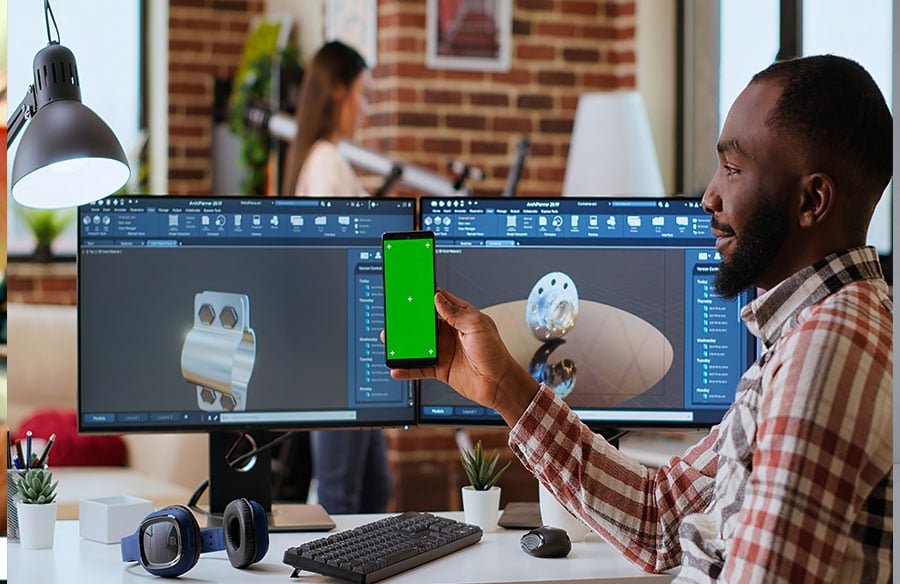
The evolution of ai 3d modeling software is reshaping how brands create, manage, and deploy digital product assets. What once required extensive manual work, specialised designers, and long production timelines can now be accelerated through intelligent automation. Platforms such as https://mazingxr.com/en/ demonstrate how artificial intelligence is redefining the standards of 3D content creation for eCommerce, manufacturing, and spatial commerce.
As digital retail grows increasingly competitive, companies need faster production cycles without compromising quality. AI-driven 3D modelling solutions offer scalability, consistency, and operational efficiency — essential factors for brands managing large product catalogues.
3D Modeling AI Software: From Manual Workflows to Intelligent Automation
Traditional 3D modelling has long been a time-intensive process. Designers manually construct geometry, refine textures, and optimise assets for web integration. While highly detailed results are achievable, the process often limits scalability.
Modern 3d modeling ai software introduces automation into these workflows. Instead of building each asset from scratch, AI algorithms analyse input data such as CAD files, product images, or technical specifications. The system then generates accurate, optimised 3D models suitable for digital display.
Key benefits of this shift include:
- Reduced production time
- Lower dependency on large creative teams
- Consistent visual standards across product ranges
- Faster deployment to eCommerce platforms
By automating repetitive modelling tasks, businesses can allocate creative resources more strategically while maintaining high-quality output.
AI Software for 3D Modeling: Enhancing Speed and Accuracy
The integration of ai software for 3d modeling allows companies to move beyond traditional limitations. Artificial intelligence not only accelerates asset generation but also improves accuracy through machine learning optimisation.
AI systems can:
- Detect product contours and geometry automatically
- Apply realistic materials and textures
- Optimise models for Web AR and 3D viewers
- Reduce file sizes without sacrificing quality
This level of automation is particularly valuable for retailers with thousands of SKUs. Instead of managing lengthy production pipelines, brands can implement streamlined workflows that generate interactive 3D content efficiently.
For furniture manufacturers, fashion brands, and industrial companies, this means faster product launches and improved digital presentation without delays caused by manual modelling bottlenecks.
AI Powered 3D Modeling Software for eCommerce Growth
The rise of ai powered 3d modeling software aligns closely with the expansion of augmented reality and immersive shopping experiences. Consumers increasingly expect to view products in 3D, rotate them, zoom in on details, and even visualise them within their own environment.
AI-powered solutions support these expectations by generating scalable, web-ready assets that integrate directly into online stores. Combined with Web AR technology, 3D models become interactive tools rather than static representations.
For businesses, this translates into measurable advantages:
- Higher conversion rates
- Reduced product return rates
- Improved customer engagement
- Enhanced brand perception
By offering realistic digital previews, companies reduce uncertainty in the buying process. Customers can make more informed decisions, which improves satisfaction and long-term loyalty.
Applications Across Industries
AI-driven 3D modelling is not limited to one sector. Its flexibility makes it applicable across multiple industries.
Furniture and Interior Design
Retailers can present full collections in 3D, enabling customers to visualise products in their own living spaces through AR integration.
Fashion and Accessories
3D models enhance product detail visibility, while virtual try-on tools increase buyer confidence.
Industrial Manufacturing
Complex components can be displayed interactively, helping clients better understand specifications and assembly structures.
Consumer Electronics
Detailed 3D visualisation highlights product features and differentiators, improving product storytelling.
In each case, AI significantly reduces content production time while maintaining consistent quality.
Scalability and Automation for Enterprise-Level Catalogues
Large enterprises often manage extensive product libraries. Traditional modelling approaches struggle to keep up with frequent updates, seasonal releases, and custom variations.
AI-powered systems address these challenges through:
- Batch processing capabilities
- Automated texture mapping
- Intelligent asset optimisation
- Seamless integration with eCommerce platforms
This automation allows companies to scale digital content production in line with business growth. Instead of increasing team size proportionally, businesses can leverage AI to maintain efficiency.
Integration with Web and AR Technologies
The true value of ai 3d modeling software emerges when integrated with augmented reality and interactive web platforms. Generated models can be embedded directly into product pages, allowing users to rotate, zoom, and explore items in real time.
Web-based AR eliminates the need for app downloads, providing frictionless access to immersive experiences. When AI-generated models are optimised for browser performance, they deliver smooth interaction without compromising quality.
This seamless integration enhances the digital shopping journey while supporting faster loading speeds and better user retention.
Data-Driven Optimisation and Continuous Improvement
Machine learning enables AI modelling platforms to improve continuously. As systems process more data, they refine geometry accuracy, material mapping, and performance optimisation.
This iterative improvement ensures that AI-generated assets become increasingly sophisticated over time. Businesses benefit from ongoing enhancements without needing to overhaul their entire production infrastructure.
The Strategic Advantage of AI in 3D Modeling
Adopting ai powered 3d modeling software is not merely a technical upgrade — it is a strategic decision. Companies that integrate intelligent automation into their content pipelines gain a competitive advantage through:
- Faster time-to-market
- Lower operational costs
- Consistent digital branding
- Enhanced customer engagement
As immersive commerce becomes the standard, AI-driven 3D modelling will continue to play a central role in digital transformation strategies.
Conclusion
The emergence of ai 3d modeling software marks a significant shift in how digital product content is created and delivered. By combining automation, scalability, and integration with AR technologies, businesses can accelerate workflows while enhancing user experiences.
From furniture retailers to industrial manufacturers, 3d modeling ai software, ai software for 3d modeling, and advanced ai powered 3d modeling software solutions provide the tools needed to compete in a rapidly evolving digital marketplace. As consumer expectations rise, intelligent 3D modelling stands as a foundational technology driving the future of spatial commerce.