Dubai’s luxury vehicles culture thrives on standout finishes and practical protection for daily driving, desert dust, and intense sun. Car owners who want a new look today weigh style, durability, and ease of upkeep as closely as color. Innovative paint technologies now allow for rapid local scratch fixes at workshops across Dubai, and Golden Horse scratch repair is part of a growing trend, providing a range of services to restore and protect vehicle surfaces efficiently. In 2026, the most influential advances aren’t just about a shinier surface; they also aim to reduce abrasion, improve scratch resistance, speed up refinishing, and support customization without sacrificing factory paint. From premium paint protection film options that can change colors to robotic application that eliminates overspray, these technologies are reshaping how designers, body shops, and owners think about paintwork and vehicle care across the UAE and beyond.
In Short: What’s Shaping Car Design in 2026
- Self-healing PPF and paint protection film options protect original paint from chips and scratches.
- Colored PPF and peelable paint make customization reversible while still adding protection.
- Ceramic coating and hydrophobic top layers keep surfaces glossier and easier to clean in harsh climates.
- Factory paint advances, digital application, fast-cure repair systems, and smart color change redefine how paintwork is made, maintained, and reinvented.
Self-Healing PPF That Protects the Vehicle’s Paint in Dubai Traffic
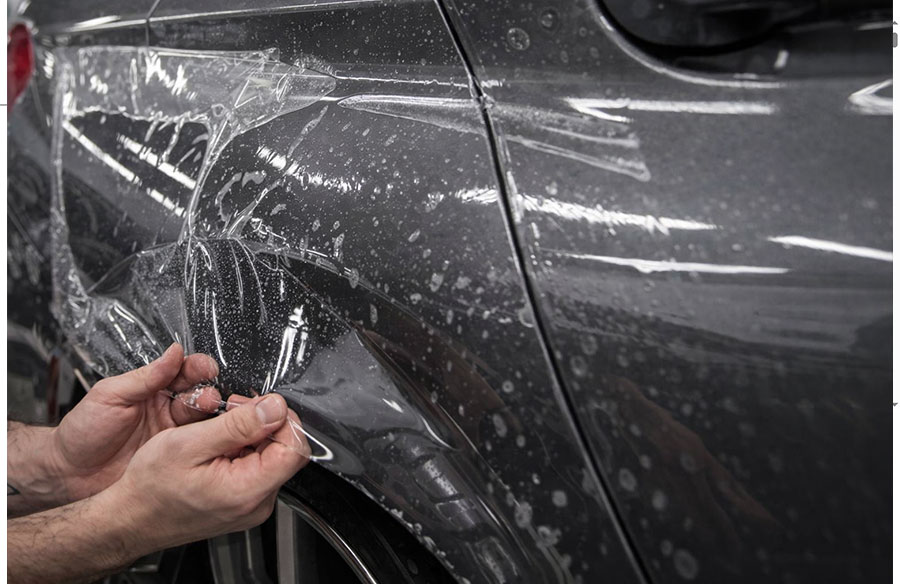
Modern PPF is no longer a niche add-on for exotic cars; it’s a mainstream layer of protection that quietly preserves original paint. The newest films focus on clarity, edge stability, and self-healing behavior so light marks fade with warmth, which matters in a hot climate where parked cars regularly heat up. 3M describes a self-healing formula where minor scratches disappear when heat is applied to the film surface, reinforcing why premium film has become a top choice for car owners in Dubai who face sand, road debris, and frequent washing. In practice, owners use PPF strategically on high-impact zones to prevent a chip from becoming a repair. It also supports a cleaner paint job narrative when you want to sell, since factory paint and panel consistency stay intact, which strengthens resale value and protects their investment.
Colored PPF and Finish Customization That Delivers a Bold New Surface
Colored PPF expands the conversation from protection to design, enabling a color change without committing to a traditional paint process. It is particularly appealing for luxury car owners who want a distinctive finish while retaining the option to return to original paint later. Because the film acts as a shield, it helps reduce chips and scratches while providing a controlled aesthetic, whether the goal is a satin appearance, a deep tone, or a high-end effect that reads premium from a distance. 3M’s paint protection film portfolio underscores how films can be purpose-built for vehicle surfaces while adding resilience in real-world use. For Dubai’s car culture, colored PPF and premium paint protection film sit at the intersection of car customization and practicality, offering style and protection in one step while avoiding the permanence and downtime of repainting a whole car.
Peelable Paint and Peelable Car Paint for Reversible Color Change in the UAE
Peelable paint has matured into a credible path for customization, especially when owners want experimentation without permanent paint. The appeal is simple: peelable car paint creates a removable layer that can be lifted later, revealing the original paint beneath, which is valuable for luxury car resale conversations. Official guidance from Plasti Dip’s European FAQ emphasizes removability, reinforcing why peelable coatings are widely seen as a lower-commitment approach than traditional paint. In 2026, peelable paint Dubai demand is driven by people seeking a bold new look that can be refreshed seasonally, matched to events, or changed colors for variety. When applied correctly, high-quality peelable paint can help protect the vehicle’s finish from minor scratches and light contamination while still giving owners who demand flexibility an on-ramp to customization.
Ceramic Coating for Gloss, UV Defense, and Easier Car Care
Ceramic coating remains a cornerstone technology because it improves daily maintenance while reinforcing appearance. Instead of acting like a thick barrier, ceramic forms a bonded protective layer that enhances gloss and reduces how strongly grime adheres. 3M’s ceramic coating product description highlights a hydrophobic water-beading effect that carries away surface dust and dirt as water quickly sheds, which aligns with Dubai use cases where water and dirt can quickly dull a finish. This is where like ceramic solutions shine for many car owners: the coating helps protect against UV rays that can cause paint to fade, and it supports a consistent “just detailed” look with less effort. For the car detailing industry, ceramic is also a workflow upgrade, because it gives predictable outcomes across many car types, from daily sedans to an ideal for a luxury garage.
Hydrophobic Coating Topcoats That Keep Paint Cleaner for Longer
Beyond ceramic, specialized hydrophobic topcoats are evolving to emphasize slickness and water behavior. The goal is straightforward: make surfaces resist wetting so contaminants rinse away, reduce spotting, and keep vehicles looking new between washes. In a region where dust can settle daily, a coating that promotes fast runoff improves appearance with fewer touch-ups, and it reduces the temptation to over-wash, which can introduce fine marring over time. 3M’s official ceramic product notes the dust-and-dirt carry-off effect, and that same principle is now being refined into dedicated top layers that prioritize water shedding and surface feel. For vehicle owners, this technology is less about showy transformation and more about sensible vehicle care: paint stays visually crisp, and the surface tends to look cleaner for longer, even when conditions are challenging.
Factory Paint Innovation: Nissan Scratch Shield for Scratch Resistance
Factory paint developments matter because they set the baseline every other technology builds on. Nissan’s Scratch Shield is an example of OEM clearcoat engineering designed to maintain appearance in everyday conditions. Nissan explains that Scratch Shield is a clearcoat that is more scratch resistant than conventional clearcoats, helping a vehicle maintain its new look for a longer period of time, while noting limits if damage is deep. For Dubai drivers, this kind of factory paint approach complements external protection like PPF and coatings. It also influences refinishing expectations, because owners and body shops increasingly want clearcoats that resist swirls from cleaning and reduce visible wear. When combined with careful washing habits, self-healing or resilient clear layers can keep paintwork looking consistent and preserve a higher perceived quality over the vehicle’s lifetime.
Chameleon Automotive Paint Pigments That Reshape Luxury Car Styling
Automotive paint is also shifting toward effects that change perception across angles and lighting. Multi-dimensional pigments deliver a chameleon-like appearance that can read different tones across panels, wheels, and trim, which fits 2026 design language centered on depth and movement. PPG’s 2026 global automotive color trends briefing explicitly discusses finishes with “chameleon-like” properties, signaling that major coatings players are investing in experimental aesthetics rather than just incremental updates. For a luxury car audience, the benefit is a new look that feels bespoke without relying on graphics. These pigments also pair well with protective layers, because owners can lock in a premium effect while still applying PPF or a coating over it. The result is a surface that feels high-end, expressive, and aligned with modern design tastes.
PixelPaint Digital Application That Expands Customization Without Overspray
How paint is applied can be as transformative as what paint is used. ABB’s PixelPaint is built to deliver two-tone or complex patterns with minimal waste and reduced masking, which speeds production and enables cleaner transitions between design elements. ABB states: “ABB’s PixelPaint non-overspray technology eliminates the need for time-consuming masking and demasking methods for two-tone painting in the automotive industry, significantly reducing time and costs, improving productivity, and expanding possibilities for customized paint schemes to meet customer demand.” This matters in Dubai because car customization often involves two-tone roofs, accents, and precise edge work. PixelPaint-like precision supports custom color matching and cleaner boundaries, and it can reduce rework risk. It’s a technology that makes customization scalable, moving intricate finishes closer to factory-level repeatability.
Fast-Cure Refinish Paint Systems for Rapid Repairs and Paint in Dubai Realities
In 2026, speed is a design factor because owners dislike long downtimes and workshops need predictable throughput. Fast-cure, low-energy refinish systems address this by reducing bake time and energy usage while maintaining finish standards expected on a luxury car. Axalta’s announcement around its Spies Hecker Permasolid Speed-TEC Fast Cure Low Energy Collision Repair Paint System emphasizes rapid drying via air-drying or a short bake cycle, aligning with the push for efficient repair workflows. This shift supports localized repairs after a scratch or chip, improves turnaround for services in Dubai, and helps preserve factory paint appearance when panels need blending. For owners, faster curing can translate into less disruption, and for body shops it supports consistency, particularly when the goal is to make your car look seamless again without repeating a full repaint.
Smart Color Change Surfaces That Challenge Permanent Paint Expectations
The boldest frontier is smart exterior color change, which rethinks what “paint” even means. BMW’s iX Flow featuring E Ink uses electrophoretic technology and microcapsules to alter exterior appearance with electrical signals, demonstrating a future where drivers can shift visual identity without repainting. BMW’s press release explains the surface coating contains many millions of microcapsules, underlining the material science behind the concept. For Dubai’s car scene, the appeal is instant customization that can adapt to events, seasons, or personal preference, while avoiding a permanent paint commitment. It also hints at a world where paint stays flexible and the line between wraps, coatings, and factory paint blurs. Even if this remains high-end for now, it’s a clear signal of where design ambition is heading.
Comparison Table of Paint Technologies for Style and Protection
The table below compares how each 2026 technology balances protection, aesthetics, and practicality for a vehicle’s exterior. The intent is not to crown a single winner, but to show how different solutions fit different priorities, whether you’re protecting the car’s paint for resale value, chasing a new look, or minimizing downtime. PPF and paint protection film options lead in impact defense, while coatings dominate low-effort cleaning and UV resilience. Peelable solutions prioritize reversible customization, and smart surfaces push the boundary of what a car paint concept can be. Digital applications like PixelPaint affect both sustainability and design precision, and fast-cure systems modernize repair workflows for minor scratches and refinishing.
| Technology | What it changes most | Best fit | Key trade-off |
| Self-healing PPF | Impact and scratch defense | High-use areas, highway driving | Cost and installation skill |
| Colored PPF | Style plus protection | Seeking a bold, protected finish | Limited color palette vs sprayed paint |
| Peelable paint | Reversible customization | Seasonal redesigns, experimentation | Durability depends on prep and thickness |
| Ceramic coating | Gloss and ease of cleaning | Daily maintenance, UV exposure | Not strong against sharp impacts |
| Hydrophobic topcoat | Cleaner for longer look | Dusty environments, frequent rinsing | Needs periodic refresh for peak behavior |
| Scratch Shield clearcoat | Baseline scratch resistance | Factory paint longevity | Limited recovery on deep damage |
| Chameleon pigments | Visual depth and shifts | Statement builds, show styling | Complex repair matching |
| PixelPaint application | Precision patterns and less waste | Two-tone, sharp transitions | Requires specialized equipment |
| Fast-cure refinish systems | Repair speed and efficiency | Local repairs, busy workshops | Material system discipline required |
| E Ink color change | Instant visual transformation | Top-tier experimentation | Currently high-end and limited availability |
Dubai-Ready Paintwork That Blends Style and Protection
The biggest 2026 change is that paint is no longer just a color layer; it’s a system that combines surface engineering, efficiency, and design freedom. In Dubai and across the UAE, the market rewards solutions that protect the vehicle’s finish from abrasion, UV, and chips while supporting customization that feels premium. PPF and coatings help protect and preserve original paint, peelable approaches give owners flexibility, and factory paint innovations raise baseline durability. Meanwhile, PixelPaint and fast-cure systems reshape how repairs and bespoke designs are delivered, making advanced finishes more attainable. As smart color change matures, the idea of a static exterior may fade, and owners who want to evolve their car’s look could do so without repainting. For car owners, the best choice will depend on goals, but the direction is clear: better protection, richer finishes, and faster, cleaner processes.
FAQ
Is PPF better than ceramic coating?
PPF is better for impact defense, while ceramic coating is better for cleaning ease and UV resilience.
Does peelable paint damage factory paint?
When applied and removed correctly, peelable coatings are designed to lift away without harming factory paint.
Can fast-cure systems maintain a premium finish after a repair?
Modern fast-cure refinish systems are engineered to speed drying while still meeting high-end appearance standards when applied correctly.
Video: https://www.youtube.com/watch?v=9vNPrqUJxGw