In the ever-evolving world of renewable energy, solar power continues to be at the forefront of innovation. One of the most exciting developments in recent years is the emergence of bifacial solar panels. These cutting-edge photovoltaic modules are changing the game by capturing sunlight from both sides, potentially revolutionizing the solar energy industry. In this comprehensive guide, we’ll explore the world of bifacial solar panels, their advantages, how they work, and whether they’re the right choice for your energy needs.
What Are Bifacial Solar Panels
Bifacial solar panels, as the name suggests, are solar modules that can absorb sunlight from both their front and back sides. Unlike traditional monofacial panels, which only capture light on one side, bifacial panels take advantage of reflected light that hits their rear surface. This innovative design allows for increased energy production, making them an attractive option for both large-scale solar farms and residential installations.
The concept of bifacial solar technology isn’t entirely new – it has been around since the 1960s. However, recent advancements in manufacturing processes and materials have made bifacial panels more efficient and cost-effective, leading to their increased adoption in the solar market.
Advantages of Bifacial Solar Panels
Bifacial solar panels offer several compelling advantages over their monofacial counterparts:
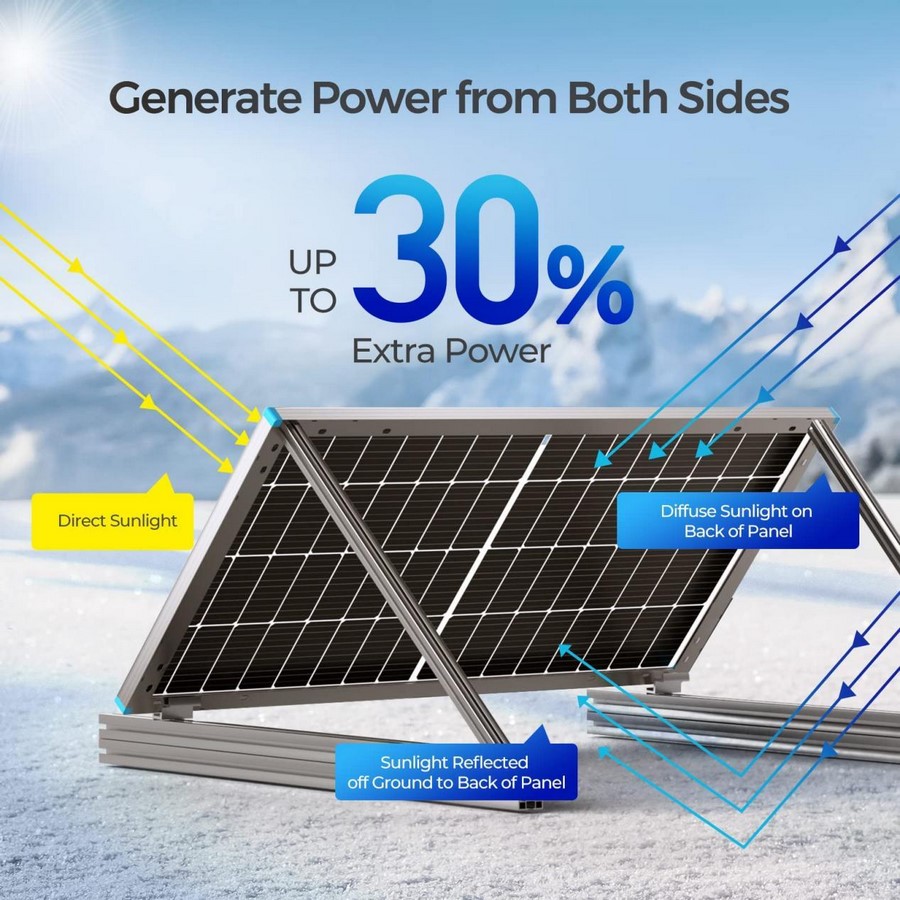
Increased Energy Yield: The most significant advantage of bifacial panels is their ability to generate more electricity. By capturing light from both sides, these panels can produce up to 30% more energy than traditional monofacial panels under optimal conditions.
Improved Performance in Low-Light Conditions: Bifacial panels can better utilize diffuse and reflected light, making them more effective during cloudy days or in areas with less direct sunlight.
Longevity: The double-glass construction of many bifacial panels provides better protection against environmental factors, potentially extending the lifespan of the solar installation.
Reduced Temperature Coefficient: Bifacial panels tend to have a lower temperature coefficient, meaning they perform better in high-temperature environments compared to monofacial panels.
Versatility in Installation: These panels can be installed vertically or at innovative angles, opening up new possibilities for solar array design and placement.
Aesthetic Appeal: The sleek, frameless design of many bifacial panels can be more visually appealing, especially in architectural applications.
How Bifacial Solar Panels Work
To understand how bifacial solar panels work, it’s essential to first grasp the basics of solar energy conversion. Like traditional solar panels, bifacial panels use photovoltaic cells to convert sunlight into electricity. The key difference lies in their ability to capture light from both sides.
Here’s a step-by-step breakdown of how bifacial solar panels function:
Front-Side Absorption: The front side of the panel works just like a traditional solar panel, absorbing direct sunlight and converting it into electrical energy.
Rear-Side Absorption: The back side of the panel captures reflected and diffuse light from the surrounding environment. This can include light reflected off the ground, nearby structures, or even clouds.
Transparent Back Sheet or Glass: Instead of an opaque back sheet used in monofacial panels, bifacial panels use either a transparent back sheet or a second layer of glass. This allows light to pass through to the rear side of the solar cells.
Bifacial Solar Cells: The solar cells used in these panels are designed to absorb light from both sides. They typically have a specialized anti-reflective coating on both surfaces to maximize light absorption.
Energy Conversion: The absorbed light energy is converted into electrical current by the solar cells on both sides of the panel.
Power Output: The electricity generated from both sides is combined, resulting in a higher overall power output compared to monofacial panels of the same size.
The efficiency of bifacial panels depends largely on the albedo of the surface beneath them. Albedo refers to the reflectivity of a surface – the higher the albedo, the more light is reflected. Surfaces like white concrete, snow, or even light-colored gravel can significantly boost the performance of bifacial panels.
Are Bifacial Solar Panels Worth It?
The question of whether bifacial solar panels are worth the investment depends on several factors. Here are some key considerations to help you determine if bifacial panels are the right choice for your situation:
Installation Location: Bifacial panels perform best in areas with high albedo surfaces or where they can be mounted to maximize rear-side exposure. If your installation site has these characteristics, bifacial panels could offer significant benefits.
Available Space: If you have limited space for solar panel installation, bifacial panels might be worth considering due to their higher energy density.
Climate: In regions with high diffuse light conditions or frequent cloudy weather, bifacial panels can offer improved performance compared to monofacial panels.
Budget: While bifacial panels are more expensive upfront, their increased energy production can lead to faster ROI in the right conditions. Consider the long-term savings potential when making your decision.
Energy Needs: If you have high energy requirements and want to maximize production from a limited number of panels, bifacial technology could be a good fit.
Aesthetic Preferences: For applications where the appearance of the solar array is important, the sleek design of bifacial panels might be preferable.
Future-Proofing: As the technology continues to improve and costs decrease, investing in bifacial panels now could position you ahead of the curve in solar technology.
It’s important to note that while bifacial panels can offer significant advantages, they’re not always the best choice for every situation. A thorough assessment of your specific needs, installation site, and budget is crucial in determining whether bifacial panels are worth the investment for you.
For those considering bifacial solar panels, the Renogy Bifacial 220 Watt 12 Volt Monocrystalline Solar Panel is worth considering. This panel offers 220 Watt power output from the front side with additional generation from the back, making it suitable for various off-grid applications. Its monocrystalline technology ensures high efficiency, while the durable design features tempered glass on both sides. In optimal conditions, it can potentially yield up to 30% more energy than traditional panels. While it may have a higher upfront cost, the increased energy production over time can make it a worthwhile investment, especially in installations with abundant reflected light. As always, consult a solar professional to determine if it’s right for your specific needs.
Bifacial vs. Monofacial Solar Panels
While bifacial solar panels offer several advantages, it’s important to compare them directly with traditional monofacial panels to understand when each type might be most appropriate.
Energy Production
Bifacial: Can produce up to 30% more energy under optimal conditions due to their ability to capture light from both sides.
Monofacial: Produces energy only from the front side, limiting their output to direct sunlight exposure.
Cost
Bifacial: Generally more expensive upfront due to more complex manufacturing processes and materials.
Monofacial: Typically less expensive, making them more accessible for budget-conscious consumers.
Efficiency
Bifacial: Higher overall efficiency when considering total energy production per panel area.
Monofacial: Lower total energy production, but may have higher front-side efficiency.
Installation Requirements
Bifacial: Require more careful installation to maximize rear-side exposure and may need specialized mounting systems.
Monofacial: More straightforward installation process with standard mounting options.
Durability
Bifacial: Often more durable due to their double-glass construction, potentially leading to a longer lifespan.
Monofacial: Standard durability, with typical warranties ranging from 25-30 years.
Space Efficiency
Bifacial: Can be more space-efficient due to higher energy production per panel, allowing for smaller installations in some cases.
Monofacial: May require more panels to achieve the same energy output as a bifacial system.
Aesthetics
Bifacial: Often have a sleek, frameless design that can be more visually appealing in certain applications.
Monofacial: Traditional appearance, which may be preferred in some residential settings.
Applications of Bifacial Solar Panels
Bifacial solar panels are finding their way into various applications, both in large-scale solar farms and smaller installations. Here are some of the most promising areas where bifacial technology is making an impact:
Ground-Mounted Solar Farms: Large-scale solar installations can benefit greatly from bifacial technology. By using light-colored ground covers or elevating panels to allow more light reflection, these farms can significantly increase their energy yield.
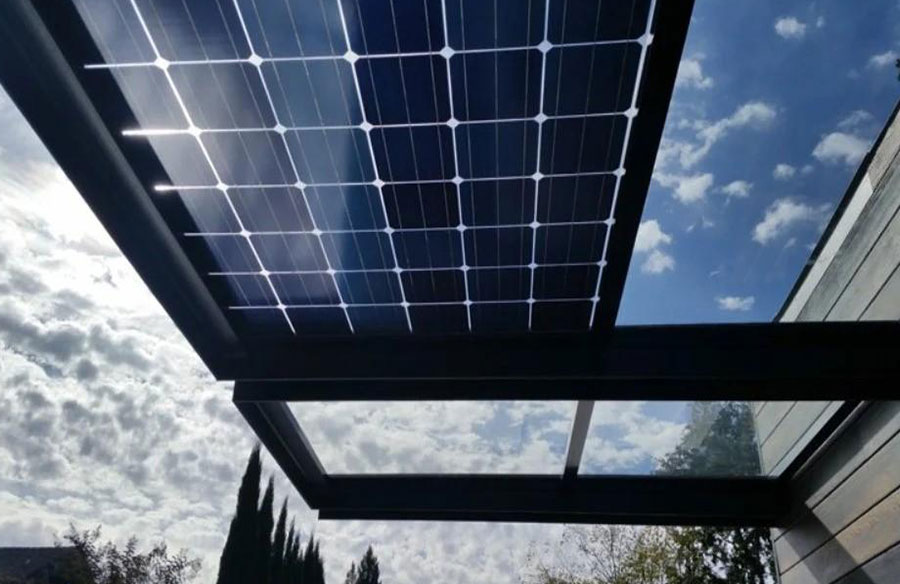
Canopy Structures: Bifacial panels are ideal for solar canopies in parking lots or over walkways. They can generate energy from direct sunlight above while capturing reflected light from the surface below.
Building-Integrated Photovoltaics (BIPV): The aesthetic appeal and dual-sided energy capture of bifacial panels make them excellent for integration into building designs, such as in transparent solar windows or balcony railings.
Agrivoltaics: The combination of agriculture and solar power production is an emerging field where bifacial panels excel. Elevated bifacial arrays allow crops to grow underneath while benefiting from increased energy production.
Vertical Installations: In urban environments or areas with limited horizontal space, bifacial panels can be installed vertically, capturing light from both east and west throughout the day.
Floating Solar Farms: When used in floating solar installations on bodies of water, bifacial panels can take advantage of the high reflectivity of water surfaces to boost energy production.
Snow-Prone Areas: In regions that receive significant snowfall, bifacial panels can capture light reflected off the snow, potentially increasing winter energy production.
Rooftop Installations: While less common, some rooftop installations can benefit from bifacial technology, especially on light-colored or reflective roofing materials.
As the technology continues to advance and costs decrease, we can expect to see bifacial solar panels in an even wider range of applications, further accelerating the adoption of solar energy worldwide.
Conclusion
Bifacial solar panels represent a significant advancement in solar energy technology, offering increased energy production and versatility in design and placement. While not suitable for every situation due to higher costs and specific installation needs, they excel in many applications, from large-scale farms to building-integrated systems. As we transition to renewable energy, bifacial panels will likely play a crucial role. Their ability to maximize energy production, coupled with improving efficiency and decreasing costs, positions them as a key technology in sustainable energy. Whether for residential, commercial, or utility-scale projects, bifacial panels merit serious consideration in the evolving landscape of solar energy solutions.
Rethinking The Future (RTF) is a Global Platform for Architecture and Design. RTF through more than 100 countries around the world provides an interactive platform of highest standard acknowledging the projects among creative and influential industry professionals.
We use cookies to ensure that we give you the best experience on our website. If you continue to use this site we will assume that you are happy with it.