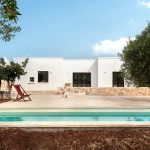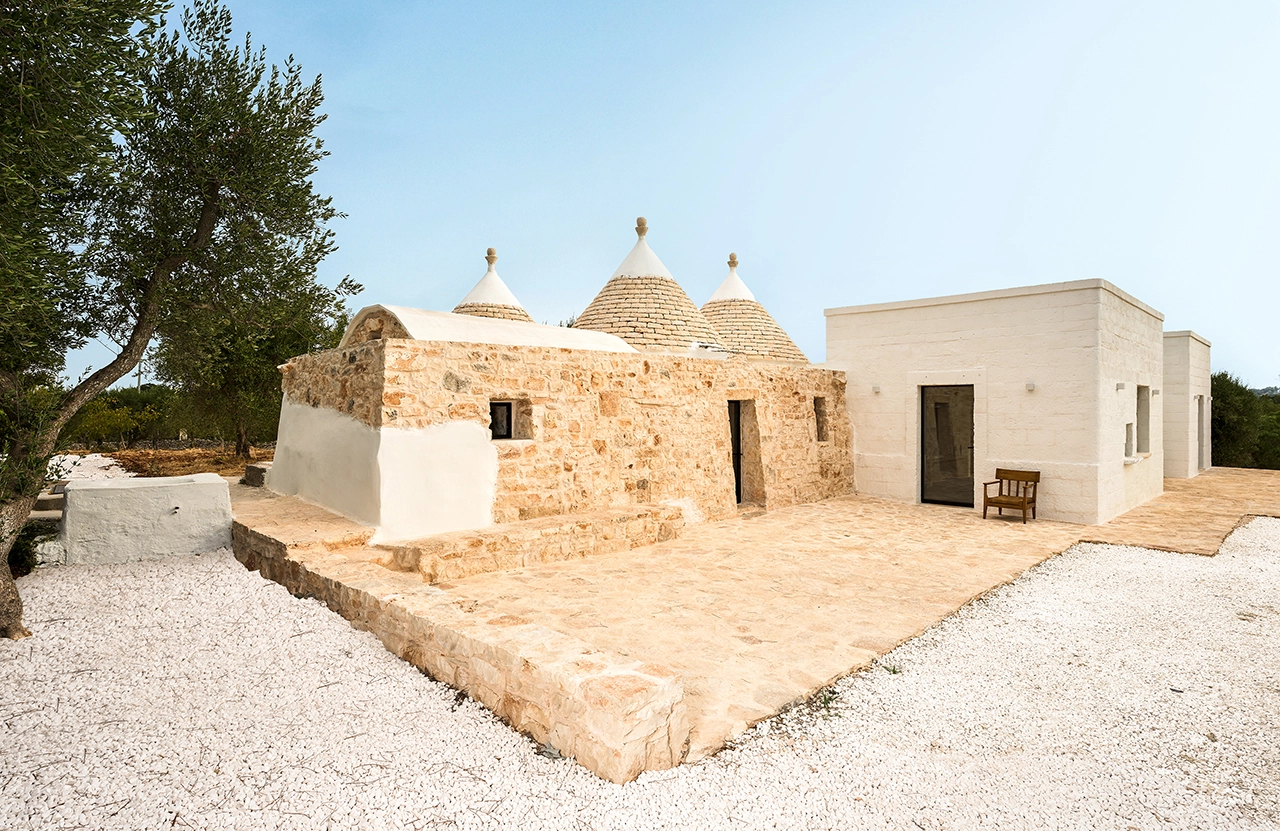
Located in the Valle d’Itria in Italy’s Puglia region, the Trulli architecture is renowned for its iconic white stone walls and conical limestone roofs. These unique architectural forms, dating back to the 16th century, carry historical and cultural significance.
Project Name: Vacation Villa
Studio Name: STUDIO8 Architects
Location: Puglia, Italy
Design Stage: 2023
Completion: 2024
Project Area: 2400sqm
Building Area: 120 sqm
Design Team: STUDIO8 Architects team
Photography: Giulia Gallo
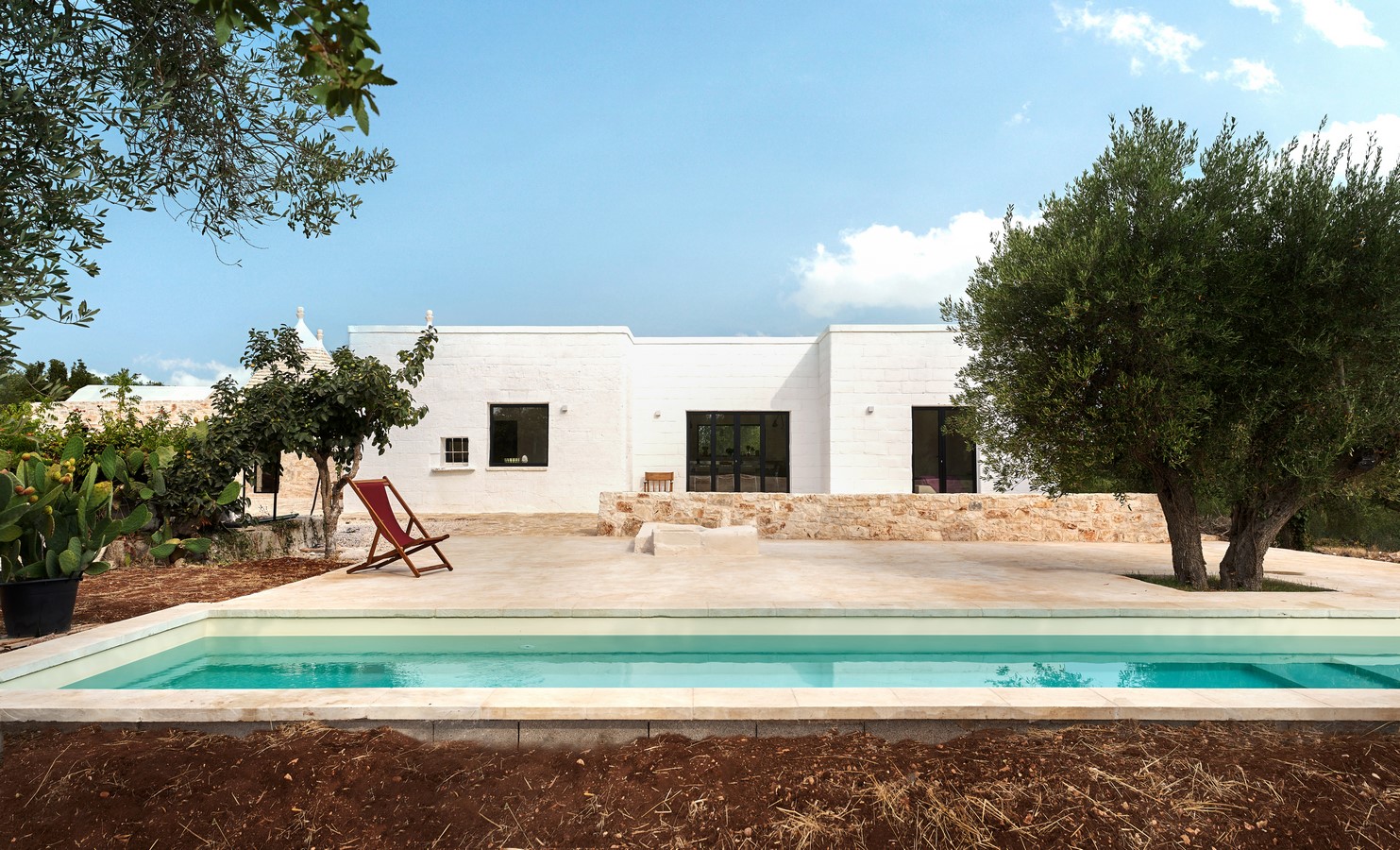
When the Franco family commissioned Studio8 Architects to create their vacation home, the site’s existing three weathered Trulli buildings immediately caught the design team’s attention. The aged marks of these buildings, along with the surrounding olive groves, form the core of the project’s design. The owners tasked the architects with restoring and renovating these ancient domed stone houses, adding extensions and a pool to create a vacation experience where history and modernity meet. The challenge was to balance the vibrant personalities of the owners with the equally rich soul of the building, distinguishing it from ordinary vacation homes.
Texture of Time
From the original conical Trullo to the stone house extended a century ago, as technology evolved, so did the cutting techniques for building materials over different periods. Compared to the smaller stones of the Trulli, the stones in the century-old extension are larger and more intact. The architects used this as a timeline, exploring the history and evolution of building materials and forms based on the Trullo’s architectural context. On the other side of the extended stone house, according to the owner’s needs, the designer expanded and added two new building volumes. The stones from three different historical periods are arranged from left to right, from old to new, creating a “time gradient” that not only reflects in the architectural forms but also symbolizes the continuity of family bonds and cultural heritage.
History and Modernity
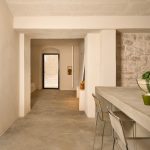
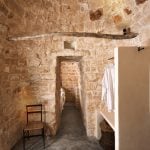
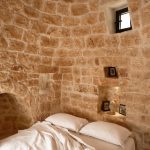
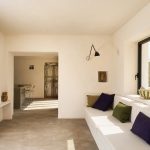
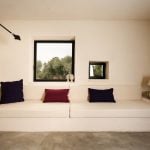
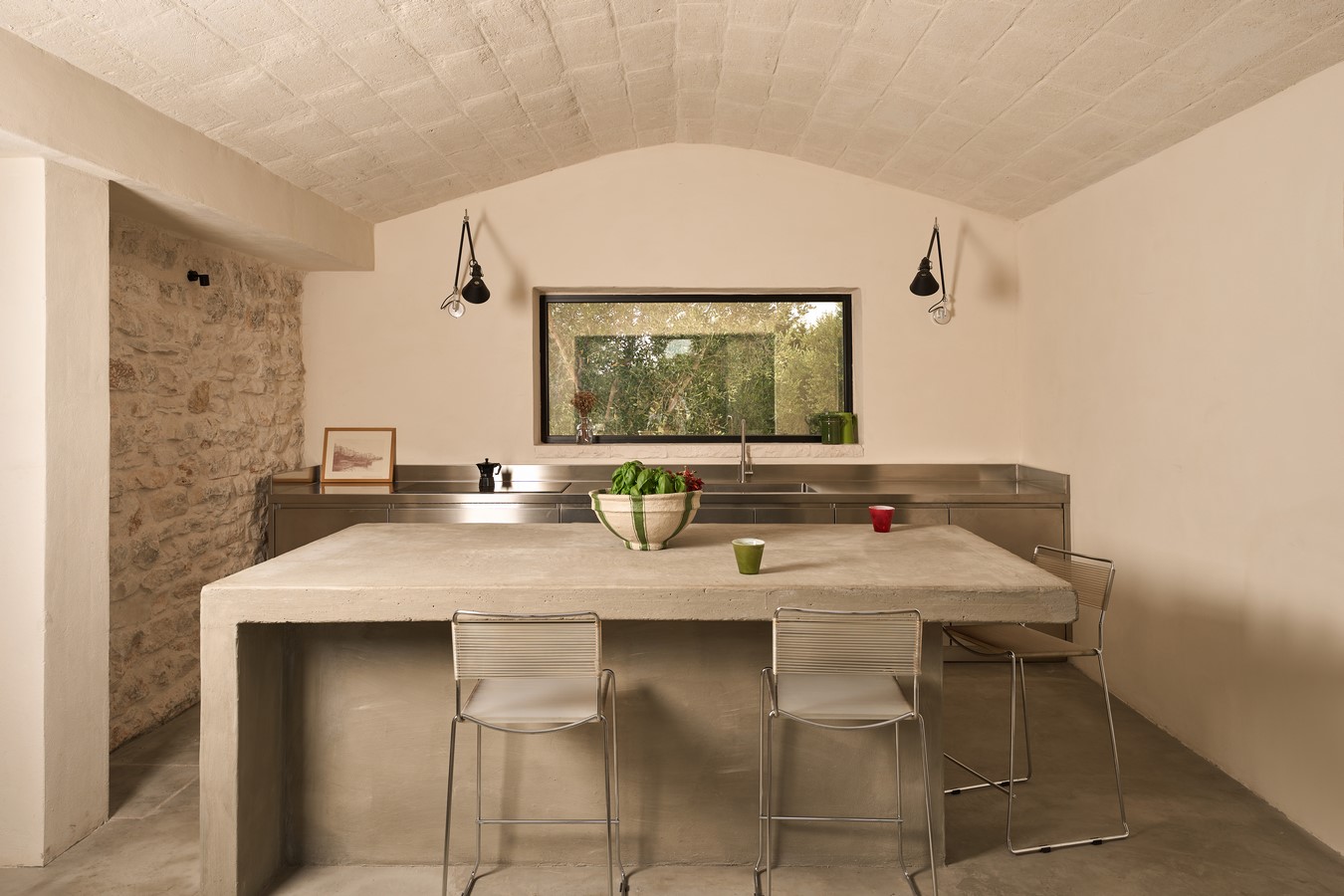
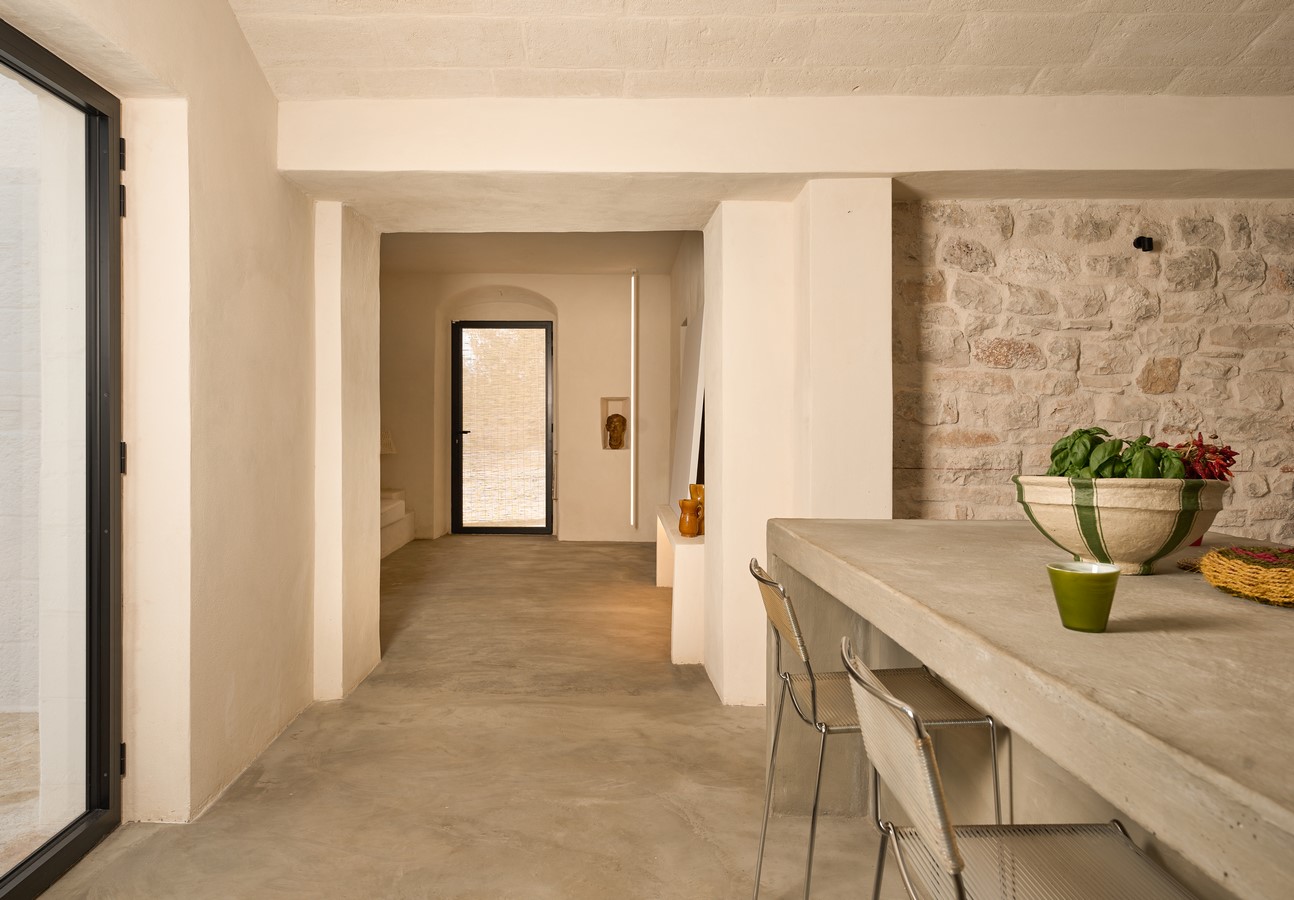
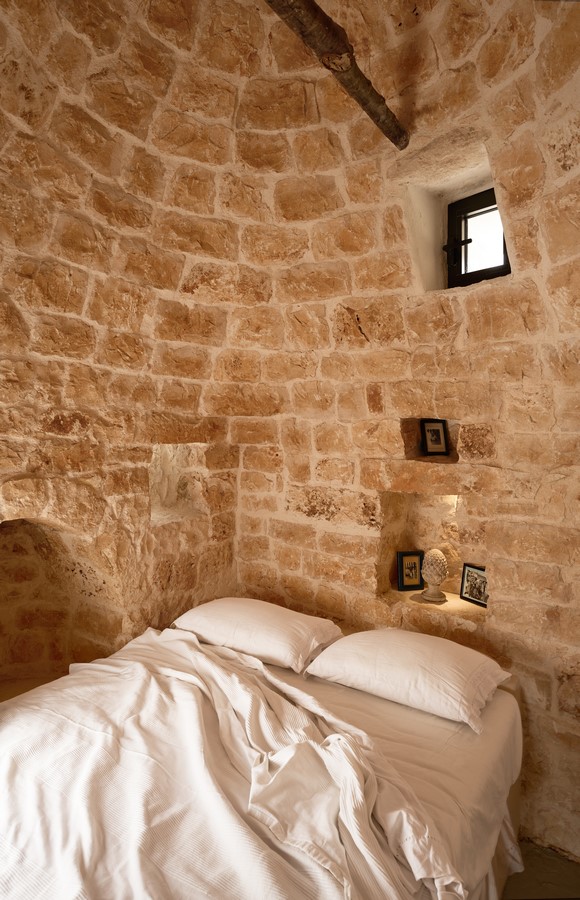
The main entrance of the vacation home is located in the middle of the second time gradient, the century-old extension. It links history on the left and modernity on the right. This area serves as both the main entrance and the living space. The designer installed large windows in the thick stone walls to improve lighting, integrating a custom white cushioned sofa as a transition between tradition and modernity. The left side houses the oldest Trulli buildings, converted into two bedrooms, preserving historical textures and using lighting to highlight details; the right side features newly constructed spaces, including the kitchen, master bedroom, and common areas.
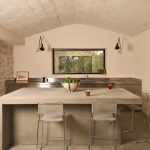
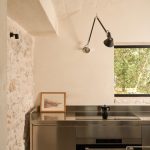
The kitchen, as the family’s activity hub, is equipped with a concrete island and a stainless steel workstation, serving both cooking and dining purposes. Floor-to-ceiling glass doors open up to the natural scenery of the olive groves, adding comfort and a sense of ceremony to life.
Challenging Traditional Craftsmanship
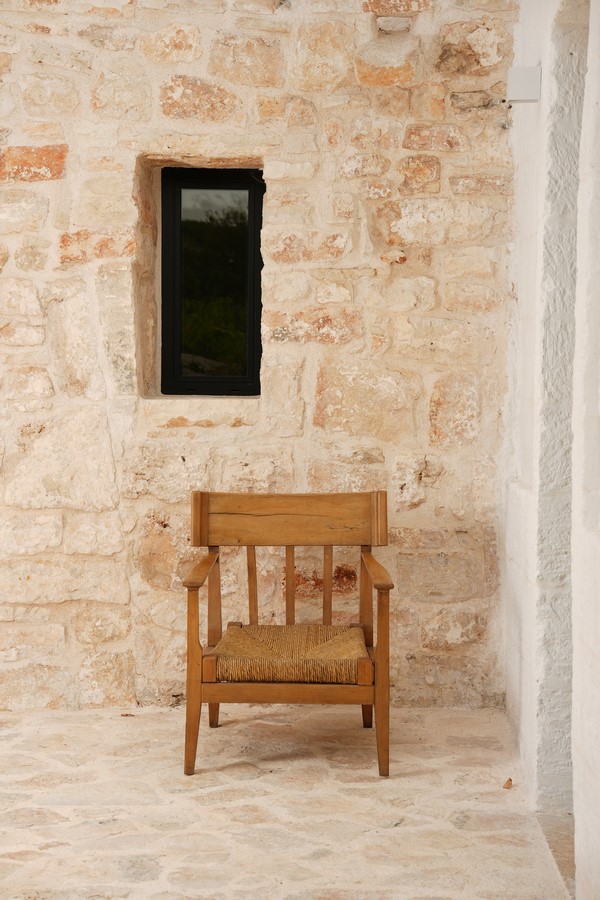
Since the Trullo is a symbolic structure in Puglia, the designers needed to repair damaged parts using original materials. This traditional mortar-free masonry technique not only insulates but also showcases ancient Italian building wisdom. However, collaboration with local stonemasons initially posed challenges: traditional craftsmen relied on experience and touch, not precise modern blueprints. To bridge this gap, the designers used colored spray paint to mark construction points on the walls and floor, facilitating on-site communication and visually conveying design intentions, ultimately achieving a collaboration between history and modernity.
Natural Villa
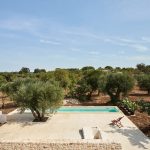
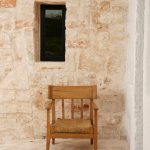
The estate’s plot retains its natural state of raw red soil, with a swimming pool reflecting the lush olive groves. We have adorned the indoor and outdoor spaces with local artworks and understated soft furnishings, leaving the experiential focus on the space itself, highlighting the harmony between architecture and nature.
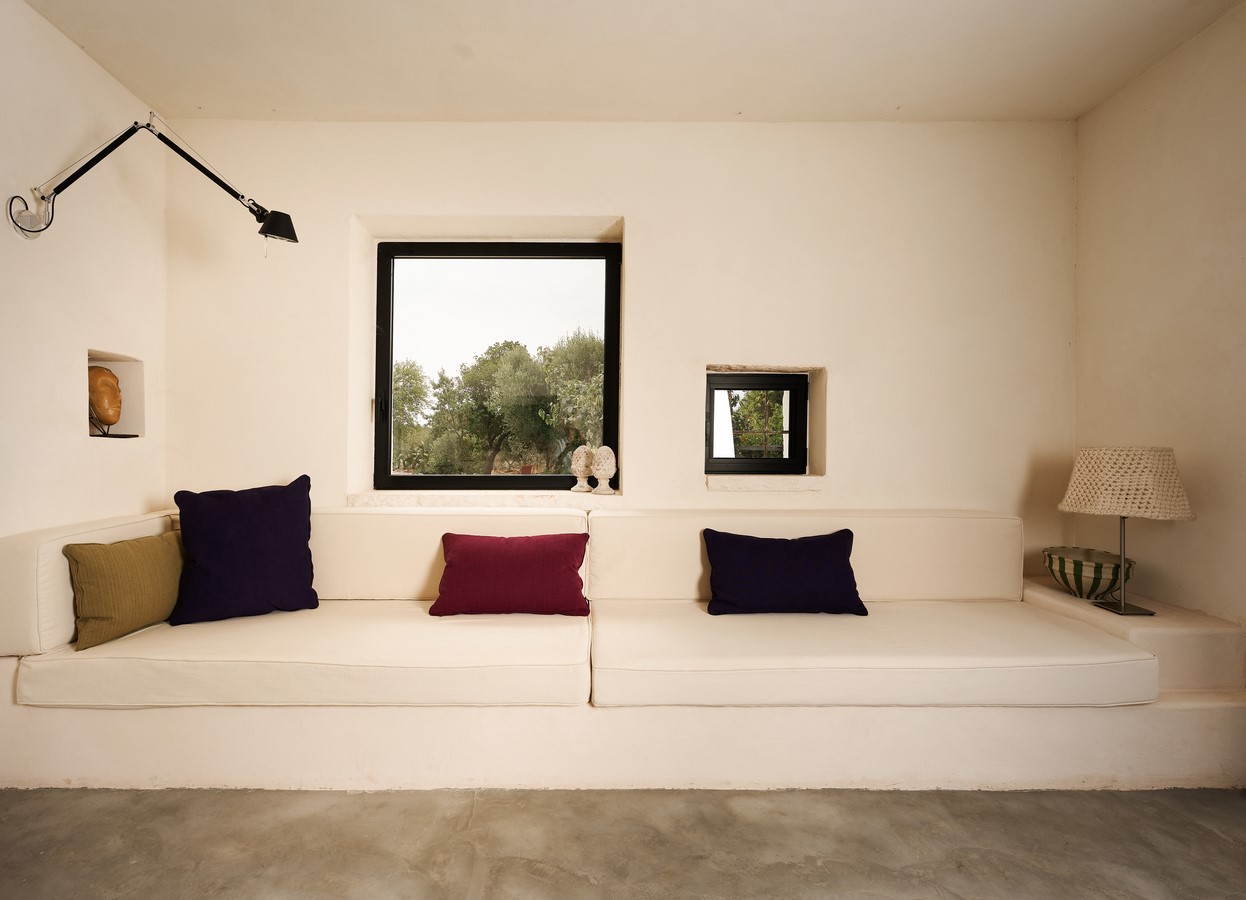
This vacation home is not only a family retreat but also a monument to time. Here, ancient architecture rejuvenates and seamlessly integrates with modern life, allowing the Franco family to enjoy the blend of history and nature during their tranquil summer days.