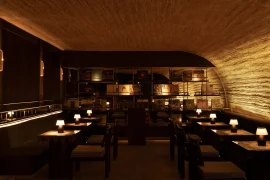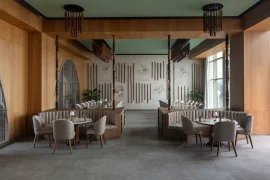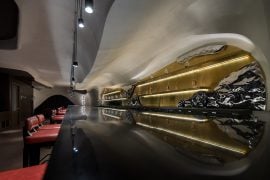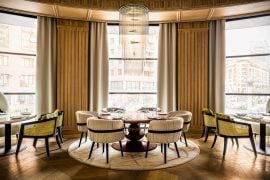
The Ecuadorian brand Galletti, specialty coffee, manages local production and marketing. Its decision to expand its coffee shops seeks the proximity of the product to its users. The new coffee shop is located in a commercial plaza in Quito, Ecuador.
Project Name: Galletti Café
Studio Name: A la par estudio
Year of construction: 2023
Construction área (m2): 108 m2
Location: Hiedras Plaza, calle de las hiedras y Av. de los granados
Principal architect(s): María Fernanda Ayala
Photographer: AS studio

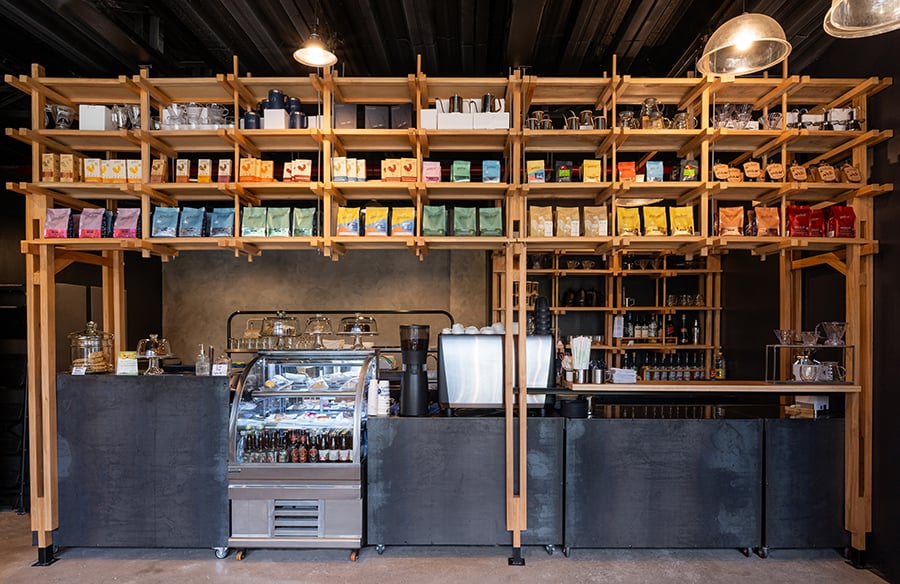
The clients require that their stores exhibit an industrial design, prioritizing visible and noble materials such as wood and metal, this materiality is present throughout the brand, but is adapted differently in each site. The main objective is that Galletti Café is presented as a sensory and spatial experience. One of the client’s requests was that, since the store was located in a shopping plaza, it was necessary to make the most of the space so that all the products could be displayed and at the same time there was space for tasting and the work that Galletti users normally do.

Furniture is used as a delimitation tool, in this way the limits are permeable and malleable, making the environments feel larger and cozier. Thus, it was decided to design a multipurpose furniture, which functions as an exhibitor of products, bar type bar for tasting as well as framing and defining the service, preparation and delivery area.

A permeable “wall” of wooden slats and galvanized threaded rods structure the main furniture, the rods work as a tensor that hangs from the main metal structure, having vertical supports for reinforcement. This division not only frames the space with the wooden structure, but also becomes a large boundary filled with the brand’s products, as well as allowing the structuring of a tasting bar. A coworking area was also required inside the cafeteria, this is solved by folding metal doors incorporating the color of the brand in the detail.

In addition to the coffee experience within the space, art is present as an activity of interaction inside the cafeteria, therefore a mini gallery is projected with a system of rails and hanging hooks for artworks that change every so often, these are located in the teeth that form the columns of the main structure of the building. In this way a space is given to both local and international artists so that they can exhibit their work, opening the space to dialogue and experience.