Public spaces provide people with opportunities to socialise which is an important part of modern urban life. These spaces, such as parks, squares, streets, and community gardens are not just spaces. They have great meaning set up in terms of promoting social interactions, and the development of different cultural activities and events. Urbanisation of cities and the use of electronic media increases the need to design spaces for face-to-face interaction. Such spaces create common experiences and enhance cultural linkages, the impacts of which are felt by the people in the society.
Public Spaces in the Diaspora: Towards a New Conceptualisation of Social Space in the Urban Landscape
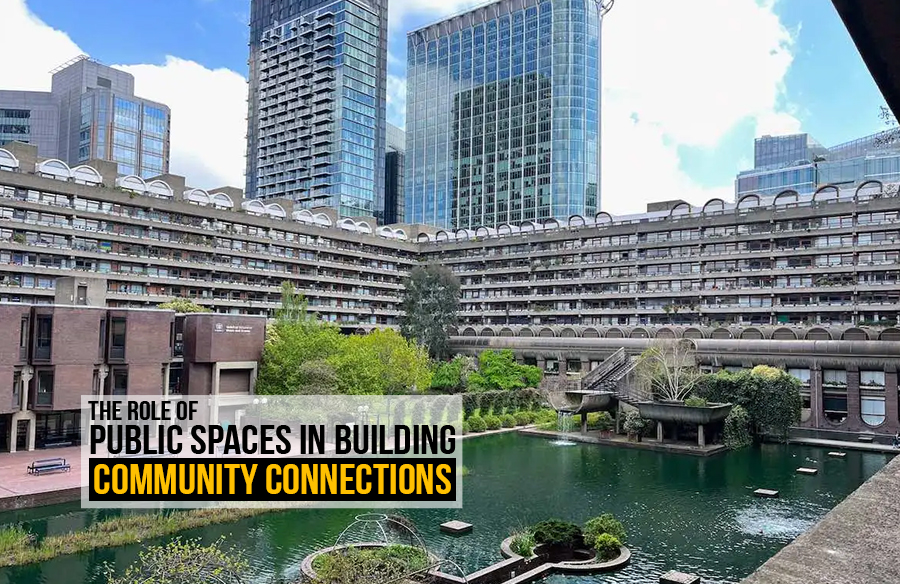
Public spaces perform a fundamental social function as they are used by various groups of people regardless of their social and economic status. There are areas of marked difference from private ones as they invite potential chance meetings and group interactions. The Barbican Centre in London is an example, for instance, of how in this brutalist-style building art, public space, and greenery are all successfully integrated to create a comfortable atmosphere for residents and guests of the city.


When looking at Barbican, it is commendable how effectively the architect has designed the place with an open layout that allows for gathering and sharing moments within the space.
Celebrating Culture in Diversity Through Design
The creative and asymmetric edifice of Melbourne’s Fed Square is no chance, but rather a huge part of the city’s eclectic nature. Its shocking design allows for hosting everything from aboriginal gatherings to installation art. Due to the incorporation of such different activities into one public area, it isn’t surprising that Fed Square attracts crowds of locals and tourists, encouraging coexistence and appreciation of different cultures.

Promoting Mental Well-being through Green Public Spaces
In recent years, the appreciation of public spaces has boosted not only their social impact but also their mental health. Nature helps to ease tension and lift one’s spirit in the presence of the urban jungle thanks to its reviving aspects. With Dublin being almost entirely cut off from the sea, Phoenix Park which is one of the largest enclosed parks in Europe provides urban residents with an area free away from the hustle and bustle of the city, to engage in sporting activities and most importantly to enjoy nature. In addition to providing leisure facilities, the expansive green fields and historical places in Phoenix Park serve as a therapeutic landscape that calms people and promotes their well-being, hence ensuring good health for the residents of the area.


Rethinking Public Spaces for Social Equity
For instance, they promote social equity by allowing free participation in events and access to resources. They foster a certain degree of inclusiveness and help to overcome the barriers evident within society by serving all sections of the population. La Villette in Paris, a modern-day park and cultural space, is one such instance where public design encourages interaction across all demographic groups. La Villette, where the interactive art installation, open-air movies, and the kids science museum attracts a variety of visitors is an example of a polyfunctional public space that ensures social equality and inclusivity.

Another compelling case in point is Singapore’s Kampung Admiralty, a vertical town that integrates senior housing, healthcare, and leisure. To promote a healthy society where individuals regardless of age can come together and offer support to each other, this multigenerational complex has designed amenities for the elderly, young children, as well as the family. Achieving a breakthrough, such spaces go beyond the traditional zoning of commercial, retail, or recreational areas giving rise to a wide combination of landscape which includes, green spaces, hawker centres, and health services, illustrating a commitment towards equity and social support.


Encouraging Sustainability and Resilience in Public Space Design
Seeking to resolve the challenges of urban resilience and climate change, contemporary public spaces are being transformed. Through providing sustainable techniques, it is possible to nurture responsible behaviour towards the environment in the concerned society through the design of public space. Fostering Freshwater Ecosystems: The Transformation of Singapore’s Bishan-Ang Mo Kio Park is one of many paradigm-changing examples with its naturalised river and flood-resilient landscape structures that offer residents an appealing and interactive environment. The park’s green roof is an extremely efficient means of sustainable design that serves not only for park recreation and education but also promotes the users’ psyche values of ecological care amid urbanisation and its environmental controls.


In a similar vein, Chicago’s Maggie Daley Park incorporates eco-friendly and playful design elements which include native plants and recycled materials that educate the visitors on the importance of conserving the environment. These park examples show how it is feasible to incorporate sustainability into public areas, creating climatically-responsive, healthy settings that promote respect for the environment and its inhabitants.


The social sphere is still very important for building and maintaining a sense of belonging as well as family relations in a society where technology has taken over a lot of operations. It is instrumental in the creation of more binding large societies as it offers dynamic and tolerant environments in which flexible social networks flourish. Neighbourhood open spaces such as small public squares or even steeper structures like city-scale parks are also important for cultural exchanges and for the well-being and equity of the communities. Well–conceived and planned places can transform the environment of the cities giving them additional comfort for their inhabitants and forming a stable bond between different ethnic groups. In such spaces, imaginative approaches to community building and inclusiveness serve to enhance a shared narrative about what urban living can be and should be like.
References:
Williams, M. (2023) Brutal or beautiful? the barbican estate, RICS. Available at: https://ww3.rics.org/uk/en/modus/built-environment/homes-and-communities/barbican-estate.html (Accessed: 27 October 2024).
Souza, N. de (2023) Here are all the magical things happening at Fed Square this festive season, Secret Melbourne. Available at: https://secretmelbourne.com/fed-square-festive-season/ (Accessed: 27 October 2024).
Somerville, C. (2011) Walk of the week: Phoenix Park, Dublin, Irish Independent. Available at: https://www.independent.ie/life/travel/ireland/walk-of-the-week-phoenix-park-dublin/26750711.html (Accessed: 27 October 2024).
Tschumi, B. (no date) Parc de la Villette, Bernard Tschumi Architects. Available at: https://www.tschumi.com/projects/3 (Accessed: 27 October 2024).
Case study – kampung admiralty (no date) Biophilic Cities. Available at: https://www.biophiliccities.org/case-study-kampung-admiralty (Accessed: 27 October 2024).
Bishan – Ang Mo Kio Park (no date) DREISEITLconsulting. Available at: https://www.dreiseitlconsulting.com/bishan-ang-mo-kio-park (Accessed: 27 October 2024).