It will be crucial to mention that Indian architecture possesses a rather long and quite colourful history marked by the significant shifts before and after the Mughal period. In Indian buildings and structures, there are different kinds of such architecture because of the cultural, religious, and historical differences.
Pre-Mughal Indian Architecture
Early Indian Architecture
The first civilization was Indus Valley Civilization which is estimated to have emerged in around 3300 BC and was unfruitful in 1300 BC. Thus, it can be dated back to the beginning of the Uttar Pradesh part of the Indo-Gangetic region of the Indus Valley Civilization that had a well-planned city, a well-laid grid system, and excellent use of bricks in the construction of buildings. Some of the massive examples include Harappa and Mohenjo-Daro; the areas were found to have proper drainage systems and great constructional norms which were followed in the future architectures.

The initial empire of India established was the Mauryan Empire around 322 BCE to 185 BCE. The Mauryan period of architecture focused on developing large structures like the Ashokan pillars, stupas, and rock-cut caves. The capitals from the polished stone pillars with figures of animals on the top and frequently having the edicts of Emperor Ashoka inscribed on them are the Lion Capital located at Sarnath. Sanchi Stupa is one of the earliest documented architectures which belongs to this period characterised by domes like Chhatris and profusely carved toranas.
Delhi Sultanate is chronologically placed between the period of 1206 AD to 1526 AD or between the second block of the Islamic invasions. Thus, the new master and the arrival of Islamic rulers also introduced new architectural features including arched passages, domes, and minarets. The first stages of Indo-Islamic architecture that can be witnessed in structures are The Qutb Minar and Quwwat-ul-islam mosque at Delhi where elements of Indo-Islam were inserted into the Hindu Janin temples.

The second topic is Mughal Empire architecture which is architecture from India of the period about 1526 to 1857. Later during the Mughal period architects from Iran and other parts of the Muslim world brought quite a new architectural feeling to India that has Persian, Central Asian, and Indian touches. Many times Mughal emperors were excellent builders and during Mughal rule, many styles of architecture were generated in India.
Early Mughal Architecture
Babur and Humayun (c. 1526–1556): The first phase of the evolution of schools of building in Mughal architecture is characterised by the architectural works of Babur and Humayun which have Persian origin. Among plans used in the featured designs, there was the minaret’s utilisation of char bagh; the incorporation of Persian domes; and the vast embrace of symmetry. The tomb belongs to Humayun, who is buried in Delhi; his widow Bega Begum constructed this tomb much before the Taj Mahal, but has been built as per the principles of Persian architects.

Akbar (c. 1556–1605): Thus, the rule of Akbar means definite progress in the process of Mughal architecture development. He popularised the blending of the Hindu technology of construction with the Islamic field resulting in the birth of the Indo- Islamic architecture. A very good example is the construction of his new capital, known as Fatehpur Sikri which he later relinquished. In the complex some of the structures are Buland Darwaza, Jama Masjid, and the remaining one Panch Mahal; it is a red sandstone and marble building having a fusion of architecture.
Jahangir and Shah Jahan (c. 1605–1658): The Mughals were at their best in designing when Shah Jahan was on the throne that is why he is called ‘Builder King’. This period employed a large number of white marble, and the laid works were most abundant and ornamental and the architectural works were highly inventive. A popular example linked to this sort of architecture is the Taj Mahal in Agra built in memory of Mumtaz Mahal, Shah Jahan’s wife.

Aurangzeb and Decline (c. 1658–1857): In the later part of the Mughal period there were several flaws and imperfections in architectural styles and it can be blamed on economic issues and some changes in the political setup. However, some big constructions of this age are there like Badshahi mosque in Lahore and Bibi ka Maqbara at Aurangabad. While the architectural features of this period remained commonly Mughal, the art trend became somewhat less frivolous and less elaborate than before.
Post-Mughal Architecture of India
New developments occurred in India’s architecture due to the overthrow of the Mughals and the invasion of India by the British who incorporated the European touch and characteristics with Indian architecture.
Colonial Architecture (c. 1757–1947)
British Colonial Period: They were also responsible for the erecting of many social infrastructures like courthouses, Churches, and other forms of administrative buildings, in systematic architectures like Greedy, Neoclassical, and Renaissance. After this construction, a new style of construction which was mainly known as the Indo-Saracenic style was developed which had Islamic, Hindu, and Gothic features. A few well-known edifices are the Victoria Memorial at Calcutta, the Gateway of India at Bombay, and the Madras High colonial structure the Madras High Court. Besides this, the British constructed standard railway stations like the Victoria Terminus ( CST ) in Mumbai, which shows the gothic architecture with Indian style.

Post-Independence Architecture (1947–Present)
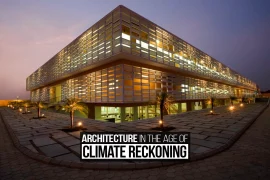
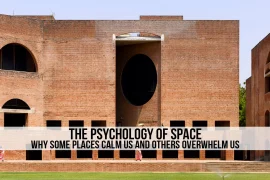
Modern and Contemporary Architecture: Modernist architecture arrived in India only after the country gained independence due to globalisation and the requirement for new public architecture. Where the very concept of a functional city with strictly geometrical layouts and metal and concrete buildings designed by Le Corbusier is to be applied to the city of Chandigarh, representatives of traditions are hardly able to become shocked. Born in India, the architect Charles Correa also fared well with his input in Contextual Modernity as the extension of traditional Indian Architecture wherein modernist architectural features were newly infused into the structures.

In the last few decades, Indian architecture has not contained the novelty of experimenting with materials, technology, and practice of sustainability. Thus, the emphasis has been placed on the perspective aspects of green architecture in the sphere of designing and constructing buildings as well as in such areas as remaking the city’s focus and tourism with the protection of history and archeological heritage. Other aspects that have also often been observed to be incorporated in modern architecture include reviving traditional craftsmanship and methods that have come out as a constant feature, which gives an impression of modern India’s interest in the historical architectural forms.
The initial phase of the adopted style of architecture and the architecture of the more prominent Mughals also does not unveil the architecture of the Indian subcontinent exclusively which has been conceived as culturally assimilative. The kind of art that was dominant before architectural involvement with the Mughals were regional and some Islamic influences but during the Mughals’ rule, there were articulations of Indian and Persian Islamic art that created some of the well-known structures globally. The local architectural development went on and emerged after the Mughal period, particularly from the British period where many styles and building forms were introduced categorising this phase as modern representing the age of positivism, and contemporary representing the age of scepticism. Indian architecture proves the relationship and the impact of architecture with the Indian culture and its history of the particular period and how the inhabitants of India adopted it and reshaped it into a truly representative architectural theme as the country’s population.