Unveiling the Iconic Guangzhou Opera House by Zaha Hadid – Projects That Define Zaha Hadid’s Style
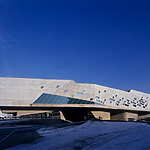
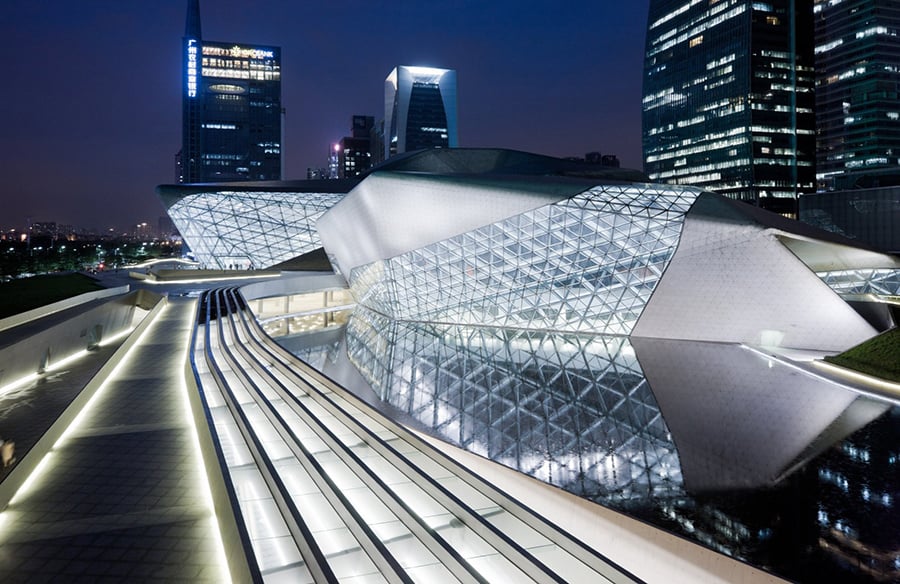
The Guangzhou Opera House, an embodiment of Zaha Hadid’s avant-garde architectural style, stands as a testament to her innovative approach towards design. Situated in the heart of Zhujiang New Town, Guangzhou, China, this architectural masterpiece symbolizes fluidity, dynamism, and futuristic design principles.
Embracing Organic Forms and Fluidity
At first glance, the Guangzhou Opera House captivates with its organic forms, characterized by flowing lines and curvilinear structures. The design exudes a sense of fluidity, reflecting the merging of art, nature, and architecture. Hadid’s vision aimed to create a seamless integration with the surrounding landscape, providing a harmonious blend between the man-made and natural environments.
Structural Ingenuity and Complexity
The Opera House’s construction presented intricate challenges due to its ambitious design. The structure’s irregular and undulating geometry demanded innovative engineering solutions. Advanced computational modeling and engineering techniques were employed to bring Hadid’s vision to life, resulting in a harmonious fusion of form and function.
Interior Spatial Experience
Beyond its striking exterior, the Opera House offers visitors an immersive spatial experience. The interior spaces, characterized by sweeping curves and organic shapes, promote a sense of exploration and intrigue. The interplay of light and shadow, facilitated by strategically positioned openings, contributes to an ever-changing atmosphere within the building.
Cultural Significance and Functionality
Functionally, the Guangzhou Opera House is a cultural hub that hosts various performances and events. Its vast auditoriums, rehearsal halls, and multifunctional spaces cater to a wide array of artistic endeavors, fostering cultural exchange and artistic expression within the community.
Legacy and Impact
Since its inauguration in 2010, the Guangzhou Opera House has become an architectural icon, attracting visitors and architectural enthusiasts from around the world. Its innovative design language has inspired a new wave of architectural exploration, encouraging architects to push the boundaries of design and redefine the possibilities of architectural expression.
Conclusion: A Symbol of Architectural Innovation
In conclusion, Zaha Hadid’s Guangzhou Opera House stands as a pinnacle of architectural innovation. Its fluid forms, structural complexity, and seamless integration with its surroundings make it a testament to Hadid’s pioneering vision. As a defining example of the Zaha Hadid style, this architectural gem continues to inspire and leave an indelible mark on the world of contemporary architecture.