MAXXI Museum of XXI Century Arts – Projects That Define Zaha Hadid’s Style
Zaha Hadid’s MAXXI Museum, located in Rome, Italy, stands as an avant-garde testament to her distinctive architectural style. The MAXXI, an acronym for the Museum of XXI Century Arts, represents a convergence of innovative design, structural complexity, and a commitment to pushing the boundaries of contemporary architecture.
Embodying Zaha Hadid’s Vision
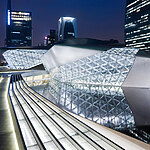
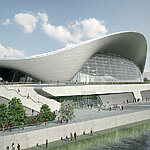
The MAXXI Museum’s design embodies the essence of Zaha Hadid’s architectural language – dynamic, fluid, and unconventional. The structure’s fluid lines and interconnectedness create an organic and futuristic aesthetic that challenges traditional perceptions of museum architecture.
Architectural Ingenuity: A Fusion of Form and Function
At the core of MAXXI’s design philosophy is the seamless integration of form and function. The museum houses exhibition spaces, galleries, auditoriums, and educational facilities, all interconnected through a network of fluid spaces and bridges, fostering a sense of continuity and interaction.
Structural Complexity and Innovation
The design’s complexity posed unique challenges in construction. The museum’s reinforced concrete structure, characterized by curvilinear walls and cantilevered elements, required advanced engineering techniques and computational modeling to achieve the envisioned fluidity and spatial dynamism.
Natural Light and Spatial Fluidity
One of the striking features of MAXXI is the manipulation of natural light. Hadid’s design incorporates skylights, slits, and strategically positioned openings that allow daylight to penetrate deep into the museum’s interior spaces, creating ever-changing light patterns and enhancing the visitor experience.
Functionality and Versatility
MAXXI’s layout prioritizes flexibility, offering adaptable spaces that can accommodate various art installations and exhibitions of diverse scales and formats. The museum’s adaptable design allows for the evolution and transformation of its interior environments, ensuring an ever-evolving experience for visitors.
Legacy and Influence
Since its inauguration in 2010, MAXXI has made a profound impact on the global architectural landscape. Its innovative design language and spatial fluidity have influenced subsequent museum designs, inspiring architects to explore new frontiers in museum architecture and spatial experiences.
Conclusion: A Contemporary Architectural Masterpiece
In conclusion, Zaha Hadid’s MAXXI Museum is a paradigm of architectural innovation and a hallmark of her visionary style. Its fusion of sculptural forms, spatial fluidity, and functional versatility make it an enduring symbol of contemporary architectural excellence, leaving an indelible mark on the world of museum design.