Steps for a green Building – Ways to turn a city green
In the relentless pursuit of sustainable urban living, the architectural landscape plays a pivotal role. As cities burgeon and environmental concerns intensify, the imperative to “Green Your Building” becomes a clarion call for architects and designers. This article delves into the realm of sustainable architecture, unraveling the multifaceted strategies that can be employed to transform conventional buildings into eco-friendly marvels, fostering a verdant and resilient urban environment.
The Foundation of Sustainability: Green Building Practices
1. Energy-Efficient Design
Energy-efficient design is the bedrock of sustainable architecture. Architects, armed with cutting-edge technology and a deep understanding of passive design principles, can optimize a building’s orientation, layout, and insulation to minimize energy consumption. This not only reduces the environmental impact but also translates into long-term cost savings for building owners.
2. Harnessing Renewable Energy Sources
Incorporating renewable energy sources is a hallmark of green building practices. Solar panels, wind turbines, and geothermal systems are viable options that can be seamlessly integrated into the architectural design. By harnessing the power of nature, buildings can generate clean energy, further diminishing their carbon footprint.
3. Sustainable Materials and Construction Methods
The choice of materials and construction methods significantly influences a building’s ecological footprint. From recycled and locally sourced materials to low-impact construction techniques, architects can make conscientious decisions that promote sustainability. Timber from responsibly managed forests and recycled steel are just a few examples of eco-friendly building materials gaining prominence in the industry.
The Green Envelope: Eco-Friendly Facades and Roofscapes
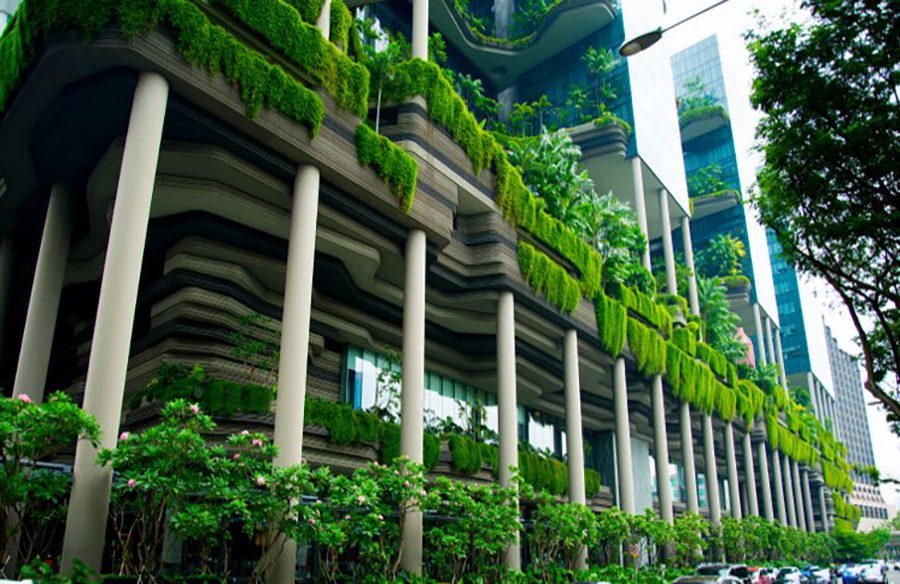
1. Living Green Facades
Living green facades, adorned with climbing plants or vegetation, not only enhance the aesthetic appeal of buildings but also contribute to energy efficiency. These green walls act as natural insulators, reducing the need for artificial heating and cooling, while also mitigating the urban heat island effect.
2. Rooftop Gardens and Green Roofs
Transforming rooftops into gardens is a transformative approach to green architecture. Green roofs not only provide a haven for biodiversity but also offer insulation, stormwater management, and improved air quality. Architects can leverage these spaces for communal gardens, recreational areas, or even urban farms, adding functionality to the ecological benefits.
3. Solar-Responsive Building Skins
Innovative solar-responsive building skins are revolutionizing the way buildings interact with sunlight. These dynamic facades adapt to changing light conditions, optimizing energy absorption and utilization. This technology not only enhances energy efficiency but also showcases the seamless integration of sustainability and cutting-edge design.
Efficient Water Management: A Crucial Element in Sustainable Architecture
1. Rainwater Harvesting Systems
Implementing rainwater harvesting systems is a sustainable solution to address water scarcity issues. Architects can design buildings with integrated rainwater collection systems, providing a renewable source for non-potable water needs such as irrigation, flushing toilets, and even for cooling systems.
2. Greywater Recycling
Greywater recycling involves treating and reusing water from sinks, showers, and washing machines. Architects can incorporate greywater systems into building designs, reducing water consumption and lessening the burden on municipal water supplies. This innovative approach aligns with the principles of circular economy, promoting resource efficiency.
3. Sustainable Landscaping and Permeable Surfaces
Beyond the building envelope, architects can contribute to sustainable water management through thoughtful landscaping. The use of native, drought-resistant plants and permeable surfaces allows rainwater to infiltrate the soil, reducing runoff and preventing water pollution. This not only enhances the aesthetic appeal of the surroundings but also supports local ecosystems.
Smart Technologies: Pioneering the Future of Green Buildings
1. Building Automation Systems
Intelligent building automation systems optimize energy usage by regulating lighting, heating, ventilation, and air conditioning (HVAC) systems based on occupancy and environmental conditions. Architects can integrate these systems into their designs to create energy-efficient, responsive buildings that adapt to the needs of occupants.
2. IoT-Enabled Sustainable Architecture
The Internet of Things (IoT) has opened new frontiers in sustainable architecture. Smart sensors and connected devices enable real-time monitoring of energy consumption, indoor air quality, and other environmental parameters. This data-driven approach empowers architects to design buildings that continuously evolve to meet sustainability goals.
3. Adaptive Reuse and Retrofitting
A sustainable approach to architecture goes beyond new constructions. Architects can contribute to environmental conservation by repurposing existing structures through adaptive reuse and retrofitting. Transforming outdated buildings into energy-efficient spaces not only preserves architectural heritage but also reduces the demand for new construction materials.
The Economic Viability of Green Buildings: A Win-Win Proposition
1. Return on Investment (ROI) for Sustainable Buildings
While the initial costs of implementing green building practices may seem daunting, the long-term benefits far outweigh the investment. Energy savings, reduced operational costs, and increased property value contribute to a favorable ROI for building owners. Sustainable buildings often attract eco-conscious tenants, further enhancing their economic viability.
2. Government Incentives and Certification Programs
Governments around the world are increasingly recognizing the importance of sustainable architecture. Incentive programs and certification frameworks, such as LEED (Leadership in Energy and Environmental Design) and BREEAM (Building Research Establishment Environmental Assessment Method), provide recognition and financial incentives for green building initiatives.
3. Social Responsibility and Corporate Image
In an era where corporate social responsibility is paramount, adopting green building practices enhances a company’s image. Businesses that prioritize sustainability not only contribute to environmental conservation but also resonate with consumers who value eco-friendly practices. This positive perception can lead to increased brand loyalty and market competitiveness.