Gothic Architecture-1100 AD to 1450 AD – Timeline of prominent architectural styles
In the annals of architectural history, the Gothic period, spanning from 1100 AD to 1450 AD, stands as a testament to the human spirit’s boundless creativity and quest for transcendence. Characterized by soaring spires, pointed arches, and intricate ornamentation, Gothic architecture emerged as a revolutionary departure from its Romanesque predecessor. This article delves into the nuanced details of Gothic architecture, exploring its historical context, defining features, and enduring legacy.
Historical Context: Shaping an Era
Rise of Gothic Amidst Medieval Europe
Gothic architecture found its roots in medieval Europe, flourishing during the High and Late Middle Ages. Its emergence was closely tied to the societal and cultural shifts of the time. As Europe sought to express its newfound economic prosperity and spiritual fervor, a departure from the heavy and simplistic Romanesque style became imperative.
Defining Features: Elegance in Precision
-
Pointed Arches and Ribbed Vaults
One hallmark of Gothic architecture is the pointed arch. Unlike the rounded arches of the Romanesque era, Gothic arches soar upward, creating a sense of verticality and aspiring towards the heavens. This architectural innovation not only served aesthetic purposes but also distributed weight more efficiently, allowing for the creation of larger, more open spaces.
Ribbed vaults, another defining feature, enhanced structural integrity. These intersecting arches and ribs formed a skeletal framework, distributing the load of the roof and enabling the construction of lofty cathedrals and chapels.
-
Flying Buttresses
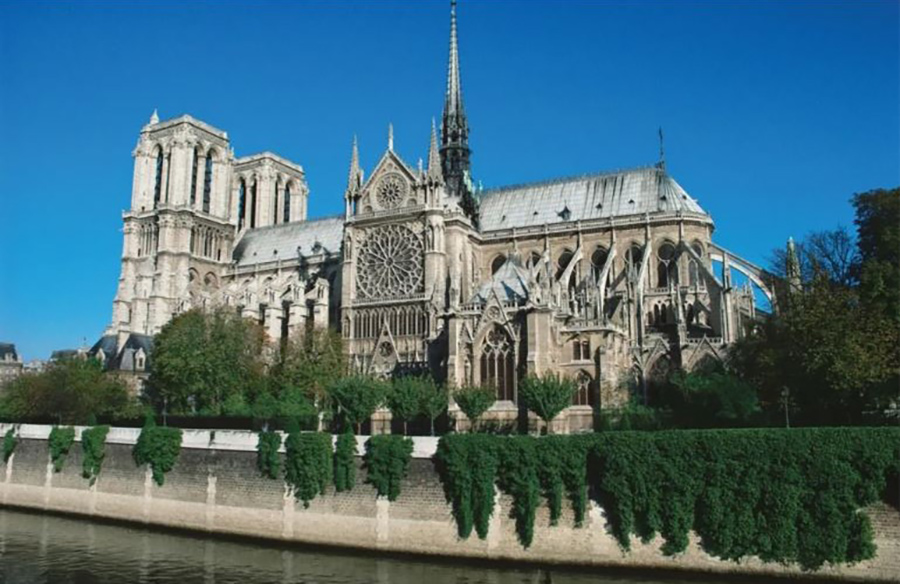
Gothic architects ingeniously incorporated flying buttresses into their designs. These external, arched supports counterbalanced the outward thrust exerted by the vaulted ceilings, preventing structural deformation. The flying buttresses not only served a practical purpose but also added a distinctive and dramatic visual element to Gothic cathedrals.
-
Stained Glass Windows: Divine Illumination
Stained glass windows, a hallmark of Gothic architecture, transformed cathedrals into kaleidoscopes of light. These intricate windows depicted biblical narratives, allowing natural light to filter through a mesmerizing array of colors. The interplay of light and glass served as a metaphor for divine illumination, captivating worshippers and creating a spiritually immersive experience.
Enduring Legacy: Timeless Beauty and Cultural Impact
-
Iconic Examples of Gothic Architecture
Several architectural masterpieces from the Gothic era continue to awe and inspire. The Notre-Dame Cathedral in Paris, with its intricate rose windows and towering spire, exemplifies the grandeur of Gothic design. The Cologne Cathedral in Germany, an epitome of meticulous craftsmanship, stands as a testament to the enduring legacy of the Gothic architectural style.
-
Influence on Later Styles
Gothic architecture’s influence transcended its temporal boundaries, leaving an indelible mark on subsequent architectural movements. The Gothic Revival of the 19th century saw architects drawing inspiration from medieval Gothic designs, leading to the construction of iconic structures like the Westminster Palace in London and the United States Capitol in Washington, D.C.
Educational Significance: Understanding Gothic Architecture Today
-
Preservation and Restoration Efforts
Preserving and restoring Gothic structures is not merely an architectural endeavor but a cultural responsibility. Institutions and organizations around the world dedicate resources to the conservation of these historical gems, ensuring that future generations can marvel at the ingenuity of their forebears.
-
Educational Programs and Tours
To deepen public appreciation for Gothic architecture, educational programs and guided tours are essential. Architectural enthusiasts, students, and tourists alike can benefit from immersive experiences that delve into the historical, cultural, and artistic dimensions of Gothic structures.
Conclusion: A Majestic Symphony of Stone and Light
As the sun sets on the Gothic era, its architectural legacy remains eternally illuminated. The pointed arches, ribbed vaults, and soaring spires of Gothic cathedrals stand as an enduring testament to the indomitable human spirit and its pursuit of beauty and transcendence. From the divine glow of stained glass windows to the awe-inspiring height of cathedral spires, Gothic architecture continues to captivate and inspire, inviting us to marvel at the boundless possibilities when art and engineering converge in harmony.
In exploring the intricate details and historical significance of Gothic architecture, one cannot help but be drawn into a majestic symphony of stone and light, echoing through the corridors of time. It is a legacy that beckons us to not only admire the past but also to preserve and cherish the architectural marvels that have shaped our cultural landscape for centuries.