Awaji Yumebutai, Hyogo – 15 Projects by Tadao Ando
In the realm of architectural marvels, the Awaji Yumebutai in Hyogo, Japan, stands as a testament to the brilliance of Tadao Ando, a maestro in the field of architecture. This awe-inspiring structure, with its meticulous design and thoughtful integration into the landscape, has become a symbol of innovation and sustainability in the architectural world.
The Visionary Behind Awaji Yumebutai
Tadao Ando, a Pritzker Prize-winning architect renowned for his minimalist approach and mastery of concrete, envisioned Awaji Yumebutai as a multifunctional complex that seamlessly blends with the natural surroundings. The project, completed in 2000, is a harmonious convergence of architecture, urban design, and interior design.
Typology and Built Use
1. Architectural Marvel Unveiled
Awaji Yumebutai is a sprawling complex that spans 100,000 square meters on Awaji Island. The primary purpose of this architectural gem is to serve as a memorial park and conference center. It has emerged as a hub for cultural events, conferences, and a retreat into nature’s serenity.
2. The Integration of Nature and Design
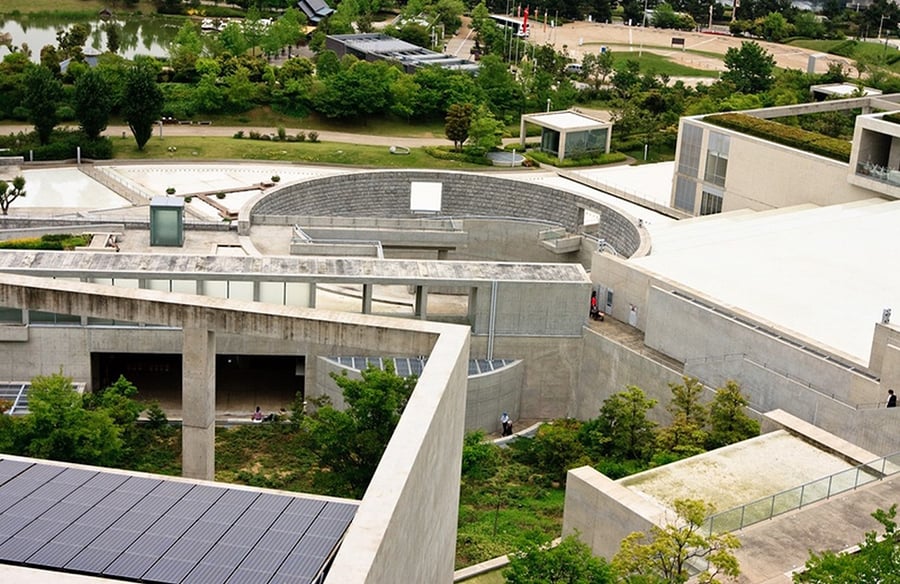
At the core of Ando’s design philosophy is the seamless integration of architecture with its natural surroundings. Awaji Yumebutai ingeniously incorporates a series of terraced gardens that cascade down the hillside, creating a breathtaking visual spectacle. The terraces not only enhance the aesthetic appeal but also serve as a vital part of the building’s sustainable design, promoting biodiversity and ecological balance.
Architecture and Planning
1. Concrete Elegance
Tadao Ando’s signature use of exposed concrete is prominently featured in Awaji Yumebutai. The monolithic structures exude a sense of strength and permanence while maintaining a delicate balance with the surrounding greenery. The stark contrast between the raw concrete and lush vegetation highlights Ando’s mastery in creating a dialogue between man-made structures and nature.
2. Spatial Harmony
Awaji Yumebutai is a study in spatial harmony. The architect meticulously planned the arrangement of spaces, ensuring a seamless flow between the indoor and outdoor areas. The conference center, exhibition halls, and memorial spaces are interconnected, creating a sense of unity and continuity throughout the complex.
Interior Design
1. Serene Interiors
The interior spaces of Awaji Yumebutai reflect Ando’s commitment to simplicity and tranquility. Clean lines, minimalistic furniture, and abundant natural light characterize the interiors. The design allows visitors to experience a sense of calmness and contemplation, fostering an environment conducive to reflection and cultural appreciation.
2. Functional Elegance
Every element of the interior design serves a purpose. From the choice of materials to the arrangement of furniture, each decision contributes to the overall functionality and aesthetics of the space. Awaji Yumebutai stands as a testament to the belief that good design is not just about appearances but also about enhancing the user experience.
Urban Design and Facade Details
1. Contextual Integration
Awaji Yumebutai’s urban design is a case study in contextual integration. Rather than imposing itself on the landscape, the complex adapts to the natural contours of the site. This approach not only preserves the existing environment but enhances it, creating a symbiotic relationship between architecture and nature.
2. Facade as Art
The facade of Awaji Yumebutai is a work of art in itself. Ando’s use of exposed concrete, combined with carefully placed openings and strategic lighting, creates a play of shadows and textures. The result is a facade that evolves throughout the day, responding to changing light conditions and offering a dynamic visual experience for visitors.
The Legacy of Awaji Yumebutai
Awaji Yumebutai, Hyogo, is more than a structure; it is a living testament to the marriage of architecture and nature. Tadao Ando’s visionary approach has left an indelible mark on the architectural landscape, inspiring future generations to consider the environmental impact of their designs.
As we marvel at the concrete elegance of Awaji Yumebutai, let us also reflect on the profound lessons it imparts – the importance of harmony with nature, the power of thoughtful design, and the enduring impact of architectural brilliance.