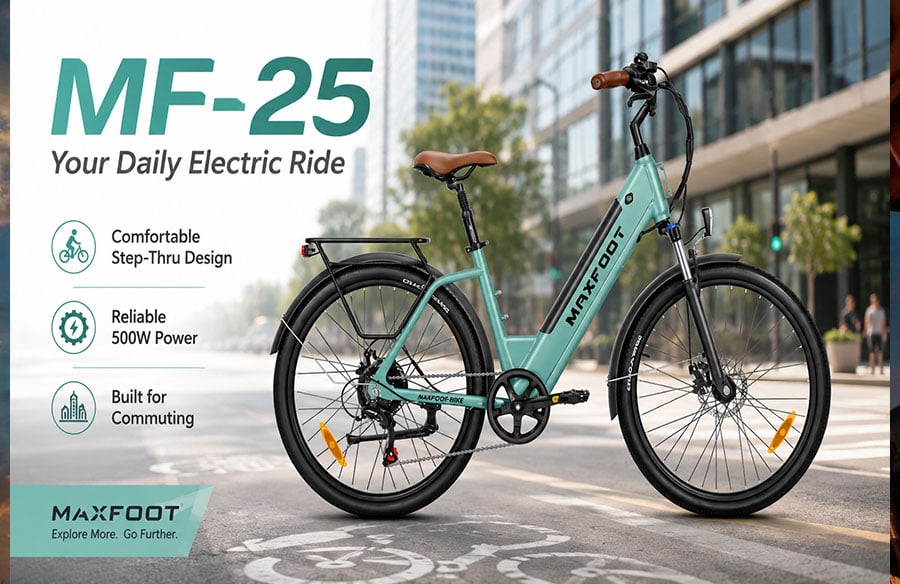
For many riders, an an electric commuter bike is not the one with the biggest motor or the largest battery. It is the one that feels easy to use every day, comfortable on rough streets, practical for carrying cargo, and affordable enough to make sense as a car alternative.
The Maxfoot MF-25 is built around that idea. At a current clearance price of $659, it combines a 500W rated motor, up to 1000W peak output, a removable 500Wh battery, front suspension, a suspension seatpost, Shimano 7-speed gearing, puncture-protection tires, and a 55-pound rear rack.
Those numbers are already competitive, but the real value of this model comes from how the smaller details work together.
Maxfoot MF-25 Key Specifications
| Specification | Maxfoot MF-25 |
| Motor | 500W Rated / Up to 1000W Peak |
| Battery | 500Wh Removable Lithium-Ion |
| Frame | Step-Through Aluminum Alloy |
| Fork | Suspension Fork with Lockout |
| Seatpost | Suspension Seatpost |
| Drivetrain | Shimano 7-Speed |
| Tires | 26 x 1.95-Inch Puncture-Protection Tires |
| Rear Rack Capacity | 55 lbs |
| Maximum Payload | 300 lbs |
| Display | Color LCD |
| Lighting | LED Headlight and Brake-Sensing Taillight |
| Recommended Rider Height | 5’3″–7’3″ |
| Current Price | $659 |
A Real 500W Commuter Motor
This model uses a 500W rated brushless motor with peak output reaching up to 1000W.
That distinction matters. Peak wattage shows what a motor can deliver briefly, while rated power better represents its normal operating capability. For daily commuting, a real 500W-class setup is more meaningful than an oversized marketing number.
It gives the bike enough assistance for stop-and-go traffic, moderate hills, and riding with cargo. The higher peak output can provide extra support when the rider needs stronger acceleration.
For an urban commuter, this is a practical balance between usable power, efficiency, and control.
Comfort From Both the Front and Rear
One of the more attractive features of this model is its dual comfort setup.
The bike uses a front suspension fork to absorb impacts from cracks, rough pavement, driveway entrances, and uneven roads. It also includes a suspension seatpost, helping reduce vibration reaching the rider from the rear.
Many lower-priced commuter e-bikes offer only front suspension or rely entirely on the tires for comfort. The bike addresses both ends.
The fork also includes a lockout feature, so riders can choose a firmer setup on smoother roads.
For someone riding several miles to work or making regular neighborhood trips, this kind of comfort can matter more than another 5 mph of theoretical top speed.
A Step-Through Frame for Everyday Convenience
This model uses a low step-through aluminum frame.
That makes getting on and off easier, especially when the rear rack is loaded with groceries or a bag. It can also be helpful for riders who simply do not want to swing a leg over a high top tube several times a day.
Maxfoot lists the recommended rider-height range at approximately 5’3″ to 7’3″, giving the bike a broad fit range.
For a commuter bike that may be shared within a household, that flexibility is useful.
This adaptability in personal transport mirrors broader trends in residential architecture and interior design, where flexible spaces and multi-functional furniture are increasingly valued. As urban living spaces become more compact, the design of items that serve diverse users and can be easily stored or integrated into a home’s aesthetic becomes a key consideration for architects and designers aiming to optimize utility and livability.
A 55-Pound Rear Rack Adds Real Utility
The bike comes with a rear rack rated for about 55 pounds.
That immediately expands what the bike can do.
With suitable bags or baskets, riders can carry groceries, work equipment, packages, or other daily items without wearing a heavy backpack.
The total maximum payload is rated at 300 pounds, including the rider and cargo.
This is one of the features that helps turn the bike from a recreational e-bike into a real transportation tool.
A commuter bike becomes much more useful when it can handle the same short trips that would otherwise require a car.
Tires and Wheels Built for City Roads
This model uses 26 x 1.95-inch puncture-protection tires.
This size keeps the bike relatively efficient and easy to handle while still providing enough volume for typical city streets and neighborhood roads.
The specification sheet also highlights double-wall rims, which add strength compared with simpler single-wall designs.
These are not glamorous features, but they matter over time. Commuter bikes deal with potholes, curbs, uneven pavement, and regular cargo loads.
A stronger wheel setup can reduce the likelihood of deformation and help the bike feel more solid during everyday use.
Battery Protection and Electrical Details
The bike uses a removable 500Wh lithium-ion battery.
A removable battery is useful for riders who live in apartments, park outside, or prefer charging indoors rather than bringing the entire bike near an outlet.
Maxfoot also emphasizes the internal battery protection and heat-management design used in the pack.
The specification materials describe a heat-conductive potting approach designed to help stabilize the cells, improve heat transfer, and protect internal components from moisture and contaminants. The bike also uses higher-specification copper wiring rather than reducing conductor size simply to save cost. These details are not visible during a test ride, but they are part of the electrical system riders depend on every day.
Such attention to hidden engineering and material science is fundamental in all areas of design, from the structural integrity of a building to the efficiency of its energy systems. Just as architects specify advanced insulation or smart climate controls, the choice of materials and internal design for components like batteries and wiring ensures long-term performance and safety, contributing to the overall sustainability and reliability of the product in its environment.
Safety Features for Commuting
This model includes an integrated LED headlight and a rear light with brake-sensing functionality.
The brake-sensing taillight is especially useful in traffic because it communicates when the rider is slowing down rather than functioning only as a constant rear light.
A color LCD display provides information such as speed, battery level, riding distance, and assist mode.
The Shimano 7-speed drivetrain also gives the rider mechanical gear options when climbing, riding without much assistance, or adjusting cadence for different road conditions.
Why this model Makes Sense at $659
The strongest argument for this model is value.
At $659, it includes a 500W rated motor, up to 1000W peak output, a removable 500Wh battery, front suspension, suspension seatpost, Shimano 7-speed gearing, puncture-protection tires, double-wall rims, integrated lighting, brake-sensing taillight, a 55-pound rear rack, and a 300-pound payload rating.
It also includes smaller details that are easy to overlook when comparing e-bikes online: battery protection, quality wiring, a step-through frame, and practical commuter accessories.
This model is not trying to win by offering one extreme specification. Its strength is balance.
It has enough power for normal commuting, enough cargo capacity for errands, enough comfort for everyday riding, and enough practical equipment to make short trips easier.
For US riders looking for an affordable electric commuter bike in 2026, the Maxfoot MF-25 offers a strong combination of performance, comfort, cargo capability, and everyday usability.
At its $659 clearance price, it is especially compelling for buyers who want a practical e-bike without paying premium-brand prices.