
Manufacturers face growing demands for complex parts, shorter lead times, and tighter tolerances. Traditional machining methods can require multiple setups to complete a single component, which may increase production time and create additional opportunities for errors. These challenges can affect efficiency, quality, and overall project costs.
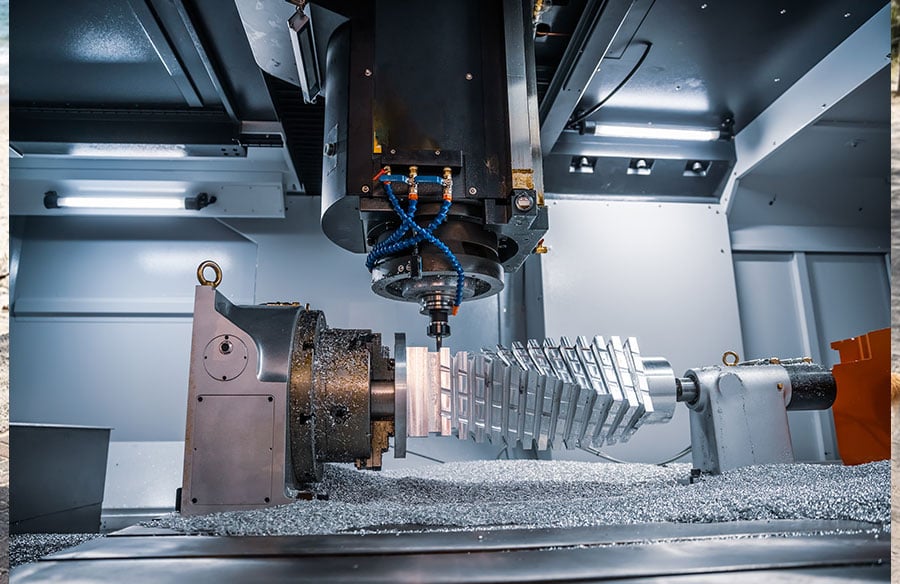
Advanced machining equipment helps address these concerns. A 5 axis machining centre allows manufacturers to machine multiple surfaces in a single setup, helping production teams improve workflow efficiency and support increasingly complex manufacturing requirements.
Reduce Setup Time Across Production Runs
Every machine setup requires time, labor, and attention to detail. When a component needs multiple setups, production schedules can become longer and more difficult to manage. 5-axis technology allows operators to access different sides of a part without repositioning it repeatedly. Fewer setups help reduce downtime and support a more efficient manufacturing process for complex components.
Support Complex Part Geometries
Industries such as aerospace, medical, and automotive manufacturing frequently require parts with intricate shapes and detailed features. Traditional machining approaches may struggle to reach certain surfaces efficiently. A 5-axis system allows cutting tools to approach parts from multiple angles. This capability helps manufacturers produce components that would otherwise require additional operations or specialized equipment.
Improve Part Accuracy and Consistency
Part movement between multiple setups can introduce small alignment variations. Even minor discrepancies may affect dimensional accuracy and create quality concerns. A 5 axis machining centre helps minimize these issues by reducing repositioning requirements. Maintaining a single setup for more machining operations can support greater consistency throughout the manufacturing process.
Expand Opportunities for New Business
Manufacturers frequently encounter customer requests for parts that feature complex contours, tight tolerances, and intricate geometries. Equipment limitations can make it difficult to pursue these opportunities or compete for specialized projects. 5-axis machining technology helps companies expand their manufacturing capabilities and pursue a wider range of work. Greater production flexibility can support entry into industries such as aerospace, medical, energy, and defense, where advanced machining requirements are common.
Increase Production Flexibility
Manufacturing requirements can change quickly as customer demands evolve. Facilities may need to produce prototypes, low-volume parts, or highly customized components within short timeframes. 5-axis machining technology provides flexibility for a broad range of applications. Manufacturers can adapt to different project requirements without relying on multiple machines or extensive process changes.
Enhance Surface Finish Quality
Complex parts frequently contain curved surfaces, deep cavities, and detailed contours. These features may require smooth finishes to meet customer specifications or functional requirements. Advanced tool positioning capabilities help maintain consistent contact between the cutting tool and the workpiece. This approach can contribute to improved surface quality and reduce the need for secondary finishing operations.
Materials Commonly Processed with 5-Axis Machines
A major advantage of 5-axis technology is its ability to handle a wide range of materials used across different industries. Manufacturers should confirm that machine capabilities align with the materials processed in their facility.
- Aluminum for aerospace and automotive parts
- Titanium for medical and aerospace applications
- Stainless steel for industrial components
- Tool steel for molds and dies
- Brass for precision fittings
- Copper for electrical components
- Engineering plastics for prototypes and specialized parts
Material requirements can influence spindle selection, tooling strategies, and machine specifications.
Manufacturers invest in CNC 5-axis machining technology because it supports greater efficiency, improved accuracy, enhanced flexibility, and the ability to produce complex components. Reduced setup requirements and advanced machining capabilities allow production teams to handle demanding projects more effectively. As product designs continue to become more sophisticated, 5-axis technology remains an important solution for manufacturers seeking to improve productivity and maintain high-quality standards.