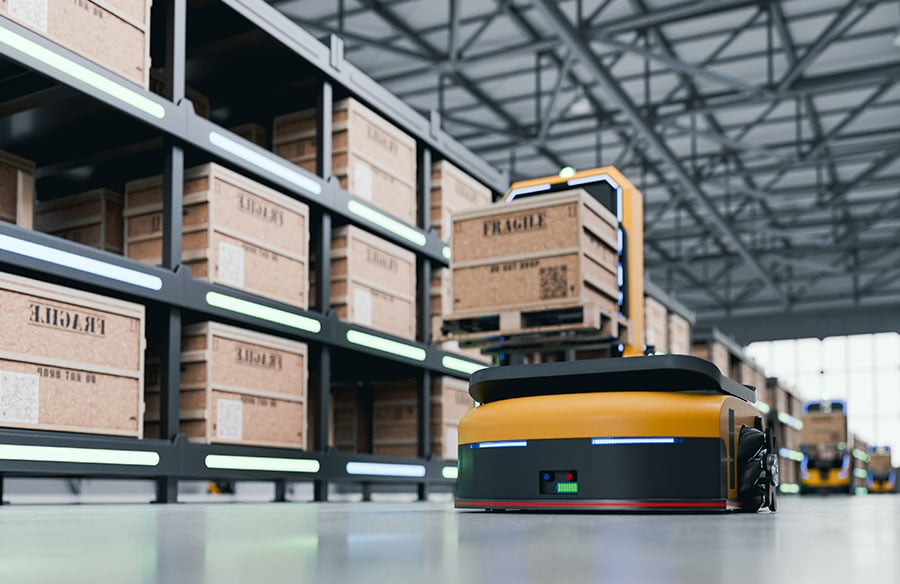
With the current trend of smart automation, warehouses are becoming increasingly intelligent to boost productivity and minimize unnecessary downtime and operational costs. Conventional battery-based systems may not be suitable for use in a warehouse due to the need for the automatic equipment to remain operational throughout the shift. Compared to other technology, lithium-ion has the ability to supply constant power and charge quickly in a wide range of industrial applications. The advanced battery technology increases warehouse efficiency by enabling seamless operations and enhancing the performance of automated material handling systems.
As intelligent warehouse technology becomes more widespread, businesses are increasingly aware of the need for effective energy storage to keep things running smoothly each day. Advanced battery management systems also provide the ability to monitor battery performance and provide insight for operators to help them detect potential issues before they begin to impact vital warehouse operations. As a result, lithium-ion battery technology is increasingly being adopted as a key enabler in contemporary warehouses aiming for efficiency and sustainability.
Powering A GVs Reliably
AGVs are a critical component to moving inventory between storage areas and other warehouse workstations. The cars need reliable energy sources to keep them moving steadily through the challenging warehouse operations with minimal downtime. By implementing lithium-ion AGV batteries (170), warehouse operators can enhance the availability of their vehicles and reduce battery charging time. Unlike traditional lead-acid batteries, lithium-ion batteries can accept charge during set times of the day or when the operation is slower. This versatility enables AVs to pick up more deliveries without having to wait for long battery replacement or maintenance processes.
Predictable performance from automated systems can also be achieved as the battery charge level steadily drops during operation, thanks to consistent voltage delivery. Therefore, warehouse managers have a better chance to schedule transportation activities more effectively while also ensuring the steady movement of inventory in other operational departments.
Minimizing Charging Downtime
When automated machines are unavailable during key material handling and distribution operations, it can cause a drastic drop in productivity. In most cases, lithium-ion batteries can be charged more quickly than traditional lead-acid batteries with a well-designed industrial charging system.
They can be charged with partial loads, which allows equipment operators to charge when the warehouse is temporarily not operating. This can minimize the need for long charging times, which can disrupt planned order fulfillment and inventory processing. Today’s charging systems also can manage energy delivery based on equipment needs and the electrical capacity of warehouses.
Smart charging solutions can help companies sustain high equipment uptime without necessarily increasing their automated vehicle fleet and staff sizes. Fewer charging disruptions in the end lead to seamless processes and more uniform productivity in hectic warehouse settings that demand tight schedules.
Improving the Safety of Batteries in Warehouses
Automated equipment is joining workers in the busy storage and distribution environment, and warehouse safety becomes even more crucial. Today’s lithium-ion battery systems feature smart monitoring, which constantly analyzes battery operating temperature, voltage, and conditions. These battery management systems are built-in and assist in detecting when the battery system is performing abnormally and in taking protective measures if operating conditions are outside safe limits. Sealed lithium-ion systems do not require routine handling of acid as in flooded lead-acid systems and minimize maintenance-related exposure to hazardous materials.
While suitable charging apparatus and thermal protection continue to be important for ensuring the safe operation of batteries in demanding industrial applications, automated monitoring can also enable maintenance personnel to delve into potential issues before they become major challenges to equipment or operations. These protective measures contribute to safer work environments and the consistent performance of warehouses’ automated material handling systems.
Getting Ready for the Automation of the Future in Smart Warehouses
Robotic systems, smart inventory management, and safe automated transportation will be more and more crucial to future warehouse endeavors. Lithium-ion batteries, which are already being used in AGVs, are an important building block to back these sophisticated automation functions. Battery monitoring platforms can be connected with fleet management software to enhance charging plans and recognize patterns in equipment performance.
Predictive maintenance capabilities can also be used to minimize downtime and optimize the use of the warehouse resources. With the rise of automation, scalable energy infrastructure will play a greater role in warehouse operations that are efficient and reliable. Before investing in new automated material handling equipment, businesses should consider factors such as battery size, charging compatibility, and battery life. When well installed, lithium-ion battery systems could boost productivity in the warehouse and help to improve long-term, sustainable operations.