A design team can agree on a material palette and still imagine very different experiences of the same space. One person sees a quiet entrance sequence; another expects dramatic lighting and a fast reveal. Early concept visuals can expose those differences before they become expensive production decisions.
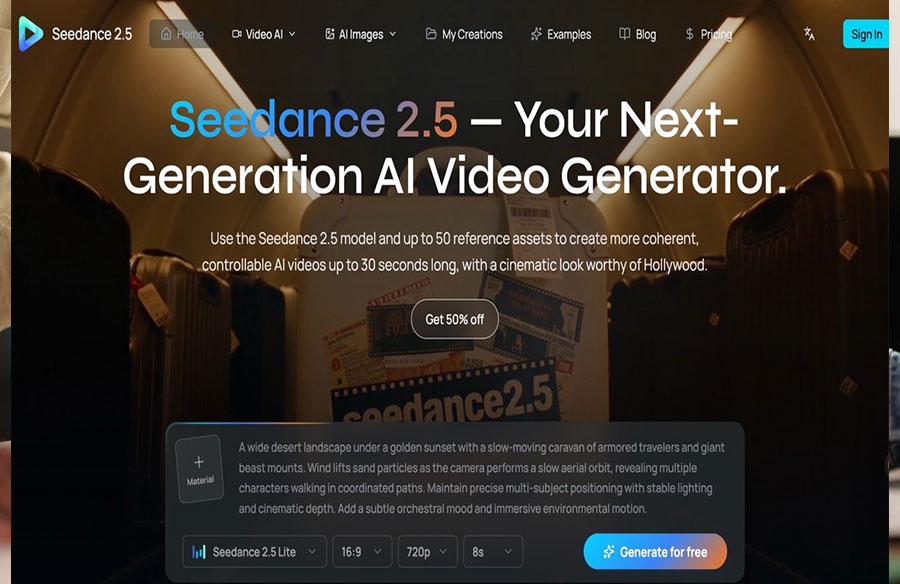
A project using Seedance 2.5 can be framed as a study of movement, atmosphere, materials, and presentation. Keep its role clear: it explores a design direction that still needs development and verification.
Define the question the concept should answer
Choose a focused question instead of requesting a complete design visualization. For a hypothetical pavilion study, the question might be: “Should the arrival feel open and immediate, or sheltered and gradual?”
That question shapes the shot, lighting, and sequence. An open arrival may begin with a clear view of the main space; a gradual arrival may introduce it through a narrower approach.
Write what the visual cannot establish. It will not verify structural feasibility, dimensions, accessibility, or construction details. Those questions require the appropriate drawings, models, and professional work.
Establish a small set of design constants
Identify the features shared by all options: the pavilion’s broad massing, a timber palette, a light roof, and the surrounding landscape.
Keep those constants stable so the review can focus on the arrival experience. If one option changes the building shape and another changes only the camera, the comparison becomes uneven.
Use approved references where supported by the interface. Assign each reference a purpose, such as material tone or environmental atmosphere, and resolve conflicts before generation.
Explore movement as an experience
Camera movement can suggest how a person encounters the concept. A slow approach can reveal a threshold, while a stationary view may make an internal relationship easier to compare.
Describe a plausible route. Avoid a camera path that passes through walls, furniture, or structural elements unless the team intentionally wants an abstract presentation.
Treat the route as a communication device. Generated movement may reveal an interesting idea, but it does not confirm that the physical space supports the same circulation.
Study atmosphere with controlled variations
Keep the viewpoint and design constants similar while changing one atmospheric condition. Compare soft morning light with a more shaded scene, or a quiet environment with modest background activity.
Label each version by the decision it explores. “Morning arrival” and “shaded approach” provide a clearer basis for discussion than “option one” and “option two.”
Do not assume that a pleasing lighting effect is physically achievable in the proposed design. Record it as an intention to investigate through more reliable simulation or site-specific analysis where needed.
Review materials without treating them as specifications
A clip may help discuss whether timber should feel pale, warm, or weathered. It can also suggest relationships between matte and reflective surfaces.
Inspect whether those materials remain in the intended locations. A roof changing from matte to metallic midway through the shot can confuse the discussion.
Translate the chosen direction into actual material samples and specifications before production. A generated texture does not establish a supplier, finish, durability rating, or construction method.
Use the visual in a structured concept presentation
Ask reviewers about the question set at the beginning. Does the arrival feel gradual? Which moment explains the entrance? What detail creates an unintended impression?
Record specific observations rather than simply ranking beauty. A viewer may prefer one option because it shows more surrounding landscape, which could be a framing issue rather than a design preference.
Keep unresolved questions beside the clip. This prevents an exploratory image from being mistaken for a fully approved proposal.
Move from the concept to verified production work
Save the selected visual direction with the brief and reference set. Translate it into a storyboard, a more accurate model, or the next presentation plan.
When sharing outside the design team, identify the footage as a concept study. The value lies in making choices visible early, then carrying those choices into the technical and production work that can substantiate them.