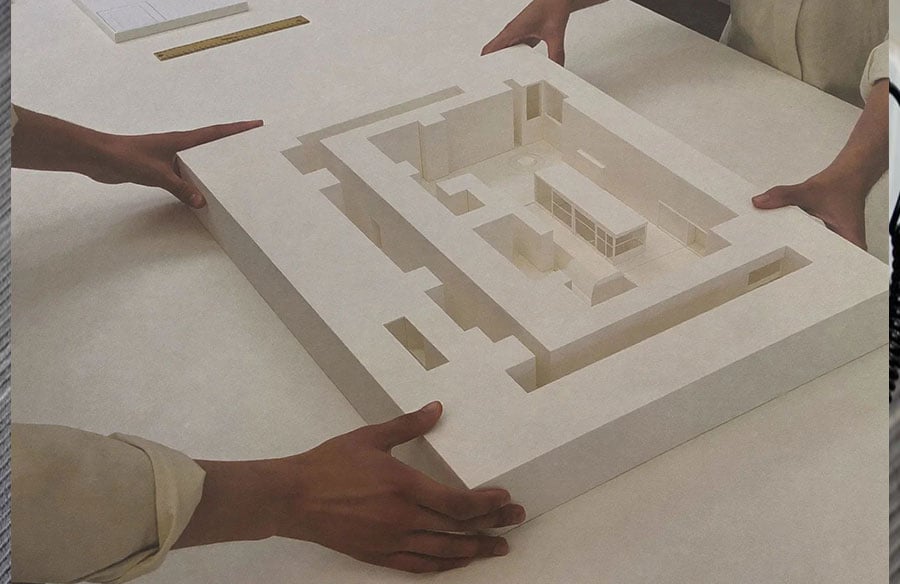
Two architects start a studio together. The work is split by instinct, the money by habit, and for two years nothing needs writing down. Then an American client appears, a US company is formed to invoice through, and a document nobody discussed becomes the most consequential paper in the practice: the operating agreement.
It is the only place where a studio’s internal arrangements are actually recorded. The state does not keep them. The formation certificate says almost nothing. Whatever the two founders assumed stays an assumption until this document says otherwise.
What it governs
An operating agreement is an internal contract between the owners of a limited liability company. Typically it sets out who owns what percentage, how profits and losses are allocated, who may sign and commit the company, what happens when one owner wants out, and how the company ends. It is not filed with the state, which is precisely why it gets postponed.
For a design practice, four of its clauses do most of the work.
- Ownership against contribution. One partner puts in money, the other puts in time and the client relationships. Equal ownership is a choice, not a default, and the agreement is where that choice is made explicit.
- Distributions against profit. How much leaves the company, and when, is separate from how profit is allocated on paper. Studios with uneven project cycles need this written down before a lean quarter tests it.
- Authority. Which decisions one partner can take alone: signing a contract, hiring, committing to a fee. Most partnership arguments are authority arguments wearing another costume.
- Exit. What a departing partner is owed, how the share is valued, and whether they may sell it to someone the other partner has never met.
Why banks keep asking for it
Even a single-owner studio should have one. When a US company applies for a bank account, the institution verifies who ultimately owns and controls it, and the operating agreement is the document that answers the question cleanly. Formation certificates in states that do not list members prove the company exists without proving who stands behind it. Applications stall on exactly that gap.
Consistency matters as much as content. The names, ownership percentages and addresses should match what appears on the formation filing, the EIN confirmation letter and the application itself.
The clause architects forget
Intellectual property. A studio’s drawings, models and design development files are its main asset, and the agreement should say whether they belong to the company or to the individual who made them, and what a departing partner may take or reuse. Two architects who separate without having settled this discover that their portfolios overlap and their positions do not.
Equally, if the practice works with external consultants or a local firm in the client’s country, the agreement should be clear that those arrangements sit in separate contracts rather than being implied by the partnership.
What the company does not confer
A US company is a contracting and banking structure. It does not grant the right to practise architecture. Licensure in the United States is handled state by state, the authority to use the title and to stamp drawings rests with individually licensed architects, and many states apply their own requirements to the firm as well as the individual. International studios normally work alongside a locally licensed architect of record, and the commercial agreement with that firm is a separate document from the one between the partners.
Check the position in the specific state where the project sits before signing anything. It is a question for that state’s licensing board, and it does not have a single national answer.
Keeping it alive
The agreement should be revisited when ownership changes, when a third partner joins, when the studio opens a second office, and when the work shifts into a different kind of commission. A document describing a two-person practice from four years ago is of limited help to a six-person one.
The formation layer itself is routine and can be delegated: the state filing, the registered agent, a US business address and the Employer Identification Number, which owners without a US Social Security Number apply for by phone, fax or mail rather than online. CORPBOLT is one of the services that handles that administrative layer for studios based outside the United States. What no service can do is decide the terms between two owners, and what a two-owner operating agreement has to settle is a better starting point than a blank template.
Drafting the agreement is the part worth slowing down for. An hour spent deciding what happens if one of you leaves is the cheapest professional insurance a young practice will ever buy, and the only moment when both partners are certain to be reasonable about it is now.