The stone gets chosen first. The engraving, the granite color, the shape — those decisions absorb most of a family’s attention during the memorial planning process, and reasonably so. They’re permanent. They’re large. They represent the most visible statement the family makes about the person being remembered.
What gets chosen last, if it gets chosen at all, is the vase.
That’s a mistake — not a catastrophic one, but a noticeable one. Because the space immediately around and beside a grave marker is where the living part of the memorial happens. Fresh flowers on a birthday. A small arrangement left after a Sunday visit. A ceramic holder full of marigolds on Día de los Muertos in California communities where that tradition is observed. The visual relationship between the stone and a filled marble cemetery vases placed beside it is the difference between a memorial that looks tended and one that looks abandoned.
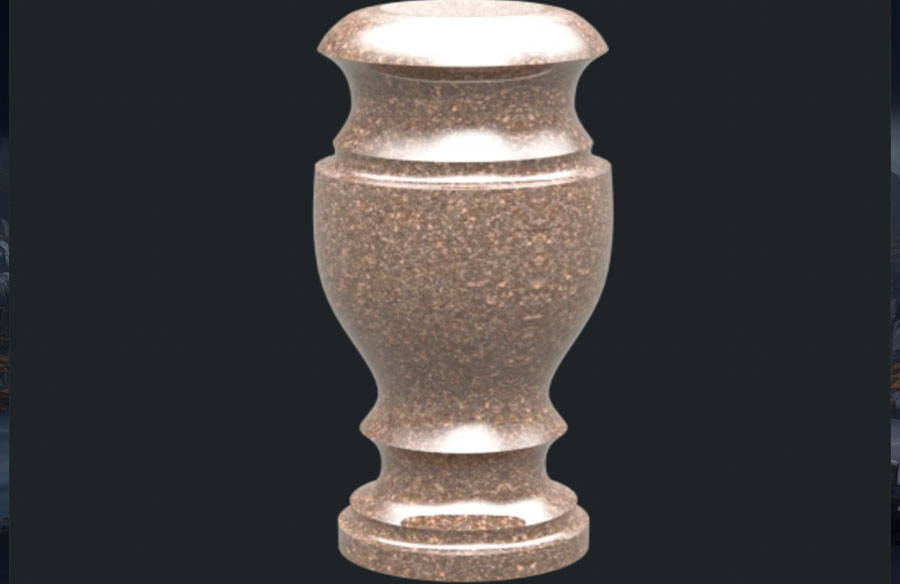
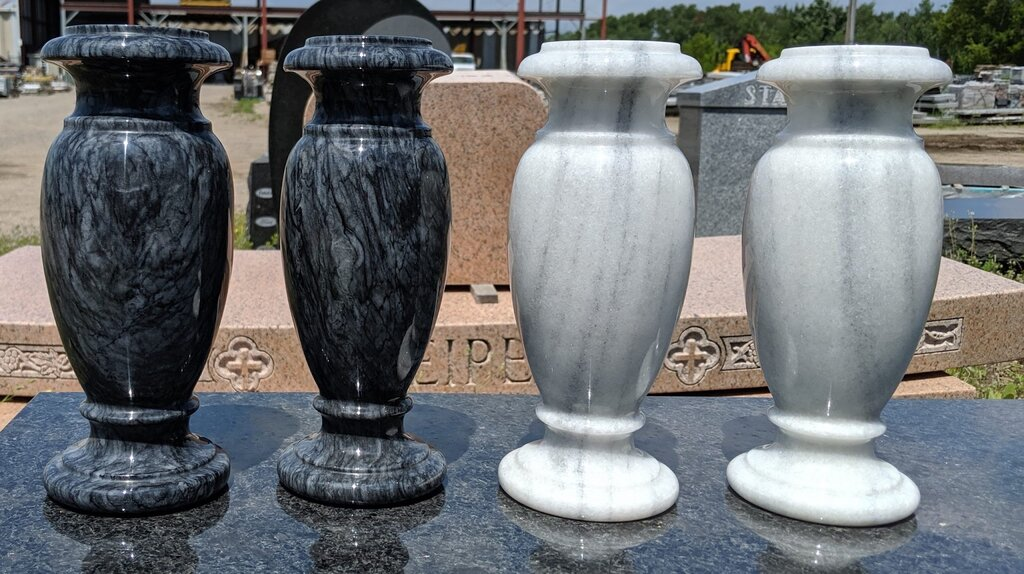
Granite vases for cemetery use are not the same as decorative garden pots. They’re cut from the same high-density exterior granite used for the headstone itself, anchored to the stone or to a base, fitted with a removable plastic liner that protects the stone from organic staining and makes changing fresh flowers straightforward without damaging the surface. The fixture is permanent. The flowers change. The grave looks alive regardless.
The tradition of flowers at graves is very old and very consistent across cultures. Ancient Greeks placed flowers on graves as offerings to the deceased. In China, chrysanthemums and white lilies have specific meaning at burial sites that extends back thousands of years. Medieval European Christian traditions associated specific flowers with specific saints and specific prayers. The American customs are a blend of all of these plus the cut-flower industry’s commercial influence from the late 19th century onward — fresh flowers for visits, wreaths for major dates, the artificial flower that holds its color through winter months when nothing blooms.
The cemetery vase is the infrastructure for this practice. Without one, flowers are laid flat against the stone and blow away within a day in most cemetery environments. With one, the arrangement stays — visible from the path, a signal that someone came here recently.
The material choice matters for aesthetics and practicality both. A granite vase cut from the same material as the headstone — matching Indian Black, or matching Elite Grey, or matching Blue Pearl — creates a unified monument composition. The vase doesn’t look added; it looks designed in. Companion memorials often carry two vases, symmetrically placed, which produces a formal visual balance that reads differently from a single asymmetric placement.
Bronze vase ring inserts — cast bronze rather than granite — are common in Catholic cemetery sections across New York, New Jersey, Illinois, Pennsylvania, and the Northeast generally, where the bronze-on-granite combination is traditional. The warm amber-to-green patina of aged bronze against polished black granite has a specific visual character that families in these communities recognize as the standard for a properly maintained grave. We produce both granite and bronze vase options.
Placement options vary. Some vases anchor to the face of an upright monument at a specific height — giving the arrangement vertical presence when the stone is tall. Others anchor to the granite base below the stone. Some mount flush to the ground surface beside a flat marker. The cemetery has a say in this: some sections specify that vase fixtures must be below a certain height to allow for consistent mowing. Confirming the permitted configuration before ordering eliminates the need for remounting.
 Family-specific considerations sometimes shape the choice in unexpected ways. Families in Washington state who visit graves in heavily wooded sections note that certain artificial flowers hold their color through a Pacific Northwest winter far better than others — specifically UV-resistant polyester rather than silk, which fades within one season of direct outdoor exposure. Families in Texas and Florida who visit year-round find that granite vases with deep liners hold water temperature better than shallow ones, keeping fresh stems viable longer in heat.
For families across California, Texas, Oklahoma, North Carolina, Ohio, and other states where we operate, the vase is available as an add-on to any memorial order, configured in the same 3D design preview as the headstone itself. The placement is visible before production begins. The material matches or complements the stone.
It is, genuinely, a small decision. But it’s the one that makes the grave look cared for when you’re not there.
Remembrance Headstones carries a full range of granite and bronze vases alongside every headstone and memorial product. Full catalog at remembranceheadstones.com.