Architecture has always been judged by what it looks like on opening day. The ribbon gets cut, the renders finally match reality, and the building is declared a success. But the true test of sustainable design doesn’t happen at the ribbon-cutting – it happens five, ten, or twenty years later, when the systems inside that building are still running, the materials are still performing, and the people who use it every day are still safe.
This is the gap that regenerative urbanism is starting to close, and it’s a gap that architects, facility managers, and operations teams need to think about together, not separately.
The Rise of Regenerative Thinking in the Built Environment
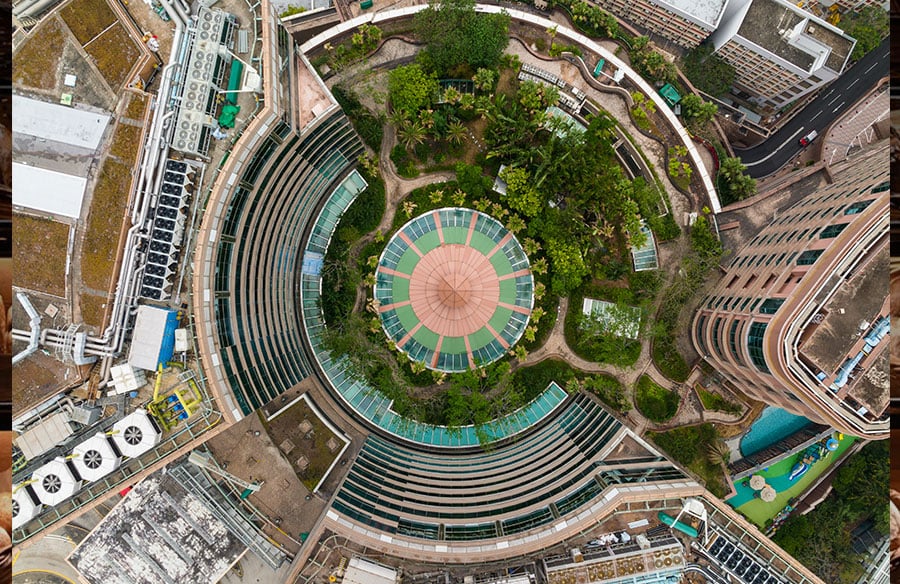
Regenerative urbanism asks architects and planners to move beyond simply reducing harm. Rather than designing buildings and cities that merely offset their environmental impact, the regenerative approach treats a structure as part of a living system, one that should actively repair and replenish the ecology around it. Green roofs that support biodiversity, water systems that recharge rather than deplete, and material choices that give back more than they take are all part of this shift.
It’s a compelling vision, and one that’s gaining real traction across the architecture and design world. But there’s a question that regenerative design doesn’t always answer clearly: who keeps all of this working once the architects have moved on to the next project?
A building designed to regenerate its surroundings only delivers on that promise if its systems are maintained as intended. A rainwater harvesting system that isn’t inspected will silt up. A green wall that isn’t monitored will dry out. A passive cooling system that isn’t recalibrated will quietly be replaced with mechanical air conditioning because nobody noticed it drifting out of tolerance. Good design sets the intention. Good operations deliver the outcome.
Where Good Design Meets the Limits of Good Intentions
This is the uncomfortable truth many sustainability-focused projects run into: design and operations are usually handled by entirely different teams, working from entirely different documents, on entirely different timelines. The architect hands over a beautifully specified building. The facilities team inherits a set of manuals, warranties, and, if they’re lucky, a maintenance schedule buried somewhere in a lever-arch folder.
From that point on, the building’s regenerative performance depends on whether frontline workers, cleaners, technicians, and site supervisors actually follow through on the intent behind the design. That’s a big ask when those teams are juggling dozens of sites, hundreds of assets, and paper-based checklists that were never built with sustainability targets in mind.
The result is what might be called the “maintenance gap”: the space between what a building was designed to do and what it actually does, year after year, once daily operations take over. Closing that gap isn’t a design problem. It’s an operational one.
From Static Buildings to Self-Aware Facilities
This is where operational technology starts to matter just as much as material choice or passive design strategy. Sensors that track temperature, humidity, air quality, and equipment performance can flag when a system is drifting away from its designed specification long before it becomes a costly repair or a compliance failure. Digital checklists replace the paper folder, meaning inspections actually happen on schedule and the data from them is visible to the people who need it, not filed away and forgotten.
Platforms like Mitti have been built around exactly this idea: giving frontline teams in manufacturing, hospitality, retail, and facilities management the tools to track assets, run inspections, and catch small issues before they become expensive ones. It’s not a design tool, but it’s arguably the layer that makes good design last. Asset maintenance workflows, IoT sensor integration, and real-time issue reporting all exist to keep a building’s operational reality lined up with its original intent, which is precisely what regenerative architecture depends on.
Think of it as the difference between a building that was designed to be self-repairing and a building that is actually self-aware. A self-aware facility knows when something is off, tells the right person quickly, and creates a record that shows whether the building is performing the way it was designed to.
Five Ways Operational Technology Extends the Life of Regenerative Design
Regenerative intent and day-to-day operations connect in more places than most project teams realise. Here are five of the clearest examples.
- Continuous monitoring over one-off inspections. Sensors and connected devices catch gradual drift in a building’s performance, such as a green roof irrigation system running dry or an HVAC unit slipping out of its efficiency band, well before it becomes visible to the naked eye.
- Digitised maintenance records that follow the asset, not the building. When equipment is tracked individually rather than lumped into a generic facility log, teams can see exactly when a component was last serviced and whether it’s still performing to the specification the architect intended.
- Faster issue reporting from the people who notice first. Frontline workers are usually the first to spot a problem, whether it’s a leaking pipe or a malfunctioning sensor. Giving them a simple way to flag it, rather than relying on a memo or a missed conversation, keeps small issues from becoming structural ones.
- Training that keeps pace with new systems. Regenerative buildings often introduce unfamiliar technology, from greywater recycling to biophilic ventilation. On-the-job training tools help site teams understand not just how to operate these systems, but why they matter.
- Analytics that prove long-term performance. Sustainability claims are only as credible as the data behind them. Ongoing analytics give building owners and design teams the evidence to show whether a regenerative building is actually regenerating, rather than simply looking the part on day one.
Designing With Maintenance in Mind From Day One
None of this means architects need to become operations experts. But it does suggest that regenerative design briefs should include a conversation about how a building will be monitored and maintained long after handover. Specifying a green facade is one decision. Specifying who checks it, how often, and what happens when it needs attention is another, and it’s just as important to the building’s long-term ecological performance.
This is also where collaboration between design and operations teams becomes genuinely valuable rather than a box-ticking exercise. Facilities managers who are brought into a project early can flag practical maintenance challenges before they’re built into the structure. Architects who understand how frontline teams will actually interact with a building day to day tend to make more resilient specification choices, favouring materials and systems that are realistic to maintain at scale, not just impressive in a render.
There’s also a cultural shift needed on site. Frontline teams are often handed new systems with little context for why they matter beyond “it’s part of the building now.” A greywater system or a living wall isn’t just infrastructure, it’s a functioning part of the site’s ecological footprint, and the people responsible for it should understand that. When maintenance staff know the reasoning behind a system, they’re far more likely to notice when something isn’t behaving as it should, rather than waiting for a formal inspection to catch it. That kind of engagement doesn’t happen by accident. It’s built through training, clear documentation, and tools that make it easy to see how a building is meant to perform against how it’s actually performing.
Why This Matters Beyond Any Single Building
It’s tempting to treat all of this as a concern for individual property owners or facility managers, but the implications reach further. As more cities set ambitious sustainability and net-zero targets, the credibility of those targets rests on individual buildings actually delivering what was promised at the design stage. A city full of beautifully designed but poorly maintained regenerative buildings won’t move the needle on urban ecology, no matter how good the original intentions were.
This is where the built environment sector as a whole has an opportunity. Architects, developers, and operations providers who treat post-handover performance as seriously as pre-construction design will be the ones whose regenerative claims hold up to scrutiny, whether that scrutiny comes from certification bodies, tenants, or the broader public. It also creates a stronger business case for regenerative design in the first place. Buildings that demonstrably perform as intended, backed by real operational data, are easier to justify to investors and easier to defend against accusations of greenwashing.
The Next Chapter for Regenerative Architecture
Regenerative urbanism has rightly shifted the conversation in architecture from “do less harm” to “actively repair.” But that ambition only holds up over time if the operational layer beneath it is just as considered as the design layer above it. A building that repairs its ecology on paper but drifts quietly out of specification within a few years hasn’t failed because the design was wrong. It’s failed because nobody was watching closely enough to keep it on track.
The next chapter for regenerative architecture isn’t only about smarter materials or bolder ecological ambitions, though both matter enormously. It’s about closing the gap between design intent and daily operations, so that the buildings we’re proud of on opening day are still worth being proud of a decade later.