A dent on your vehicle may seem like a minor issue, but even a small door ding or shallow crease can affect its overall appearance and resale value. Whether the damage happened in a crowded parking lot, during a minor collision, or because of falling hail, getting it repaired properly can help keep your vehicle looking its best. For many types of dents, Paintless Dent Repair (PDR) offers an effective solution without requiring traditional bodywork or repainting.
Drivers in Buford, GA, can benefit from understanding how this repair method works, which types of damage it can address, and when professional attention is necessary. With the right assessment and skilled workmanship, PDR can restore damaged panels while preserving the vehicle’s original factory finish.
What Is PDR?
PDR is a specialized technique used to remove dents and minor surface damage from a vehicle’s metal panels without sanding, applying body filler, or repainting. Instead of covering the damage with new materials, a trained technician carefully reshapes the affected metal until it returns as closely as possible to its original contour.
This focus on material preservation and minimal intervention resonates with principles of sustainable design, where existing structures and finishes are valued over extensive demolition and replacement. The careful manipulation of original materials to restore form aligns with an ethos of resource efficiency.
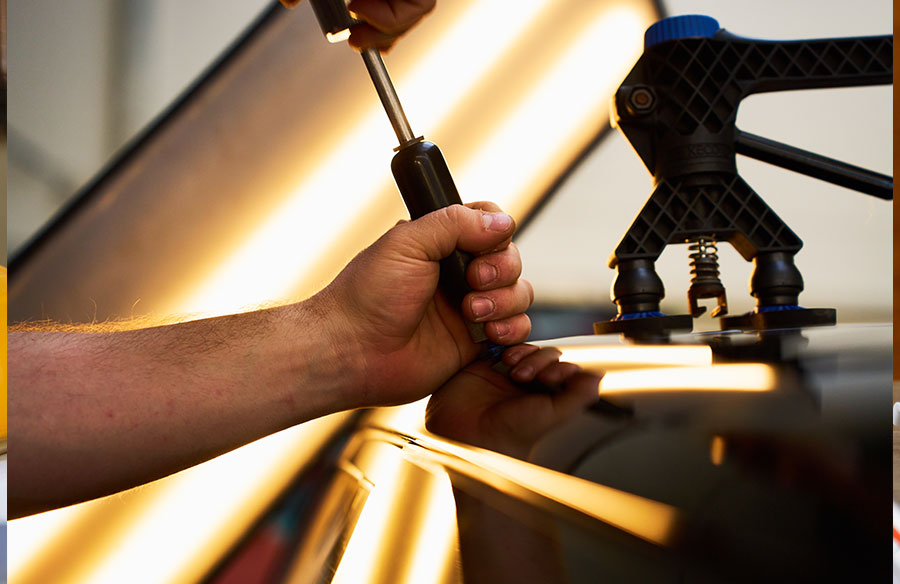
Technicians typically use specialized rods, picks, and other tools to apply controlled pressure behind the damaged panel. In areas where access from behind is limited, certain repairs may use adhesive tabs to gently pull the metal back into shape.
The goal is to correct the distortion while keeping the existing paint intact. This makes PDR particularly useful for vehicles with minor damage where the paint surface has not cracked or chipped.
Common Types of Damage PDR Can Repair
Not every dent requires a complete body repair. When the metal is not severely stretched and the paint remains intact, several common types of vehicle damage may qualify for PDR.
Door Dings and Parking Lot Dents
Door dings are among the most frequent types of vehicle damage. They can happen when another car door makes contact with your vehicle or when a shopping cart strikes a side panel. Although these dents are often small, they can be noticeable on otherwise clean bodywork.
PDR can often remove shallow door dings without disturbing the surrounding paint.
Hail Damage
Hail can leave multiple dents across a vehicle’s hood, roof, trunk, and other exposed panels. Even relatively small hailstones can create visible damage, especially when a vehicle is parked outside during a storm.
PDR may be suitable for many hail-related dents when the paint remains undamaged and the metal can be reshaped safely. A professional inspection is important because the number, depth, and location of the dents can affect the repair approach.
Minor Collision Dents
Low-speed impacts can leave shallow dents on doors, fenders, and quarter panels. If the impact has not damaged the paint or affected the vehicle’s structure, PDR may be an option.
However, dents involving sharp creases, damaged edges, or significant metal stretching may require conventional body repair.
Small Dents and Surface Creases
Everyday driving can expose vehicles to minor impacts from road debris, equipment, and other objects. Some shallow dents and soft creases can be corrected with specialized PDR techniques, depending on their depth and position.
How the PDR Process Works
Professional PDR requires patience, experience, and an understanding of how automotive panels respond to controlled pressure. A careful process helps prevent additional damage and supports a smooth final result.
- Inspecting the Damaged Area
The technician begins by examining the dent’s size, depth, shape, and location. They also check the paint for cracks, chips, or other damage. Specialized lighting helps reveal changes in the panel’s reflection, making it easier to identify the full extent of the distortion.
- Determining the Right Repair Method
After the inspection, the technician determines whether PDR is appropriate. Factors such as metal condition, panel construction, access, and the location of the dent all matter.
If the paint is cracked or the metal is severely stretched, traditional repair methods may be more suitable.
- Accessing the Damaged Panel
For many repairs, the technician needs access to the back of the affected panel. This may involve carefully removing selected interior trim, lights, or other components. When rear access is limited, an appropriate glue-pulling technique may be considered.
- Reshaping the Metal
Using specialized tools and controlled movements, the technician gradually works the dent out. The process requires precision because applying too much pressure in the wrong place can create additional high spots or distortions.
- Final Inspection
Once the repair is complete, the panel is inspected under appropriate lighting from different angles. This final check helps identify remaining imperfections and confirms whether the repaired area blends properly with the surrounding surface.
Benefits of Choosing PDR
For suitable damage, PDR offers several practical advantages compared with conventional dent repair.
- * **Preserves factory paint:** The original finish remains intact when the repair is performed correctly on eligible damage. * **Avoids unnecessary repainting:** Most qualifying repairs do not require paint, primer, or body filler. * **Can reduce repair time:** Many minor dents can be repaired more quickly than comparable traditional bodywork, although timing depends on the damage. * **Helps maintain appearance:** Removing visible dents can improve the overall condition of your vehicle.
- In architecture and interior design, the visual integrity of a space or object significantly impacts its perceived value and functionality. Just as a well-maintained exterior enhances a building’s curb appeal, preserving the aesthetic quality of surfaces contributes to a sense of care and lasting quality.
- * **May support resale value:** Keeping original paint and panels can be beneficial when preparing a vehicle for resale or trade-in. * **Limits additional materials:** Because qualifying PDR does not require conventional refinishing materials, it can reduce the need for certain paints and fillers.
The National Alliance of Paintless Dent Repair Technicians explains the method and its benefits for consumers. General Motors also provides guidance on appropriate PDR applications and repair limitations in its technical service information.
When Is Traditional Dent Repair Necessary?
Although PDR works well for many minor dents, it is not suitable for every situation. Attempting to repair damage with the wrong method can lead to poor results or additional panel problems.
Traditional body repair may be necessary when:
- * The paint is cracked, chipped, or peeling. * The dent is extremely deep or has significantly stretched the metal. * The damage affects a sharp body line or panel edge. * The panel has a tear, puncture, or substantial crease. * The impact has damaged structural components. * The affected area cannot be accessed or repaired safely with available PDR techniques.
A professional assessment helps determine whether PDR, conventional dent repair, or a combination of methods is the most appropriate solution.
Choosing a PDR Professional in Buford, GA
When looking for Paintless Dent Repair in Buford, GA, it is important to choose a technician who understands different vehicle makes, panel materials, and repair techniques. Experience matters because every dent has its own shape, depth, and access requirements.
Before approving a repair, consider asking:
- * Does the damage qualify for PDR? * Will the original paint remain intact? * What repair method will be used? * How long is the estimated repair likely to take? * Will any vehicle components need to be removed? * Is the repair covered by an applicable warranty?
A reliable repair professional should explain the available options, provide a clear estimate, and avoid promising results before inspecting the damage.
Keep Your Vehicle Looking Its Best
Small dents can make a well-maintained vehicle look worn, but they do not always require extensive bodywork. PDR provides a practical option for correcting many shallow dents, door dings, and hail-related imperfections while preserving the original finish.
For vehicle owners in Buford, GA, understanding the benefits and limitations of PDR makes it easier to choose the right repair approach. A professional inspection can establish whether the damage qualifies and help prevent unnecessary repainting or replacement work.
If your vehicle has visible dents, consider having the affected panels evaluated by an experienced technician. The right repair method can restore a cleaner appearance, protect the original finish when possible, and help keep your vehicle in good condition for the road ahead.