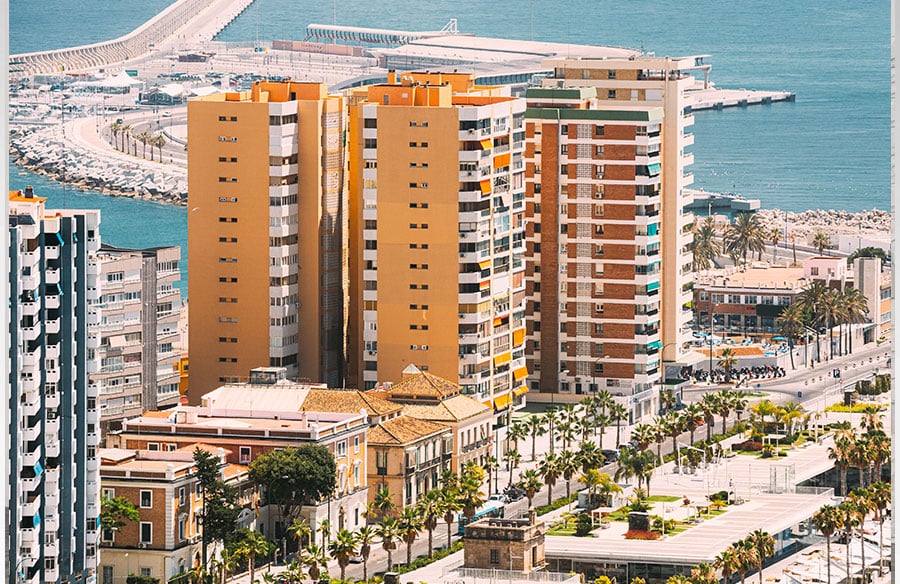
Every few years, a proposed high rise development along the Costa del Sol reignites an argument that never really goes away, whether Marbella should protect its relatively low rise skyline or allow taller buildings to meet growing housing and hotel demand. It’s a genuinely contentious planning debate, not a manufactured one, and it shapes what actually gets approved for anyone tracking property for sale in Marbella, Spain at the higher end of new development.
Why Height Restrictions Exist Here in the First Place
Much of Marbella’s coastal building stock tops out at a modest number of storeys, a legacy of planning decisions made decades ago partly for aesthetic reasons and partly because a lower rise coastline was thought to preserve views and a sense of openness for residents further back from the beach. Compare it to stretches of coastline in other parts of Spain that allowed dense high rise development early on, and the contrast is genuinely visible, Marbella still reads as a town rather than a wall of towers facing the sea.
The Case for Building Taller
Developers pushing for taller buildings argue, reasonably, that height restrictions push development outward instead of upward, consuming more land per unit of housing and pushing new construction further from the coast and into previously undeveloped areas. Given how much pressure the region faces on housing supply, both from tourism related short term rental and from a genuine influx of full time residents, some planners think a more permissive approach to height in specific, already dense zones would ease pressure without sacrificing the town’s overall character everywhere else.
The Case Against, Which Isn’t Purely Nostalgia
Opponents point out that taller buildings along the immediate coastline cast longer shadows over public beaches and neighbouring properties, changing the microclimate of ground level spaces in ways that aren’t always obvious until it’s already built. There’s also a genuine concern about infrastructure capacity, taller buildings mean more residents drawing from the same water, sewage, and road systems that are already strained during peak season, without a proportional increase in the infrastructure serving them.
Where the Compromises Actually Land
Recent planning decisions have tended to allow height increases in specific, already established commercial and hotel zones while holding firm on residential coastal stretches, a kind of zoned compromise rather than a blanket policy either way. It’s not a clean resolution and it satisfies neither side completely, but it reflects how most of these disputes actually get settled in practice, project by project rather than through one sweeping policy change.
What This Means for Buyers Right Now
Anyone buying into a specific development should understand which zoning category it falls under and what future development is realistically permitted nearby, since a beautiful sea view today can be affected by a taller building approved next door a few years later. Planning documents for the surrounding area are public record and worth actually reading, not just taking an agent’s word for what’s likely to change. The height debate here isn’t going away soon, and buyers who understand which side of it their specific property sits on tend to make better long term decisions than those who simply fall for the current view.