Standardized caregiver training does more than improve daily assistance for the more than 3 million adults who require their services nationwide. It is actively redefining the physical layout of modern residential spaces.
When care professionals understand the mechanics of mobility, their insights directly inform safer, more intuitive home environments. This crossover between clinical care knowledge and environmental design ensures that vulnerable individuals can age in place without facing unnecessary environmental hazards.
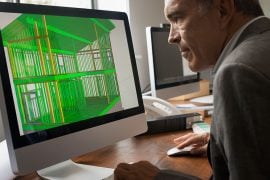
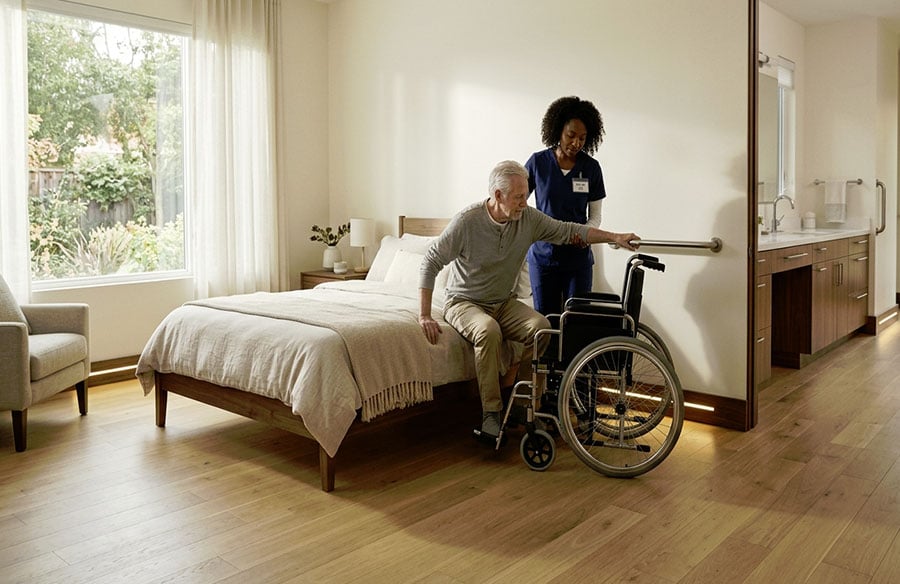
Architects and interior designers are increasingly building their design briefs around core care competencies. When a home layout accounts for precise transfer zones, specific lighting spectrums, and infection-control surfaces, the environment itself becomes an extension of the care plan. Professional training bridges the gap between spatial layout and physical capability, turning a standard living space into a supportive environment.
Aligning Built Environments With Caregiver Expertise
The modern home care landscape requires structured educational frameworks to navigate rising workforce demands and increasingly complex patient profiles. When caregivers enter a home with formalized training, they view a room through the lens of risk mitigation and proactive injury prevention.
Integrating this professional expertise directly into residential design projects allows teams to create blueprints that accommodate real-world care scenarios. Designers can translate core care protocols into specific spatial adjustments across several key areas:
- Clear transit pathways that accommodate specialized mobility equipment without creating tight bottlenecks
- Specific wall reinforcement locations tailored for the secure installation of heavy-duty grab bars
- Flooring transitions designed with flush thresholds to eliminate common tripping hazards
Adapting spaces to align with certified care skills reduces the physical strain on both the resident and the support professional. For those looking to establish these foundational skills, enrolling in a structured PCA certification online program provides the exact safety and mobility frameworks needed to manage these residential environments effectively. This formalized training ensures caregivers can spot environmental risks before they lead to injuries.
Technical Competencies That Shape Residential Blueprints
Clinical research confirms that structured educational interventions and defined workflows significantly reduce adverse events in home-based settings. When caregivers are trained to recognize subtle environmental hazards, they can provide invaluable feedback during the initial drafting and mock-up phases of a home renovation. A designer might focus entirely on aesthetics, but a certified care professional evaluates how a specific layout impacts daily physical management.
In practice, this collaborative approach changes how high-risk zones such as bathrooms and kitchens are designed and built. Proper transfer zones require specific clearance dimensions that allow two people to move in tandem without obstruction. Furthermore, proper illumination strategies employ specialized lighting configurations to assist individuals with diminished depth perception or age-related visual decline.
Proactive risk identification in the home environment prevents unnecessary hospital stays and maintains long-term independence for individuals receiving care. By embedding these clinical insights into the initial planning stages, residential properties become inherently safer, reducing reliance on reactive, piecemeal modifications later on.
Integrating Smart Monitoring Protocols With Spatial Layouts
Modern care spaces rely heavily on ambient technologies to detect real-world behavioral changes before they become medical emergencies. Predictive fall-detection sensors and automated floor-level night lighting require specific positioning to function without generating false alarms.
When a care provider understands behavioral patterns, they can help design teams place these sensors along the exact paths a resident takes during nighttime hours. This deliberate setup means that the technology operates invisibly in the background, supporting the care plan without making the home feel clinical. Integrating these technical setups directly into early room layouts enables hidden wiring and proper sensor coverage in every blind spot.
Executing Post-Occupancy Verification and Safety Checks
The collaboration between care professionals and design teams does not end once construction is complete. Real-world utilization often reveals minor spatial friction points that require immediate adjustment. Conducting structured post-occupancy evaluations allows care teams and designers to review how the finished space performs during actual daily routines.
During these walkthroughs, certified professionals track how easily equipment moves through doors and verify that antimicrobial surfaces remain easy to sanitize. This continuous feedback loop ensures that the home evolves alongside the resident’s changing physical needs. For more insights into trends impacting modern home design and architectural decision-making, stick around on our site and read more of our expert posts.