A reliable heating and cooling system does more than maintain a comfortable indoor temperature. It also supports consistent airflow, humidity control, equipment performance, and indoor air quality. Yet many homeowners only think about their HVAC system when the air conditioner stops cooling or the heating system begins making unusual noises.
Regular maintenance is a practical way to identify developing problems before they become expensive repairs. ENERGY STAR recommends professional pre-season checkups for heating and cooling equipment, with cooling systems typically inspected before the warmer months and heating systems checked before colder weather.
Why Routine HVAC Maintenance Matters
An HVAC system contains electrical components, motors, coils, filters, fans, drainage components, refrigerant circuits, and controls that must work together correctly. When one part becomes dirty, restricted, worn, or improperly adjusted, the entire system can experience reduced performance.
ENERGY STAR notes that dirt and neglect are major causes of heating and cooling system failure and inefficiency. Regular professional maintenance can therefore help homeowners identify issues while they are still manageable rather than waiting for a complete breakdown.
Better System Performance
Clean coils, appropriate refrigerant levels, unrestricted airflow, and properly functioning controls all contribute to effective HVAC operation. ENERGY STAR specifically recommends checking electrical connections, moving components, condensate drains, controls, coils, refrigerant levels, and blower components during professional maintenance.
Airflow deserves particular attention because restrictions can affect both comfort and efficiency. According to ENERGY STAR, airflow problems can reduce system efficiency by up to 15 percent, making proper inspection especially important when rooms are not cooling or heating evenly.
Fewer Unexpected Breakdowns
An HVAC failure rarely happens at a convenient time. A neglected system may continue operating despite a developing electrical, refrigerant, drainage, or airflow problem until a component eventually fails.
A scheduled inspection gives a technician an opportunity to identify warning signs and recommend corrective work. This does not guarantee that a system will never fail, but it can reduce the likelihood of preventable problems and help homeowners plan repairs more effectively.
What a Professional HVAC Inspection Should Include
A quality maintenance visit should involve more than simply cleaning the visible parts of an air conditioner. The technician should evaluate the system as a complete mechanical and electrical installation.
Depending on the equipment, a maintenance visit may include:
- Checking thermostat operation and settings
- Inspecting electrical connections and system controls
- Examining evaporator and condenser coils
- Checking refrigerant levels and system performance
- Inspecting condensate drains and drainage components
- Evaluating blower operation and airflow
- Cleaning or replacing appropriate filters
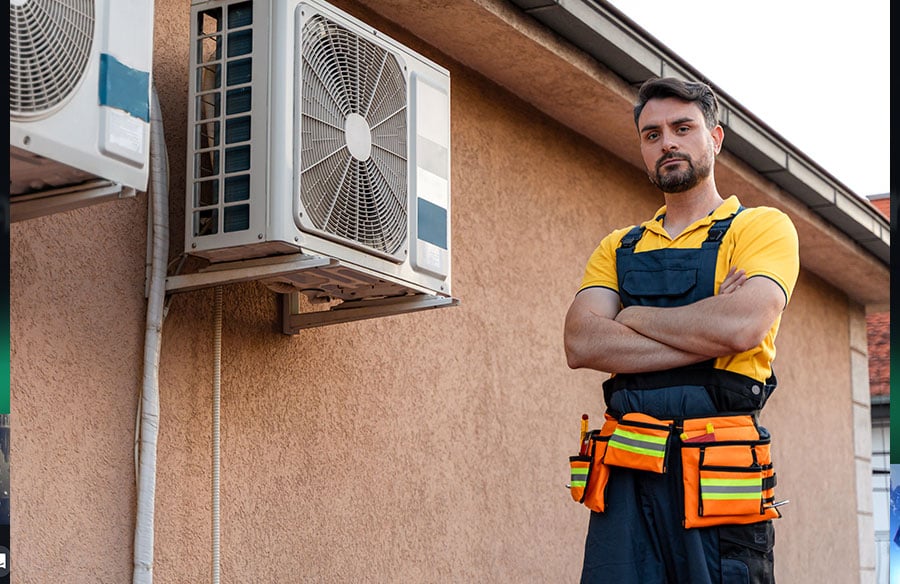
- Checking the outdoor unit for dirt, leaves, and other obstructions
- Looking for signs of component wear or potential failure
ENERGY STAR recommends keeping both indoor and outdoor HVAC equipment clean and free from debris. It also recommends checking air filters regularly because dirty filters can restrict airflow, increase operating costs, and contribute to equipment damage.
Choosing the Right HVAC Professional
Not every service provider approaches HVAC work with the same level of technical care. Homeowners should look beyond the lowest quoted price and consider whether the technician can properly diagnose the underlying problem, explain the recommended work, and perform installation or repairs according to manufacturer requirements.
When replacement, refrigerant problems, airflow concerns, or complex repairs are involved, choosing an experienced hvac contractor can provide a more structured approach to evaluating the equipment and determining the appropriate solution.
Questions to Ask Before Hiring
Before approving HVAC work, homeowners can ask a few practical questions:
- What is causing the current problem?
- Is repair or replacement the more appropriate solution?
- What components will be inspected or serviced?
- Does the proposed equipment match the home’s heating and cooling requirements?
- Are parts and labor covered by a warranty?
- Will the technician provide a written estimate before major work begins?
ENERGY STAR recommends making sure new HVAC equipment is properly sized for the home rather than relying solely on a generic rule of thumb. Proper sizing, airflow, refrigerant charge, and duct evaluation can all influence system performance and comfort.
HVAC Maintenance and Indoor Air Quality
HVAC maintenance can also play a role in maintaining better indoor air conditions. Filters help capture airborne particles while the HVAC system operates, although filtration is only one part of an effective indoor air quality strategy.
The U.S. Environmental Protection Agency explains that source control and ventilation are important approaches to improving indoor air quality, while filtration can supplement those measures. The EPA also notes that HVAC filters should be replaced according to manufacturer recommendations and that heavily soiled filters may require more frequent replacement.
Do Not Assume a Higher-Rated Filter Is Always Better
A higher-efficiency filter is not automatically appropriate for every HVAC system. The EPA recommends selecting the highest-rated filter that the system fan and filter compartment can accommodate, and homeowners may need professional guidance when considering higher-efficiency filtration.
This is one reason professional assessment matters. A technician can evaluate the equipment and determine whether a particular filter, airflow adjustment, repair, or upgrade is suitable for the system.
Make HVAC Care Part of Home Maintenance
HVAC equipment should be treated like other major home systems rather than something that can be ignored until it fails. Regular filter checks, clear outdoor units, appropriate thermostat settings, and professional inspections can help maintain dependable operation.
The goal of maintenance is not simply to make an air conditioner run colder or a furnace run hotter. It is to keep the complete system operating safely, efficiently, and consistently while identifying problems before they become more disruptive. A proactive maintenance routine, combined with qualified professional service when needed, is one of the most practical ways to protect indoor comfort and the long-term value of an HVAC investment.