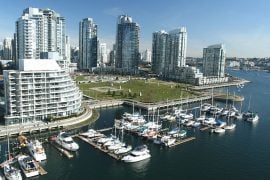
Sustainability in urban design gets discussed most often in terms of what is visible: green roofs, permeable paving, parks integrated into development precincts, solar panels on public buildings. These are legitimate and important interventions. But the infrastructure that most directly determines whether a city is genuinely sustainable is largely invisible, running beneath streets and buildings in systems that most people never see and rarely think about until something fails.
The sewer network is one of those systems. It manages waste, protects groundwater, supports public health, and feeds into the water treatment processes that sustainable cities increasingly depend on to close the resource loop. When it deteriorates without intervention, the environmental consequences are real and often severe. When it is properly maintained and monitored, it forms a quiet foundation for everything the visible sustainable city is trying to achieve above it.
Why Reactive Management Is a Sustainability Problem
The traditional model of underground infrastructure management is wait and respond. A pipe fails, a sinkhole opens, or wastewater surfaces somewhere it should not, and the response begins. This approach has direct sustainability costs that rarely get included in the accounting.
Emergency repairs require excavation. Excavation disrupts road surfaces, digs up footpaths, interrupts stormwater management, and generates significant volumes of construction waste. In dense urban areas, it also generates traffic disruption that increases vehicle emissions in the surrounding area for the duration of works. A single significant sewer failure in an urban core can have environmental consequences that spread well beyond the immediate site.
Exfiltration from deteriorating pipes, the slow seepage of untreated wastewater into surrounding soil and groundwater, compounds quietly over time before any surface failure occurs. The contamination of shallow aquifers, the introduction of pathogens and excess nutrients into urban soil systems, and the downstream loading of waterways with nutrients that drive algal blooms are all outcomes of undetected pipe deterioration rather than dramatic failure events.
Proactive sewer infrastructure inspection through CCTV camera systems changes this model fundamentally. By deploying inspection equipment through pipe networks on a regular schedule, engineers can identify cracks, joint separations, root intrusion, deformation, and infiltration points before they reach failure threshold. The resulting condition data drives maintenance and renewal decisions that are targeted to actual risk rather than calendar-based assumptions.
The sustainability case for this approach includes:
- Significantly reduced excavation volumes over time, with corresponding reductions in construction waste and surface disruption
- Prevention of groundwater and soil contamination from exfiltrating wastewater
- Reduced bypass events and untreated discharges at treatment plants caused by hydraulic overloading from groundwater infiltration
- Extended asset life through targeted repairs that prevent escalation to full replacement
- Data-driven renewal programming that prioritises the highest-risk locations in environmentally sensitive catchments
Connection to Water-Sensitive Urban Design
The relationship between underground sewer integrity and the surface-level water management systems that define contemporary sustainable urban design is more direct than it first appears.
Water-sensitive urban design, discussed in depth in the exploration of what architects must know about water urbanism, treats the urban water cycle as an integrated system rather than a series of separate problems. Stormwater, wastewater, groundwater, and potable water are understood as interconnected flows that need to be managed in relation to each other rather than independently. In this framework, the integrity of the sewer network is not a separate infrastructure concern. It is part of the water system design.
A sewer network that is exfiltrating into surrounding soil affects groundwater quality and quantity in ways that interact directly with surface-level blue-green infrastructure. Bioswales and permeable surfaces designed to manage stormwater and recharge aquifers perform differently when the groundwater they connect to is contaminated by sewer exfiltration. The sophisticated surface interventions that characterise water-sensitive urban design depend, at their foundation, on underground systems that are functioning as designed.
Similarly, infiltration of groundwater into deteriorating sewer pipes dilutes the wastewater stream, reducing the concentration of recoverable energy and nutrients in the flow that reaches treatment facilities. As the research around blue-green infrastructure and water-sensitive urban design demonstrates, effective urban water management requires systems thinking that accounts for the full cycle from precipitation through use, treatment, and return to the environment. Sewer integrity is one of the conditions that makes that cycle function well.
The Data Dimension of Preventive Infrastructure Management
One of the longer-term sustainability benefits of systematic sewer inspection is the accumulation of condition data that supports better urban planning decisions.
A comprehensive picture of sewer network condition, built up over successive inspection cycles, allows asset managers to model infrastructure risk across entire catchments. Areas where deterioration is concentrated can be identified for targeted renewal investment. Locations where infrastructure intersects with sensitive environmental areas can be prioritised. Capital programs can be designed around evidence rather than assumptions.
This data also supports the climate adaptation planning that sustainable urban development increasingly requires. As cities assess their vulnerability to increased rainfall intensity and urban flooding, the condition and capacity of underground drainage and sewer systems is a critical variable. Knowing where the network is compromised before a major storm event is a significantly more useful position than discovering it during one.
Preventive inspection is, in this sense, not only infrastructure maintenance. It is the information infrastructure that allows cities to make genuinely sustainable decisions about how they manage and develop the systems that serve their populations.