Managing a single hotel’s energy use is one thing. Managing it across ten properties, or fifty, scattered across different cities, climates, and time zones, is an entirely different problem. For a long time, that problem didn’t have a great solution. Each property ran its own systems, on its own schedule, watched by whichever staff member happened to be paying attention that week. Multiply that across a chain, and it’s easy to see how so much energy, and money, quietly slipped through the cracks.
That’s started to change, and one of the more practical shifts driving it has been the move toward networked climate control systems that let properties talk to each other, and to a central management team, instead of operating in isolation.
The Problem with Property-by-Property Management
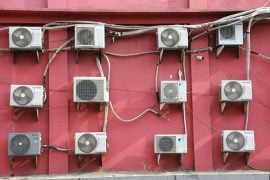
Hotels have always had climate control, obviously. But traditional systems were built around a single building’s logic. A thermostat in Room 214 knew nothing about a thermostat in Room 214 at the sister property three states away. Each property manager made their own decisions about scheduling, temperature ranges, and maintenance, often based on gut feel rather than actual usage data.
That approach isn’t necessarily wrong, it’s just inefficient at scale. A regional manager overseeing a dozen properties has no easy way to see which ones are running climate control inefficiently, which rooms are sitting empty at full power, or which units are quietly wasting energy due to a miscalibrated sensor. Everything lives in silos, and silos make it very hard to catch the small problems that add up to big costs.
What Changes When Thermostats Are Networked
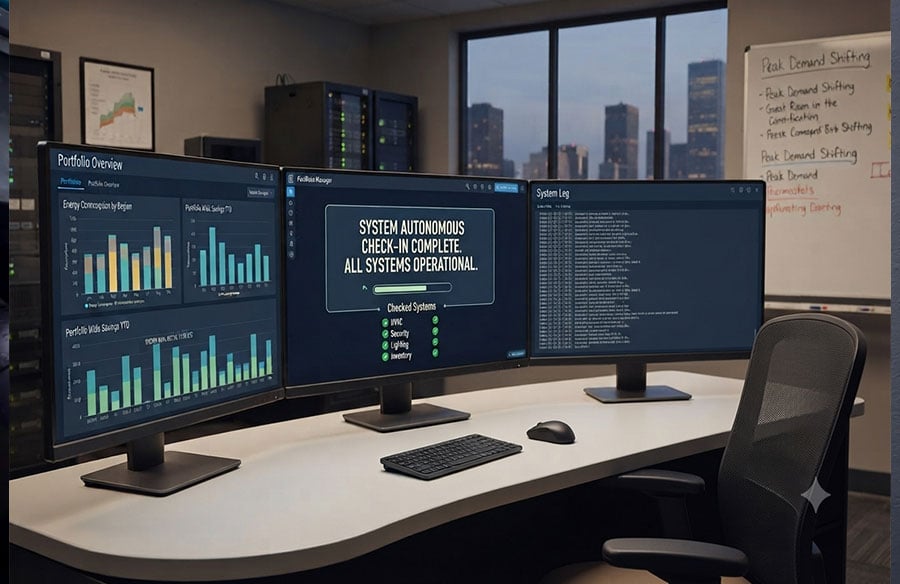
A networkable thermostat solves this by connecting individual room units into a shared system that a central team can actually see and manage. Instead of relying on each property to self-report or self-correct, management gets visibility across the entire portfolio from one dashboard. That means spotting patterns that would otherwise stay invisible, like a specific property consistently running warmer than its energy targets, or a batch of rooms with sensors that have started drifting out of calibration.
It also means policy changes can roll out instantly across dozens of locations instead of depending on each property manager to manually update settings one room at a time. If a chain decides to adjust unoccupied room temperatures during shoulder season, that change can be pushed network-wide in minutes rather than requiring individual action at every property.
For chains evaluating this kind of upgrade, networkable thermostat has become one of the more practical starting points, since they typically integrate with existing property management systems rather than requiring a full infrastructure overhaul.
Catching Problems Before They Become Expensive
One of the more underrated benefits of networked systems is how much faster problems get caught. A single malfunctioning thermostat in a standalone hotel might run inefficiently for weeks before anyone notices the utility bill creeping up. In a networked system, that same malfunction shows up almost immediately as an anomaly against the rest of the portfolio’s baseline performance.
This matters more than it might sound. A handful of units running inefficiently across a large chain, unnoticed for months, can quietly cost tens of thousands of dollars a year. Centralized visibility turns that from a slow leak into something that gets flagged and fixed within days.
Data That Actually Informs Decisions
Beyond day to day monitoring, networked systems generate something individual thermostats never could: portfolio-wide data. Regional managers can compare energy performance across properties with similar room counts, climates, or occupancy patterns, and use that comparison to figure out what’s actually working. A property consistently outperforming its peers on energy efficiency isn’t just a nice data point, it’s a template other properties in the chain can learn from.
This kind of centralized, data-driven approach to building energy performance isn’t unique to hotels. The EPA’s Energy Star program for commercial buildings notes that commercial properties waste up to 30 percent of the energy they consume through inefficiencies, and that strategic, portfolio-wide energy management is one of the most effective ways to close that gap.
The Staffing Angle Nobody Talks About
There’s also a quieter benefit here that doesn’t get discussed as often, staffing efficiency. Smaller properties, especially in a large chain, often don’t have a dedicated facilities engineer on-site full time. Networked systems let a smaller central team effectively oversee climate performance across many properties at once, rather than requiring specialized staff at every single location. That’s a meaningful cost consideration for chains trying to keep operating overhead lean without sacrificing performance.
Where This Is Heading
As more hotel chains adopt networked systems, it’s becoming less of a competitive edge and more of a baseline expectation, similar to how centralized booking systems became standard decades ago. The properties still relying on isolated, building-by-building climate control are increasingly the exception rather than the norm, and the cost gap between networked and non-networked operations tends to widen the longer it goes unaddressed.
None of this requires a dramatic overhaul overnight. Most chains are making the shift gradually, property by property, as equipment naturally comes up for replacement. But the direction is clear. Climate control in hospitality is moving away from isolated, per-building decisions and toward something closer to a connected system, one where a small central team can see, compare, and act on data across an entire portfolio instead of hoping each property is managing things well on its own.