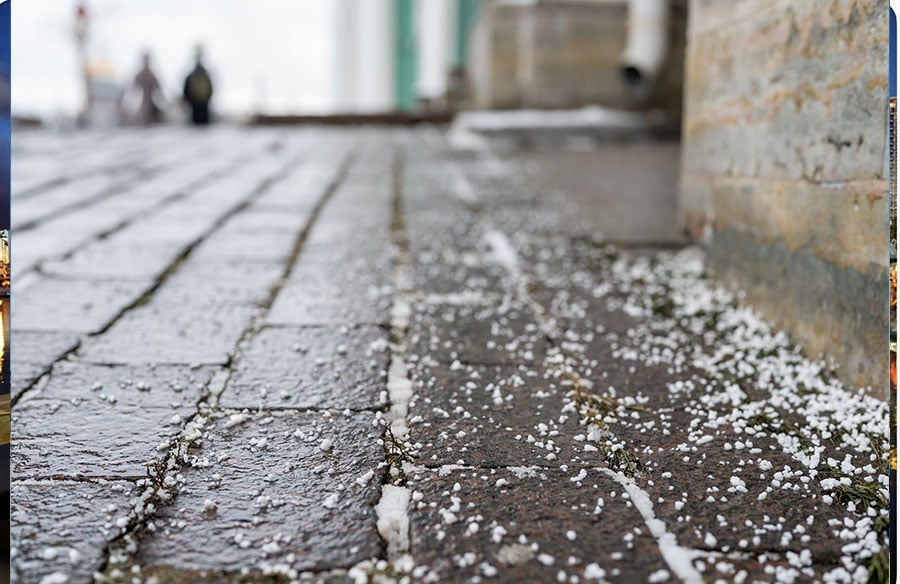
Your roof took the hit, and you didn’t even hear it. That’s the thing about Texas hail: the storm rolls through Steiner Ranch, the dogs bark for five minutes, and by the time you check the backyard, the ground looks like a golf driving range. Then the next morning, you spot the granule trail in the gutter and realize the damage is already done.
Hail season in Texas runs heavy from March through June, with a second pulse in the fall, and it costs homeowners across the state billions every single year. Here’s what actually happens to your roof when those ice balls come down, how to spot the damage before it spreads, and what your options look like if you live in Steiner Ranch.
What Hail Season in Texas Actually Delivers
Texas sits in a sweet spot for severe weather that most states would rather not claim. Warm, moist air from the Gulf collides with dry air from the west, and the result is some of the most violent hailstorms in the country. The National Weather Service tracks hail reports across the state, and the pattern is consistent: Central Texas, including the Hill Country where Steiner Ranch sits, sees the highest concentration of large hail events between March and June each year.
Here’s the number that matters. According to National Weather Service data, hail causes over $1 billion in property damage annually across the United States, and Texas consistently ranks as one of the top states for hail claims. That’s not a fluke. The combination of storm frequency and the sheer size of hailstones in this region makes it a genuine threat to every roof in your neighborhood.
But here’s the part people miss. It’s not just the big, grapefruit-sized hailstones that cause damage. In fact, those monster stones are relatively rare. The real damage in Steiner Ranch often comes from hail in the one to two inch range, stones about the size of a ping pong ball or a golf ball. Those are common in Texas storms, and they hit with enough force to bruise asphalt shingles, crack tile, and dent metal.
What Happens to Your Roof the Moment Hail Hits
When a hailstone slams into an asphalt shingle, it doesn’t punch a visible hole the way you might imagine. Instead, it does something sneakier. The impact knocks granules loose from the surface of the shingle. Those granules are essentially the armor of the shingle, protecting the asphalt underneath from UV rays. Once they’re gone, the asphalt is exposed, and the sun starts cooking it. Within months, the shingle gets brittle, cracks, and eventually fails.
So here’s what a roofing contractor sees when they climb onto a Steiner Ranch roof after a spring storm:
- Bruised spots on shingles where the impact crushed the mat without breaking it
- Granule loss concentrated in the impact zones, often visible as bare patches
- Split shingles along the edges, especially on older roofs
- Dented gutters and downspouts that took direct hits
- Damage to roof vents, flashing, and ridge caps that may not be visible from the ground
This granular damage and the integrity of roof components highlight a fundamental challenge in architectural design: balancing aesthetic appeal with material resilience. The choice of roofing material and the meticulous design of its installation, including critical elements like flashing and ventilation, are paramount not just for immediate protection but for the long-term structural health and energy efficiency of a building. Understanding these vulnerabilities informs more robust and sustainable design practices.
That last point is the one that gets homeowners in trouble. The flat expanse of the roof might look fine from the street, but the vulnerable points, the valleys, the flashing around chimneys, the ridge vents, those take the beating first. And if the underlayment gets exposed, water can worm its way into your home weeks or even months after the storm, showing up as a ceiling stain when you least expect it.
How to Tell If Your Roof Took a Hit
You don’t need to be a contractor to do a preliminary check. But you do need to be careful. Never walk on a roof that might be damaged, and never climb up right after a storm when surfaces are slick. Instead, start from the ground.
Walk your property and look for a few specific things. Check the downspout strainers and gutters for a heavy buildup of granular material, it looks like coarse black sand. Check your yard for shingle debris. Check the ground around the house for dents in soft soil, which tells you the hail was large enough to do damage. And check your car, if it was outside during the storm. If your car has dents, your roof almost certainly has damage too, cars are just easier to inspect.
Inside your home, look for water stains on ceilings, especially in corners and around skylights. Peeling paint near the roofline can also signal that moisture is getting under the roofing material. If you find any of these signs, call a licensed roofer for an inspection. Most reputable companies, including metal roofing in Barton Creek specialists, offer free inspections and can document damage for your insurance claim.
Here’s the key advice though: get the inspection done fast. Texas insurance policies typically have a time limit for filing hail damage claims, often between one and two years after the storm date. That sounds generous, but the longer you wait, the harder it is to prove the damage came from a specific storm, especially if a second storm rolls through and muddies the evidence.
Asphalt vs Metal: The Insurance and Replacement Math
So your roof is damaged. Now you’ve got a decision to make, and it’s a big one. In the Hill Country, that decision usually comes down to two options: replace asphalt with asphalt, or make the switch to metal.
Here’s some data to help you think through it. According to the Insurance Information Institute, homeowners insurance policies across the country handle hail damage differently depending on your state and your policy type, with many policies now offering actual cash value rather than replacement cost for older roofs. That distinction matters more than you’d think in Steiner Ranch, because it directly affects how much money you’ll see from your claim.
Let’s table the decision for a second. The table below shows the practical comparison most homeowners weigh when making this call.
| Factor | Asphalt Shingle | Standing Seam Metal
|
| Lifespan in Texas heat | 15 to 20 years | 40 to 60 years |
| Hail damage profile | Granule loss, bruising, cracking | Denting in softer gauges, no structural failure |
| Insurance premium impact | Standard rates | Often discounted by insurers |
| Maintenance between storms | Annual checks, frequent repairs | Minimal, designed for weather resistance |
Here’s the thing I’d tell you if you were sitting across from me. If you’re in Steiner Ranch and you plan to stay in your home for more than ten years, the math on metal starts to look genuinely good, even with the higher upfront cost. A metal roof won’t make you immune to hail, but it handles the impacts differently. Instead of cracking and failing like aged asphalt, metal dents. And a dent in a metal panel is mostly cosmetic, not a pathway for water to get into your home.
From an architectural perspective, this material performance difference underscores the importance of lifecycle assessment in building design. Opting for materials with superior durability and lower maintenance requirements, even with a higher initial investment, aligns with principles of sustainable architecture and contributes to a building’s overall resilience and reduced environmental footprint over decades. Such decisions are central to creating structures that truly stand the test of time and climate.
Steiner Ranch’s Weather Reality and What It Means for You
Steiner Ranch sits in Travis County, which means you’re exposed to the full range of Texas Hill Country weather. And in this part of Texas, that threshold gets crossed multiple times most years. You’re not wondering if a big storm will come. You’re wondering when.
So the practical advice breaks down into three steps. First, after any storm that produces hail in your area, do your ground-level inspection within 48 hours. Take photos of everything: the gutters, the downspouts, the yard, the roof from every angle you can safely shoot. Second, call a roofer for a professional inspection even if you don’t see obvious damage. Contractors are trained to spot the subtle signs that you’ll miss from the ground. Third, file your insurance claim promptly with your documentation in hand, and make sure your contractor is present during the adjuster’s visit so nothing gets missed.
For homeowners in Steiner Ranch who are weighing the switch to metal, the decision usually comes down to this. If your asphalt roof is older than 15 years and this hail season dealt it a serious blow, replacement is inevitable. The question is whether you want to be back in this position in a decade and a half. Metal changes that equation. And the quiet peace of mind that comes from watching a spring hailstorm roll through without feeling that knot in your stomach, that’s hard to put a price on.
But maybe you’re not there yet. Maybe your roof is younger and the damage is light. That’s fine too. The most important thing is that you do not ignore the signs. A small leak today becomes a mold problem by summer. A few bruised shingles become a full deck replacement in two years. Hail season in Texas isn’t a possibility. It’s a when. The only question is whether you’re ready for it, and now you know exactly what to look for.