Manufacturing has always evolved alongside technological progress. From early mechanical systems to today’s digitally connected factories, each generation of innovation has changed how products are designed, produced, and delivered. Now, automation and robotics are becoming central elements in creating more efficient, precise, and adaptable manufacturing environments.
Modern production facilities are no longer defined only by machinery and physical processes. Instead, they increasingly combine software, sensors, artificial intelligence, and robotics to improve decision-making and optimize workflows. These technologies are influencing not only how products are made but also how future industrial spaces are designed.
As industries move toward smarter production models, automation is becoming a key factor in creating flexible systems that can respond to changing consumer demands and operational challenges.
The Growing Influence of Automation in Modern Manufacturing
Automation allows businesses to reduce repetitive manual tasks while improving consistency and accuracy. In traditional manufacturing environments, many processes depend heavily on human labor, which can create variations in quality and limit production capacity.
Smart manufacturing systems address these challenges by introducing automated workflows that improve reliability and efficiency. Through connected equipment and real-time monitoring, businesses can better understand production performance and identify opportunities for optimization.
The integration of automation also influences industrial design. Factories and production spaces are increasingly planned around technology-driven workflows, where equipment placement, human interaction, and data systems work together as a unified environment.
Rather than replacing human expertise, automation allows workers to focus on creative problem-solving, system management, and higher-value responsibilities while machines handle repetitive operations.
How Robotics Is Improving Precision and Production Efficiency
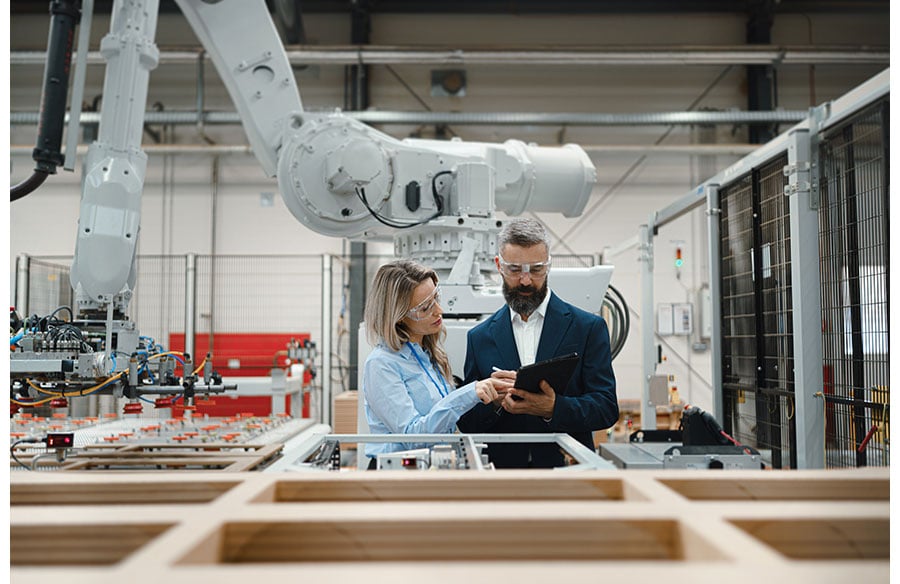
Robotics has become one of the most visible examples of how technology is reshaping manufacturing. Automated machines can perform highly repetitive tasks with exceptional consistency, helping businesses maintain quality standards while increasing output.
Industries ranging from automotive production to food processing are adopting robotics to improve speed, accuracy, and safety. Similar principles apply to specialized manufacturing sectors where precision and repeatability are essential.
For example, companies developing automated production solutions are using robotics to create more controlled processes and reduce dependence on manual operations. Technologies such as RollPros pre-roll automation demonstrate how specialized automation systems can improve manufacturing consistency while allowing businesses to scale production more efficiently.
The rise of robotics also creates new opportunities for designers and engineers. Instead of designing factories around traditional workflows, future industrial spaces can be created around collaboration between people, machines, and intelligent systems.
This shift represents a broader change in manufacturing philosophy. The goal is no longer simply increasing production volume but creating smarter systems that balance efficiency, adaptability, and quality.
Designing the Future of Smart Manufacturing Systems
The future of manufacturing will likely be shaped by deeper connections between automation, artificial intelligence, and industrial design. Smart factories will continue moving toward environments where machines communicate with each other, analyze performance data, and adjust processes automatically.
For architects, designers, and engineers, this creates new challenges and opportunities. Industrial spaces must now accommodate not only physical equipment but also digital infrastructure, automation networks, and flexible production models.
The factories of the future may look very different from traditional manufacturing facilities. They will likely prioritize adaptability, allowing businesses to modify production processes quickly as technologies and market requirements change.
Automation is becoming more than a production tool — it is becoming a design principle that influences how industries operate and how spaces are created.
As robotics and smart technologies continue to advance, manufacturing will become increasingly efficient, connected, and responsive. The companies that successfully integrate these innovations will be better prepared for a future where technology and design work together to create more intelligent production environments.