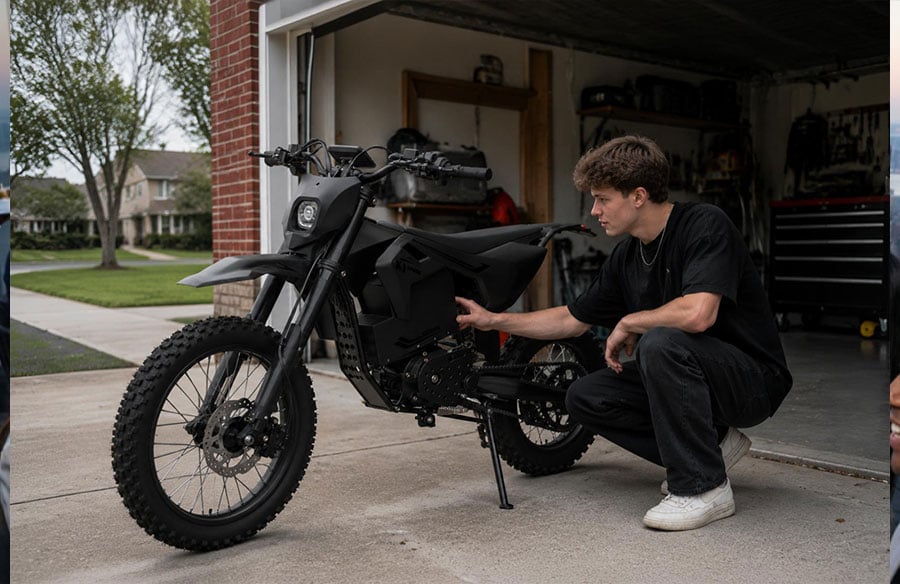
After an off-road ride, a motorcycle may be covered in dirt, riding boots may be dusty, and helmets and protective equipment need to be cleaned, dried, and stored. Without a dedicated space, gear can quickly pile up in the garage or bring mud and moisture into the house.
For households that regularly enjoy off-road riding, a practical storage area needs to do more than accommodate the motorcycle. It should also support cleaning, organization, and routine maintenance.
By carefully planning the transition from outdoors to indoors and connecting cleaning, parking, and equipment storage areas, homeowners can create a more functional space without necessarily adding square footage.
Start With the Way People Return From a Ride
Before planning the layout, consider what happens after a typical weekend of off-road riding.
The motorcycle needs to be unloaded, dirty equipment needs to be organized, and the rider may need to inspect the vehicle, clean riding boots, and prepare everything for the next outing.
When all these activities take place near a narrow garage entrance, the area can become crowded, requiring people to repeatedly move the motorcycle and other belongings.
A more practical design begins by considering how the vehicle enters its storage position and whether the rider can organize equipment without interrupting the movement of other household members.
For households that share garage space between cars and off-road motorcycles, sufficient clearance around parking areas and everyday walkways becomes particularly important.
Good spatial planning doesn’t necessarily require elaborate renovations. It simply makes each step of the post-ride routine easier to manage.
Give Dirt and Moisture a Place to Go
Mud, sand, and moisture are among the most important considerations when designing a space for off-road recreation.
An electric motorcycle used on designated off-road trails can return covered in dirt, small stones, and dust. Moving it directly into a cluttered garage can make cleaning and organization unnecessarily difficult.
One practical approach is to create a separate preliminary cleaning area near the garage or outdoor storage space. This allows riders to remove loose dirt before moving the motorcycle into its regular parking position.
Flooring and wall finishes should be easy to clean, durable, and appropriate for occasional moisture exposure. Removable floor mats can also help simplify maintenance in areas that frequently collect dirt.
If water is used for washing, drainage needs careful consideration. Wash water shouldn’t be allowed to flow indiscriminately into storm drains, and disposal should follow local regulations. Riders should also avoid directing water at electrical components and connectors.
This approach helps keep the indoor space cleaner while reducing the buildup of moisture and debris inside the garage.
Keep Charging and Cleaning Activities Separate
Storage for electric-powered vehicles requires additional planning because charging is part of regular ownership.
Charging locations should be arranged so electrical outlets, chargers, and cables aren’t exposed directly to water from cleaning activities.
Charging equipment should be used according to the manufacturer’s instructions and kept in a dry, stable location away from combustible materials. Unapproved chargers should be avoided, and extension cords or power strips shouldn’t be treated as substitutes for suitable electrical connections.
If existing wiring cannot safely support the required charging equipment, a qualified electrician should evaluate the installation rather than attempting an improvised solution.
The layout should also keep entrances and exits accessible, with parked motorcycles, charging cables, and stored equipment positioned away from necessary circulation routes.
For garages attached to residential buildings, fire separation, electrical installation, and other safety requirements should follow applicable local building codes.
The purpose of a well-designed charging area isn’t to install as much equipment as possible. It’s to support the manufacturer’s charging requirements while maintaining sensible separation from wet cleaning activities.
Organize Gear Around Everyday Habits
An off-road motorcycle isn’t the only equipment that needs storage. Helmets, goggles, gloves, riding boots, and other protective gear all require appropriate places.
Instead of placing everything inside one large cabinet, storage can be organized according to how frequently items are used and whether they need cleaning.
Helmets and gloves, for example, can be kept within easy reach, while riding boots can have their own designated area to prevent dirt from spreading to other belongings.
Damp protective equipment also needs an opportunity to dry rather than remaining piled inside an enclosed, humid cabinet.
For households with teen riders, storage design should consider accessibility alongside responsible vehicle use. The Qronge X1 Spark L, positioned as an electric dirt bike for teens, is one example where a household may need to plan not only for motorcycle parking but also for protective equipment and appropriate access management.
The goal isn’t simply to add more cabinets. It’s to make equipment easy to retrieve, organize, and put away in the order it’s actually used.
Make Room for Routine Maintenance
Parking the motorcycle doesn’t necessarily mean the post-ride routine is complete.
Before the next outing, riders may need to inspect the tires, brakes, and drivetrain and check for visible damage or loose components.
Where space permits, a small, well-lit work area can make these routine inspections more convenient.
A full professional workshop isn’t necessary for basic checks. A stable workbench, organized tool storage, and enough room to move around the motorcycle can improve everyday usability.
Tools should also have designated storage locations rather than being left on the floor or along main walkways.
If the household eventually changes motorcycles or adds other outdoor equipment, adjustable shelving and modular storage systems can adapt more easily than completely fixed cabinetry.
That flexibility can extend the usefulness of the space and reduce the need for another renovation whenever equipment requirements change.
Plan the Complete Budget Before Buying New Equipment
For households preparing to take up off-road riding or upgrade their equipment, the motorcycle’s purchase price is only part of the overall investment.
Helmets and protective gear, transportation equipment, charging arrangements, and necessary storage improvements should also be considered.
Confirming that the home has suitable storage space before selecting a motorcycle is usually more practical than trying to find somewhere to keep it after the purchase.
Once the requirements are clear, seasonal black friday deals can provide an opportunity to compare purchase costs.
During Black Friday, new subscribers to Qronge’s website can also unlock exclusive purchase offers with a combined value of $1,780. This amount represents the total value of multiple offers rather than a single gift card, with specific savings and eligibility subject to promotional terms.
A realistic budget should account for both the initial purchase and long-term ownership needs rather than focusing only on the immediate discount.
Make Outdoor Recreation a Natural Part of Home Life
A practical post-ride space doesn’t necessarily require expensive renovations or a large addition to the home.
What matters most is understanding how the space will be used and giving cleaning, equipment drying, charging, and storage their own appropriate places.
From an outdoor cleaning area to the garage and the entrance into the home, thoughtful material choices and spatial organization can improve how each area functions.
When architecture supports everyday routines rather than forcing people to work around inconvenient layouts, outdoor riding can become a more natural part of household life.