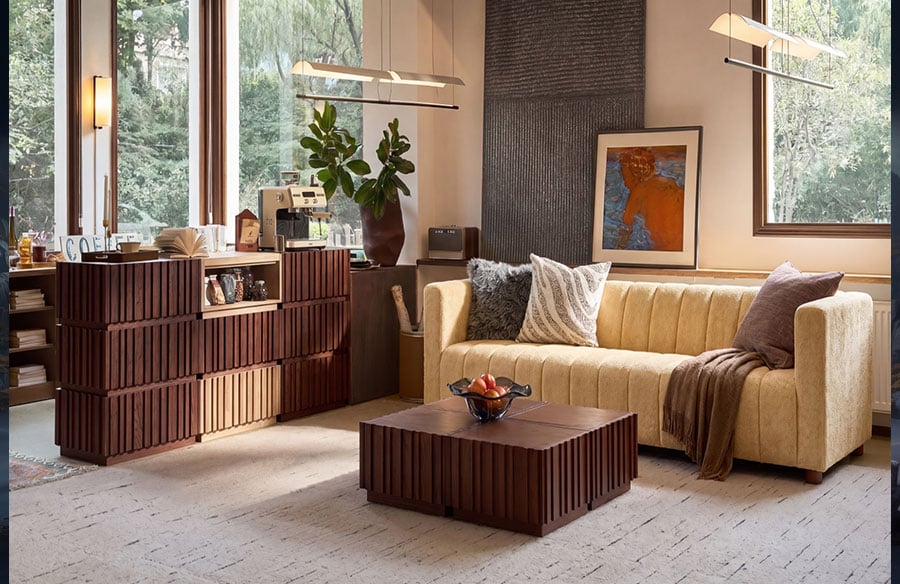
There is a word that keeps coming up when people talk about finding the right furniture for their home. Not a complicated word. Not a design term or a lifestyle buzzword. Just: finally.
Finally, storage that actually fits the alcove. Finally, a cabinet that does not leave a gap between itself and the wall. Finally, a home that feels considered rather than cobbled together from whatever was available and affordable at the time.
For British homeowners, that word carries real weight. British homes are wonderfully diverse, from Victorian terraces and converted flats to modern new-builds. That variety gives them character, but it also means that off-the-shelf furniture does not always make the best use of the available space. As more rooms take on multiple roles, adaptable storage has become increasingly valuable.
Hulala Home was built around the idea that this does not have to be the case.
What Adaptive Design Actually Means
The phrase you will hear from Hulala Home is adaptive design that makes everyday living feel effortless. It sounds polished, but it points to something genuinely practical.
Adaptive means furniture that fits the space as it actually is. Not the idealised, regular-walled, evenly-lit room from a catalogue. The real room, with its chimney breast, its odd corner, its sash window that lets in light at exactly the wrong angle. Adaptive means furniture that can be reconfigured when the room changes function, which in a British home happens more often than most people plan for.
Effortless means that the furniture supports life without adding to its complexity. A modular storage cabinet should make everyday organisation easier, not more complicated. It should make good organisation feel natural rather than something that requires constant effort. Pieces that look right without requiring active effort to maintain. These are the qualities that separate furniture that serves people from furniture that people have to work around.
The modular cabinet Problem British Homes Have Always Had
A modular storage cabinet is the most persistent unsolved problem in British domestic life. Not because people have not tried to solve it, but because the solutions available have always asked the home to adapt to the product rather than the other way around.
The Hulala Home modular cabinet system works differently. Individual units in varying widths and configurations can be combined to create a modular cabinet that fits a specific wall in a specific room. No awkward gaps. No units that almost work but not quite. The configuration belongs to the room, not the other way around.
And when the room changes, because rooms in British homes change constantly, the storage changes with it. A configuration that worked for a study can be reconfigured for a bedroom. A living room arrangement can be extended when more storage becomes necessary. The system does not become obsolete when life shifts. It simply adapts.
You can explore the full range at the Hulala Home UK modular cabinets page.
A Home That Finally Feels Resolved
There is a specific feeling that comes with a home that has been properly sorted. It does not arrive all at once. It builds gradually, as one thing after another falls into place. As the modular storage cabinet becomes adequate. As the rooms start to feel considered rather than improvised. As the home begins to work for the people inside it rather than the people working around the home.
That is what Hulala Home means by finally, home. Not a luxury aspiration or a lifestyle statement. A practical outcome, available to British homeowners who are ready to invest in furniture that was designed for the homes they have, the lives they lead, and the changes that are always, inevitably, coming.
Find out more about the full collection at Hulala Home UK.