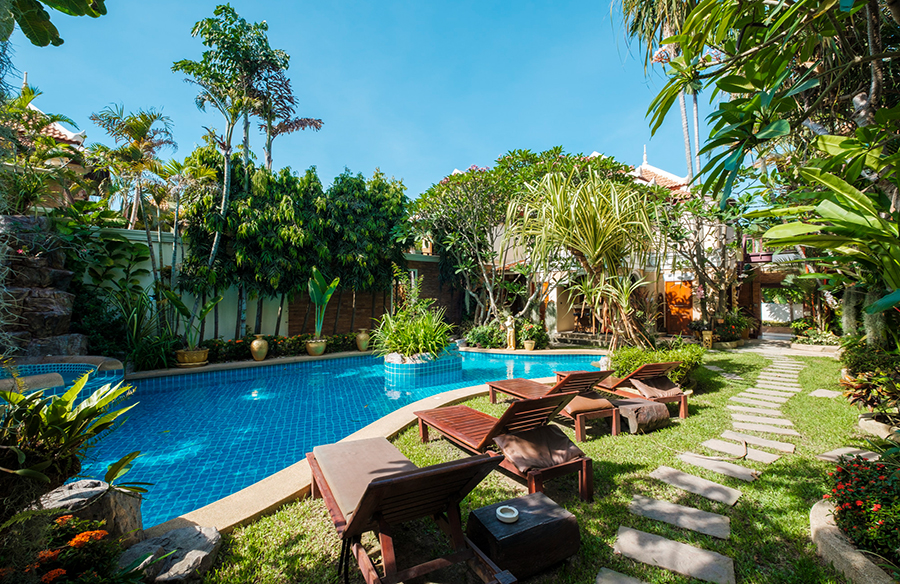
A luxury pool is more than a basin placed in a yard. It is an outdoor room shaped by site, materials, privacy, and the way light moves across water. Custom pool design starts before tile colors or deck finishes are chosen. It begins with reading the land, studying indoor-outdoor movement, and planning comfort, views, and maintenance as one buildable composition. This guide offers practical ideas for a refined pool that works well over time.
Key Design Takeaways
- Site first. Let orientation, grade, wind, and sightlines guide the footprint.
- Choose edges deliberately. Infinity, overflow, and beach-entry details require different coordination.
- Specify durable surfaces. Coping and decks need grip, manageable heat, and weather resistance.
- Light in layers. Control glare and support safe evening circulation.
- Integrate planting early. Roots, leaf litter, overspray, and runoff affect operations.
- Bring specialists in early. Verify barriers, hydraulics, electrical ratings, and structure locally.
Read the Site, Then Set the Program
Before sketching a pool shape, walk the site at different times of day. Note solar orientation, prevailing wind, grade changes, and where views open or close. Map adjacencies such as the outdoor kitchen, fire feature, dining terrace, spa, and service zones. Circulation from the house to the water should feel natural while equipment access stays discreet. Use planted berms, level changes, or louvered screens for privacy, and verify fencing, gates, alarms, and drainage locally before finalizing the plan.
Pool Types That Shape the Experience
Three broad pool types cover most luxury residential programs:
- Rectilinear lap and spa. Clean lines, swim lanes, and an attached spa suit modern architecture, narrow lots, and clients seeking exercise plus relaxation.
- Freeform or lagoon. Organic contours, boulderwork, and waterfalls soften noise and fit larger naturalistic landscapes.
- Courtyard plunge. A small pool in a walled garden or entry court creates resort atmosphere through proportion, enclosure, and rich materials rather than size.
Each type has different structural, hydraulic, and maintenance needs. Discuss trade-offs early so the form fits the site, architecture, and operating budget. Before fixing a custom pool shape, test it against circulation, privacy, service access, covers, and views from the main rooms.
Signature Edges and Waterlines
The pool’s edge condition is one of the clearest signals of design intent.
- Infinity or vanishing edge. Works on sloped sites where the far edge can spill into a catch basin below the sightline. Coordinate the overflow wall, trough, and return plumbing for an even water sheet.
- Perimeter or knife-edge overflow. Water rises to every coping edge and recirculates through a concealed slot, creating a reflective surface. Leveling tolerances are tight, so involve the pool engineer early.
- Beach entry and Baja shelf. A gradual zero-depth slope creates a relaxed wading zone. Use slip-resistant finishes and a gentle drainage pitch; a Baja shelf about 10 to 12 inches (250 to 300 mm) deep can hold lounge chairs.
Materials and Finishes That Perform
Luxury backyard pool design depends on materials that age well under sun, water, and foot traffic. Select coping profiles, such as square-cut, bullnose, or drop-face, for the desired shadow line and barefoot comfort. Slip resistance and surface temperature in direct sun matter more than short-lived color trends, so teams should compare poolside material choices as performance decisions rather than decorative afterthoughts.
For decking, porcelain pavers offer low absorption and consistent tone. Natural stone such as limestone or travertine develops a patina but usually needs sealing in wet zones. Thermally modified wood and high-density composites add warmth underfoot, yet fastener detailing and expansion joints still need planning.
In freeze-thaw climates, confirm material ratings through product data and applicable ASTM standards. Near salt-chlorination systems, anticipate splash and drift, review corrosion guidance, and coordinate planting for the splash zone.
Day-to-Night Lighting Design
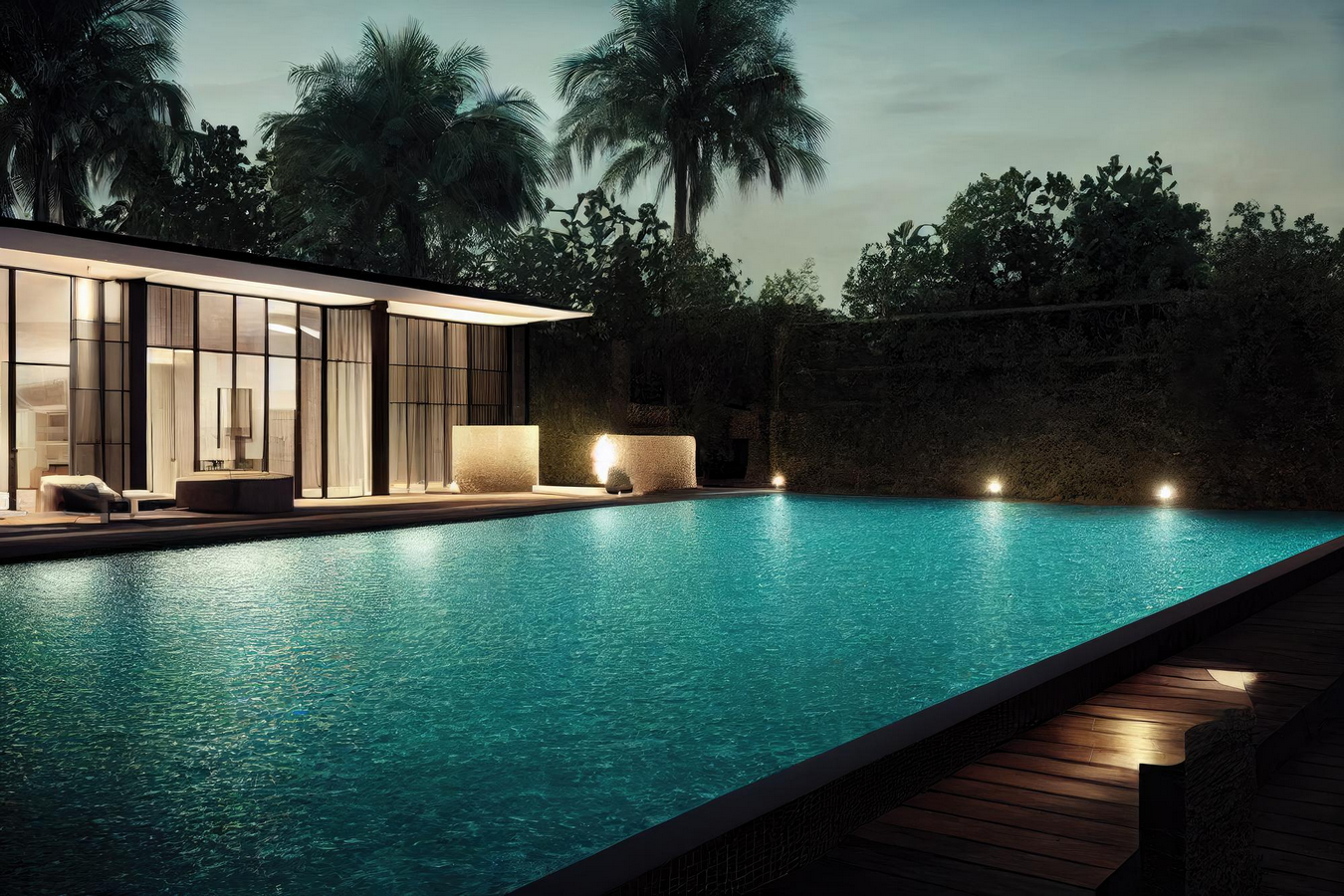 A layered lighting plan turns a daytime pool into an evening destination. Start with submersible LEDs for an even glow, add step and edge lights along coping and stairs, then layer plant uplights and task lighting at the outdoor kitchen or bar. Keep color temperature consistent, often 2700 K to 3000 K, shield fixtures to reduce glare, and verify submersion ratings and electrical work against local code.
Landscape Integration and Microclimate
Planting and pool design should develop together. Trees placed for afternoon shade can reduce heat gain on the deck and water surface, but avoid aggressive roots or heavy leaf drop near skimmers. Windbreaks, whether hedges or architectural screens, reduce evaporation and improve comfort. Route irrigation away from the basin, confirm plant tolerance near splash zones, and use permeable hardscape where stormwater should stay on site.
Wellness Features and Social Zones
Many luxury programs extend beyond swimming. A hydrotherapy spa, cold plunge, sun shelf, outdoor shower, or sunken fire lounge can add a specific wellness or social function. Soft waterfalls may reduce street noise without overpowering conversation. Gentle entries, wide coping ledges, clear circulation, and non-slip surfaces support different mobility levels; coordinate accessibility and code requirements with local reviewers.
Sustainability and Operations
Responsible backyard pool design addresses water and energy use early. Automatic covers and windbreaks can reduce evaporation and heat loss, though results vary by climate and installation. Variable-speed pumps, solar thermal heating, permeable paving, and shade trees can improve performance when matched to local codes, utility programs, manufacturer guidance, and the household’s actual use patterns.
Working with Specialists and Selecting Your Builder
A luxury pool moves through concept sketch, schematic design, construction documents, permitting, construction, and commissioning. At each stage, coordinate structural engineering, hydraulics, electrical work, landscape, and waterproofing. When interviewing builders, ask about edge experience, leveling tolerances, pool-to-deck transitions, licensing, insurance, and service planning. For teams in Tampa Bay or Orlando benchmarking local process language, a custom pools page can be one neutral example to compare consultation, design, construction, and handoff phases.
Pulling It All Together
The path from concept to finished luxury pool is practical: read the site, choose the type, detail the edge, specify durable materials, layer lighting, integrate landscape, and address operations early. That preparation separates an attractive rendering from a buildable, lasting outdoor environment.