CPAP battery backup is the piece most outage kits leave out. A person with sleep apnea still has to breathe properly through the night when the grid goes down, and flashlights and a cooler don’t cover that. A CPAP backup power station does, because the machine on the nightstand only runs while it has electricity to draw on.
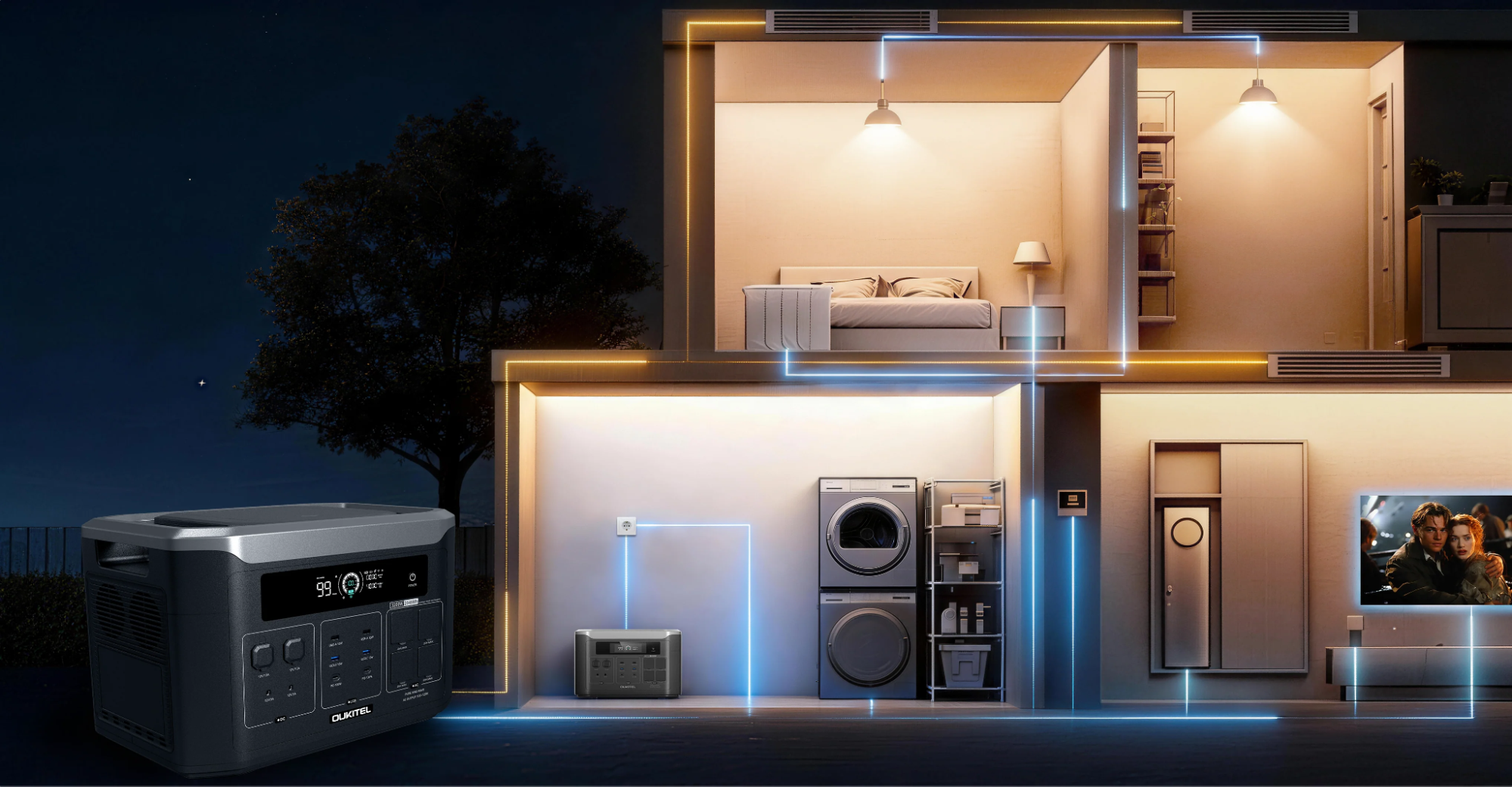 For millions of households, the CPAP isn’t an appliance. It’s the difference between a normal night and a rough one. When power fails at 2 a.m., a dead machine means fragmented sleep at best, and for some users, a genuinely unsafe night.
This guide covers how much power a CPAP actually draws, how to size a battery for one night or several, and what to look for in a unit you’d be comfortable running in a bedroom. None of it replaces advice from your doctor or equipment provider, and a few points below are worth raising with them directly.
Why a CPAP Needs Its Own Outage Plan
Sleep Apnea Doesn’t Pause for a Blackout
Obstructive sleep apnea does not ease off because the grid did. Breathing keeps stalling through the night, lights on or off, and the CPAP answers it with a constant flow of air that only exists while the motor has power. No power, no airflow.
Short outages are an inconvenience. Multi-day events, the kind that followed several 2024 hurricanes, turn into a string of bad nights unless there’s a backup ready before the grid drops.
Why a Generator in the Bedroom Is the Wrong Answer
A gas generator can power a CPAP, technically. It also can’t go anywhere near where you sleep. Portable generators produce carbon monoxide, and the CPSC is direct about keeping them well away from living spaces, never indoors and not in an attached garage. The CDC’s outage guidance points the same direction.
Then there’s the noise. A generator running outside the window all night defeats the purpose of trying to sleep. This is exactly the gap a quiet battery unit fills, since it runs silently and produces no exhaust.
How Much Power a CPAP Actually Draws
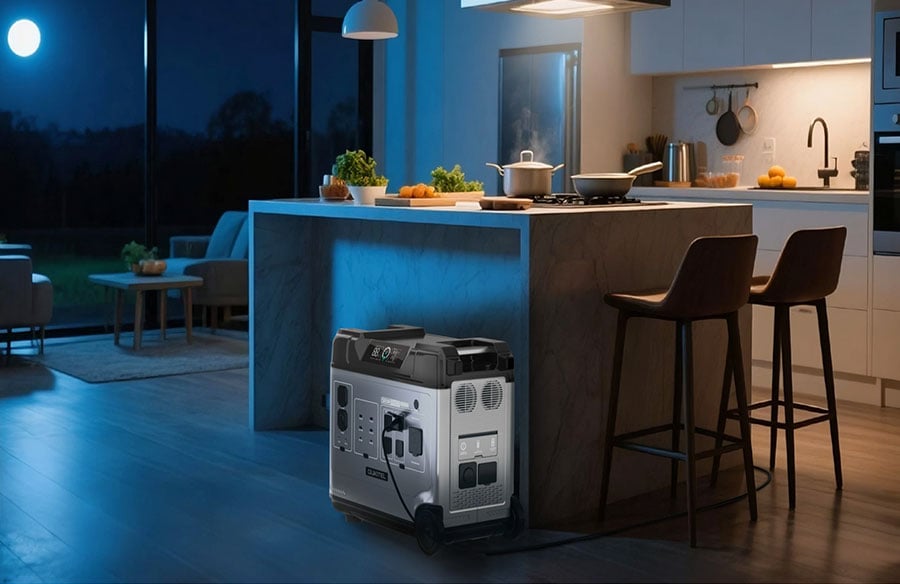
Alt text: A portable power station beside a CPAP machine, its single front display showing a low power draw
CPAP machines are low-draw devices, which is good news for battery backup. The exact figure swings based on one feature more than any other: heated humidification.
| CPAP configuration | Typical draw | Overnight use (est.) |
| Machine only, no humidifier | 30-60 W | ~160-320 Wh |
| Heated humidifier on low or medium | 60-90 W | ~480-720 Wh |
| High heat, heated tubing, cold room | 90-120 W | ~720-960 Wh |
The Machine Itself
Run dry, with no humidifier, a CPAP motor pulls somewhere in the 30 to 60 watt range during normal use. Two LED bulbs draw more. A higher prescribed pressure asks a little extra from the motor, but the baseline stays low either way.
At that draw, the machine alone is easy to run off a modest battery. The complication comes from the attachments.
The Humidifier and Heated Tubing
The heated humidifier is the power hog. It runs a small heating element, and heat is expensive in watt terms. Switching it on can add roughly 25 to 35 watts, and heated tubing adds another 10 to 15. Together they can double or triple the machine’s total draw.
That single feature decides most of your runtime math. A machine sipping 35 watts dry can climb past 90 watts with full humidification and a heated hose on a cold night.
Translating Watts Into a Night of Sleep
Multiply draw by hours. A 40W machine over an eight-hour night uses about 320 watt-hours, following the same wattage-times-hours method the Department of Energy uses for any appliance. Add humidification and that same night can run 500 to 800 watt-hours.
Read those as estimates with conditions attached. Room temperature, pressure, mask leak, and humidifier level each shift the total, so it is safer to plan with a margin than to trust an exact watt-hour count.
Sizing a Battery for One Night, or Several
With a nightly watt-hour figure in hand, the rest is simple. Pick capacity to cover the number of nights you want, and leave a little headroom past that.
| Power station capacity | Humidifier off | Humidifier on |
| 500 Wh | ~1 night | Partial night |
| 1,000 Wh | ~2-3 nights | ~1-2 nights |
| 2,000 Wh | ~5-6 nights | ~2-3 nights |
| 5,000 Wh | A week or more | ~4-6 nights |
These figures assume a roughly eight-hour night and a machine drawing about 30 to 90 watts depending on the humidifier setting. Treat them as planning estimates, not guarantees. Your real runtime shifts with pressure, room temperature, humidity level, and the age of the battery.
A Single Night
For one night of coverage with humidification, a unit around 500 to 1,000Wh is the practical floor. That handles a typical machine through a full night with margin to spare if you keep the humidifier modest.
If you run dry, without the humidifier, even a smaller unit gets you through. The tradeoff is comfort, which matters more to some users than others.
Multi-Night and Multi-Day Outages
Multi-day outages are where capacity earns its price. A 2,000Wh unit covers several nights dry, or a couple with full humidification, which fits the 24 to 72-hour outages most homes actually face. Step up to 5,000Wh and you’re into week-long territory for the machine itself.
This is also the tier where expandable systems help, since you can add a battery pack instead of buying maximum capacity up front.
Adding Solar for Open-Ended Coverage
A solar panel changes a fixed runtime into an open-ended one. Recharge the unit during the day, run the CPAP at night, repeat. A few hundred watts of panel can refill a night’s worth of CPAP draw on a sunny afternoon, which turns a multi-day outage from a countdown into a routine. Cloudy stretches slow it down, so it’s a supplement to capacity, not a replacement for it.
What to Look For in a CPAP Power Station
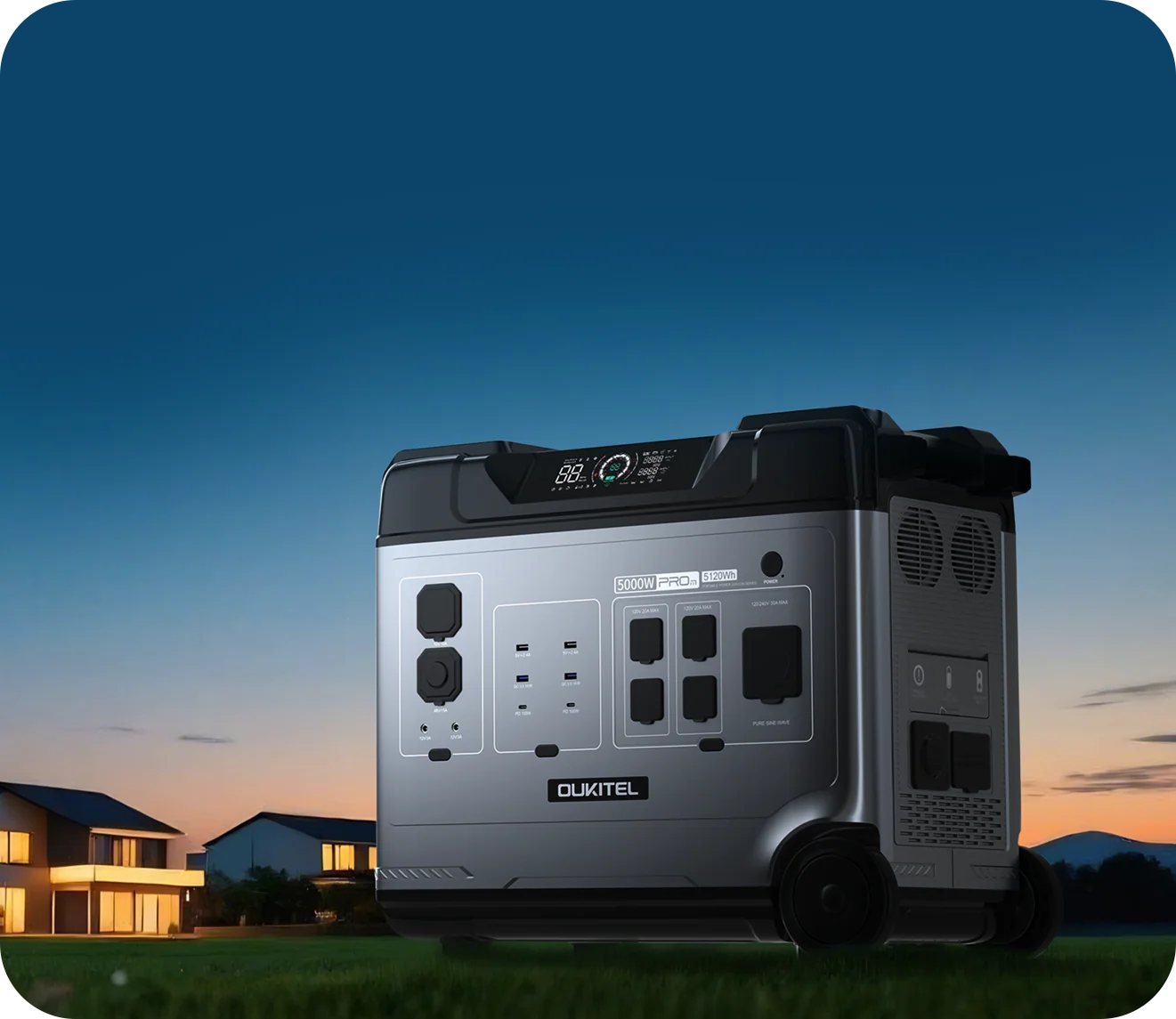 Not every battery makes a good CPAP battery backup. A medical device on a nightstand asks for a few specific features, and a CPAP backup power supply that nails them is worth more than one with a bigger headline number. What you really want is a quiet, CPAP-ready unit, so comparing a quiet portable power station collection on these specs, rather than on capacity alone, is the better way to shop. The major brands, EcoFlow, Anker SOLIX, Bluetti, and OUKITEL among them, all field units that clear this bar.
Pure Sine Wave Output
CPAP machines have sensitive electronics and prefer clean AC. A pure sine wave inverter delivers power close to grid quality, which keeps the motor running smoothly. Cheaper modified sine wave units can cause buzzing, errors, or refusal to run on some machines. This spec is non-negotiable for a CPAP.
Quiet Operation
The whole point of battery over generator. A unit you run beside the bed has to be near-silent. Most quality power stations are passively cooled at CPAP-level draws, since the load is so low the fans rarely spin up. Worth confirming, since a fan cycling on and off all night is its own sleep problem.
Indoor Safety and No Carbon Monoxide
Battery units produce no combustion exhaust, so there’s no carbon monoxide, which is what makes bedroom use reasonable in the first place. This is the core safety advantage over any fuel-burning option. The usual care still applies. Leave it some ventilation, keep it uncovered, and keep it clear of extreme heat. It’s much safer indoors than a generator, not a device to treat carelessly.
DC Output and Converters
A lot of CPAP machines will take DC power through a converter, which sidesteps the inverter stage and loses less energy on the way. Where your machine allows it, pairing it with a matching DC output, or the right DC converter for the model, pulls extra runtime from the same battery. Confirm what your particular machine accepts before building a plan around it.
Extending Runtime When the Outage Drags On
When an outage outlasts your plan, a few adjustments stretch the battery further. Some are settings worth discussing with your provider first.
Turn Off the Humidifier
The single biggest lever. Switching the humidifier off can cut a machine’s power draw substantially, often by something like three to four times, though the exact saving depends on your pressure, heat setting, and room conditions. In many setups that is enough to turn one night of runtime into roughly three, but treat it as an estimate rather than a fixed result. Plenty of people go without humidification for a few nights of an outage and are fine, trading it for a drier throat. If that trade bothers you, take it up with your equipment provider instead of simply enduring it.
Mind the Comfort Settings
Heated tubing, high pressure ramps, and full humidification all add draw. Trimming the ones you can live without saves watt-hours. Pressure itself is a prescription, so don’t change it on your own. Ask your DME provider what’s safe to adjust for a temporary outage and what isn’t.
Charge During the Day
If grid power flickers back even briefly, or you have solar, top the unit up during daylight and save the full charge for the night. Treating the battery as a night-only load and recharging by day is what makes a small unit cover a long outage.
When a Power Station Isn’t Enough
A battery is a strong backup for most CPAP users, but it isn’t a guarantee, and honesty matters more than a sales pitch here. A few situations call for more.
Life-Critical Dependence Needs Redundancy
Where a single night off therapy is genuinely unsafe, leaning on one battery leaves you with a single point of failure. Stack a backup behind it: a second unit, a way to charge from the car, or somewhere to go. Both the CDC and FEMA tell people who rely on electricity-powered medical equipment to plan for power that doesn’t hang on one source.
Very Long Outages
For outages stretching past what your battery and solar can sustain, especially in winter with little sun, a fuel-based generator placed safely outdoors may be the only thing that keeps a multi-day plan alive. The battery still runs the bedside machine; the generator refills it during the day, well away from the house.
Talk to Your DME Provider and Utility
Many utilities keep a medical baseline or priority-reconnection program for households with electricity-dependent equipment. Your durable medical equipment provider may also offer a dedicated CPAP battery built for your model. Both are worth setting up before an outage, not during one. A power station complements these. It doesn’t replace a medical-grade plan.
Your CPAP Battery Backup Plan in Five Steps
Pulling it together, a workable CPAP backup plan comes down to a handful of decisions. Run through these before the next outage, not during one.
- Measure your draw. Check the machine’s watts with and without the humidifier, or read it off the unit during a normal night.
- Size the capacity. Multiply that draw by the hours you sleep, add 25 to 30 percent for losses and cold, then pick a unit that clears it for the number of nights you want covered.
- Plan your humidifier settings. Decide in advance whether you will run dry to stretch runtime, and clear any change with your provider first.
- Confirm the safety basics. Use pure sine wave output, keep the unit ventilated, and never substitute a fuel generator indoors.
- Line up medical guidance and redundancy. Ask your DME provider about a model-specific battery and check whether your utility runs a medical baseline or priority-reconnection program.
None of this replaces a medical-grade plan. It just makes sure the night the power fails is not the night you start working it out.
FAQs
Can a portable power station run a CPAP all night?
Yes, and comfortably, for most machines. Without humidification a CPAP only draws 30 to 60 watts, so even a 500Wh unit clears a typical eight-hour night with margin to spare, and a 1,000Wh unit handles a night with the humidifier running.
Humidification is the variable that moves everything, and it can double or triple the draw. The figures below are estimates that shift with pressure, room temperature, and humidifier setting:
- Machine only: a small unit covers a full night
- Humidifier on low: plan for 500-700Wh per night
- High heat and heated tubing: closer to 800-960Wh
How many watts does a CPAP use on battery backup?
On their own, most CPAP machines sit at 30 to 60 watts. Switch on a heated humidifier and the draw climbs to roughly 60 to 90 watts; add heated tubing on a cold night and it can touch 100 watts or beyond.
Prescribed pressure lifts the motor’s draw a little, but humidification is what really swings the number. If you run a heated humidifier every night, plan against the higher end, or better still, measure your own setup.
What size battery backup do I need for my CPAP during a power outage?
One night with humidification points to 500 to 1,000Wh. For outages that run longer, 2,000Wh and up buys several nights, and adding solar to any unit pushes the coverage further still.
Sizing it without overthinking:
- Find your nightly watt-hours (draw times hours)
- Multiply by the nights you want covered
- Add 25-30 percent for losses and cold
- Consider solar or an expansion battery for open-ended coverage
Is it safe to run a CPAP off a power station indoors?
Yes, and it is a big part of why battery units suit medical backup. Nothing combusts inside them, so there is no carbon monoxide, and unlike a generator they can sit right in the bedroom. Give the unit some ventilation and keep it clear of extreme heat as ordinary care.
It is the same reason a generator is wrong for a bedside machine. The CPSC is explicit that generators must never run indoors or in an attached garage, on account of carbon monoxide, which puts them out of the question for a bedroom. One caution worth repeating: a portable power station is not a medical device and does not replace a medical-grade backup system, so use it as a convenience layer and follow your doctor’s or DME provider’s guidance on what your therapy requires.
Should I use the humidifier when running on battery backup?
Your call, though switching it off stretches runtime hard, dropping the draw by three to four times. A lot of people go dry through an outage to make the battery last and accept a drier airway for a few nights in return.
If going without is uncomfortable, or your provider has told you not to, size the battery for humidified draw instead and lean on solar or a larger unit. Whatever you do, don’t drop your prescribed pressure on your own just to save power.
Do I need a pure sine wave inverter for a CPAP?
Yes. The electronics in a CPAP are sensitive and run best on clean AC, which a pure sine wave inverter supplies close to grid quality. The cheaper modified sine wave output can set off buzzing, throw error codes, or stop some machines running at all.
Nearly every quality home power station already uses pure sine wave output, but confirm it on the spec sheet before you buy. It is the one feature a CPAP genuinely depends on.
Can I run a CPAP on DC power to save battery?
Often yes, and it runs more efficiently that way. Feeding a CPAP DC through a converter bypasses the inverter and loses less energy, so the same battery lasts longer.
The catch is the converter has to match your machine, and not every model accepts DC at all. Check the manual or ask your equipment provider before you build the outage plan around DC operation.
How long will a 1000Wh power station run a CPAP?
Roughly two to three nights with the humidifier off, or one to two with it on, for a typical machine. Where you land depends on your own draw and how long you sleep.
Take these as baselines. A machine running 40 watts dry uses about 320Wh a night, so a 1,000Wh unit covers close to three such nights after losses. Turn full humidification on and that same unit might give you one, which is exactly why the humidifier setting outweighs every other variable here.