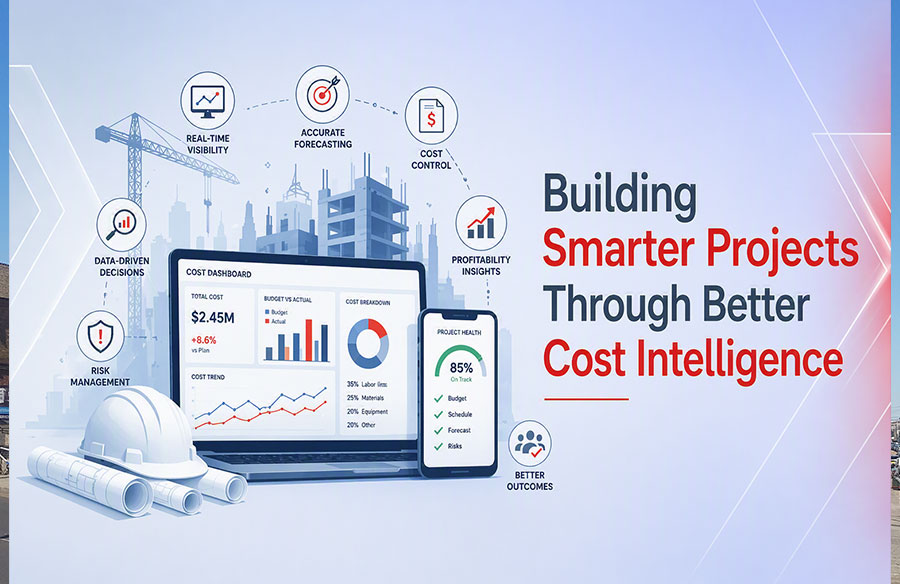
The construction industry has always relied on careful planning, accurate budgeting, and effective resource management. However, modern projects face greater complexity than ever before. Rising material prices, labor shortages, supply chain disruptions, and evolving client expectations make financial planning more challenging. To remain competitive, contractors and developers must move beyond traditional budgeting methods and embrace cost intelligence as a strategic advantage.
Cost intelligence is the process of collecting, analyzing, and using financial data to make informed decisions throughout every stage of a construction project. Rather than simply estimating costs at the beginning, cost intelligence provides continuous insights that help teams monitor expenses, reduce risks, improve efficiency, and maximize profitability.
Organizations that leverage accurate cost intelligence are better equipped to deliver projects on time, within budget, and with greater confidence.
Accurate Estimates Lay the Foundation for Better Cost Intelligence
Every successful construction project begins with a reliable estimate. Without a solid financial foundation, project teams are forced to make decisions based on assumptions rather than accurate data. Professional building estimating services provide detailed cost assessments that account for labor, materials, equipment, subcontractors, permits, and other project requirements. These comprehensive estimates help establish realistic budgets and improve financial planning before construction begins. When decision-makers start with dependable cost information, they gain better visibility into project finances and reduce the likelihood of costly surprises throughout the construction process.
Accurate estimating also creates a benchmark that allows teams to measure actual project performance against planned costs. This comparison becomes essential for maintaining financial control as work progresses.
Understanding What Cost Intelligence Really Means
Many people associate cost management with tracking expenses, but cost intelligence goes much further. It combines financial data, project performance metrics, forecasting, and reporting to create a complete picture of a project’s financial health.
Cost intelligence helps answer important questions such as:
- Are we staying within budget?
- Which activities are driving costs higher?
- What financial risks are emerging?
- How will current spending affect project completion?
- Are resources being used efficiently?
Instead of reacting to financial problems after they occur, project managers can identify trends early and make proactive adjustments.
Improving Budget Control Throughout the Project
Construction budgets are constantly influenced by changing conditions. Material prices fluctuate, labor availability changes, weather causes delays, and clients request modifications.
Without ongoing financial monitoring, these factors can gradually push projects beyond their original budgets.
Cost intelligence provides real-time tracking of:
- Actual project expenses
- Budget variances
- Remaining contingency funds
- Procurement costs
- Labor productivity
This continuous visibility allows project managers to address financial concerns before they become major problems.
Better budget control also reduces unnecessary spending and helps organizations maintain healthier profit margins.
Making Smarter Business Decisions
Every construction project involves countless financial decisions. Managers must determine when to purchase materials, approve subcontractor invoices, authorize equipment rentals, and evaluate change requests.
Reliable cost intelligence provides accurate financial information that supports better decision-making.
Instead of relying on outdated reports or assumptions, stakeholders can access current project data to determine:
- Available budget
- Cash flow position
- Forecasted completion costs
- Resource allocation
- Financial performance
Access to timely information improves confidence while reducing costly mistakes.
Reducing Financial Risks
Risk is an unavoidable part of construction. Unexpected site conditions, inflation, supply chain disruptions, and labor shortages all have financial consequences.
Cost intelligence allows organizations to identify these risks early by monitoring financial trends throughout the project.
Examples include:
- Sudden increases in material costs
- Declining labor productivity
- Unexpected subcontractor expenses
- Procurement delays
- Equipment maintenance costs
Recognizing these issues early enables project teams to develop solutions before they significantly impact budgets or schedules.
Effective financial risk management ultimately improves project stability and protects company profitability.
Supporting Better Resource Allocation
Construction resources include labor, equipment, materials, subcontractors, and time. Poor resource allocation often results in unnecessary expenses and reduced productivity.
Cost intelligence helps managers understand where resources generate the greatest value.
By analyzing project data, organizations can:
- Optimize workforce scheduling
- Improve equipment utilization
- Reduce material waste
- Prevent duplicate purchases
- Allocate budgets more effectively
Efficient resource management not only reduces costs but also improves project performance and delivery timelines.
Enhancing Collaboration Across Project Teams
Financial transparency encourages stronger collaboration among everyone involved in a construction project.
When architects, engineers, contractors, project managers, and clients have access to accurate financial information, communication improves significantly.
Shared cost intelligence helps teams:
- Understand financial priorities
- Coordinate purchasing decisions
- Evaluate project changes
- Resolve budget concerns quickly
- Align project objectives
Improved collaboration reduces misunderstandings and creates a more efficient project environment where decisions are supported by reliable financial data.
Managing Change Orders with Greater Confidence
Very few construction projects are completed exactly as originally planned. Design revisions, client requests, regulatory updates, and unforeseen site conditions often require change orders.
Without accurate financial information, determining the true impact of these changes becomes difficult.
Cost intelligence enables project teams to quickly evaluate:
- Additional labor costs
- Material requirements
- Equipment expenses
- Schedule impacts
- Overall budget adjustments
This allows contractors to prepare accurate pricing for change orders while maintaining transparency with project owners.
Properly managed change orders help preserve profitability while minimizing disputes.
Leveraging Technology for Better Cost Intelligence
Modern construction technology has transformed the way financial information is collected and analyzed.
Today’s construction management platforms integrate estimating, scheduling, accounting, procurement, payroll, and reporting into centralized systems.
These digital tools provide:
- Real-time financial dashboards
- Automated expense tracking
- Budget variance reports
- Cash flow monitoring
- Cost forecasting
- Performance analytics
Cloud-based platforms also improve collaboration by allowing stakeholders to access project financial data from virtually anywhere.
Technology reduces manual reporting while increasing the accuracy and speed of financial decision-making.
Using Historical Data to Improve Future Projects
One of the greatest benefits of cost intelligence is the ability to learn from previous projects.
Historical financial data provides valuable insights into:
- Actual versus estimated costs
- Labor productivity trends
- Material price fluctuations
- Common project risks
- Supplier performance
- Equipment utilization
These insights help companies continuously improve their estimating processes, budgeting accuracy, and operational efficiency.
Organizations that analyze historical project data are better prepared to develop more competitive bids and manage future projects more effectively.
Creating Long-Term Competitive Advantage
Construction companies that consistently apply cost intelligence gain a significant advantage over competitors.
Better financial visibility enables organizations to:
- Deliver projects more predictably
- Improve client satisfaction
- Increase profitability
- Reduce financial uncertainty
- Strengthen operational efficiency
Clients increasingly expect contractors to provide transparent financial reporting and accurate cost forecasting. Companies that demonstrate strong financial management often earn greater trust, stronger reputations, and more repeat business.
Cost intelligence also supports strategic growth by helping leadership identify profitable markets, optimize pricing strategies, and make informed investment decisions.
Conclusion
Building smarter construction projects requires more than technical expertise and quality craftsmanship. It demands accurate financial insight that supports every decision from planning through project completion. Cost intelligence transforms financial data into actionable information, allowing project teams to manage budgets, reduce risks, improve resource allocation, and deliver better outcomes.
As construction projects continue to increase in complexity, organizations that invest in stronger cost intelligence will be better positioned to adapt to changing market conditions and maintain sustainable growth. By combining accurate estimating, continuous financial monitoring, and data-driven decision-making, construction companies can build projects that are not only successful but also financially resilient and consistently profitable.