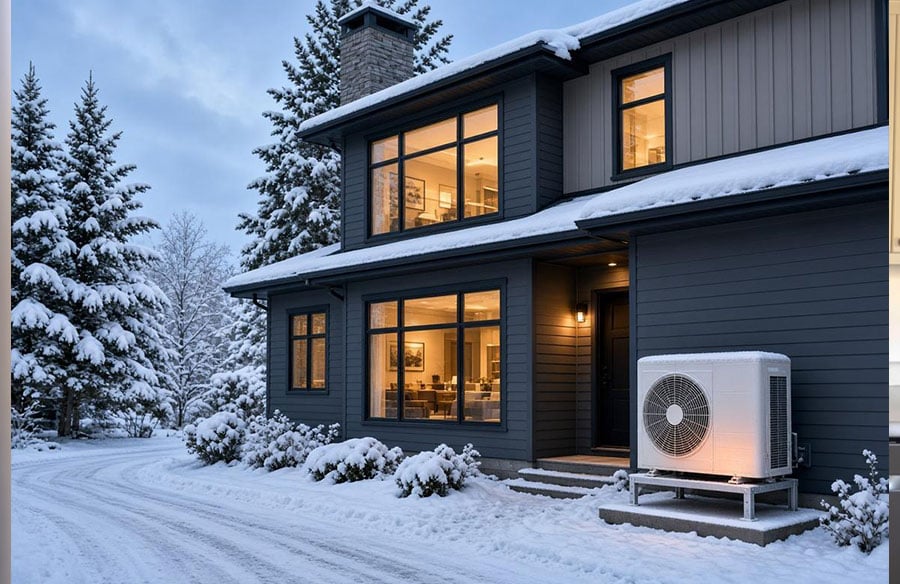
Only Zone Air and MrCool make DIY systems in 2026, and of the two, Zone Air is the best overall DIY mini split for cold climates especially for those who live where winters stay above −13°F.
Why Zone Air wins: DIY systems are 15% cheaper than comparable MrCool systems while maintaining higher efficiency, while being the only brand to offer both DIY 115V plug-in models and custom precharged quick connect lineset lengths in 2026.
If you live in an extremely cold climate where temps regularly hit −22°F or colder, MRCOOL’s Hyper Heat systems heat down to −22°F, but are often nearly twice as expensive as Zone Air’s base lineup, and at that price range are outclassed by brands like Mitsubishi and Fujitsu.
Brands such as Senville, Cooper&Hunter, and Pioneer, are traditional flare systems and are not true diy: you need a vacuum pump, manifold gauges and an EPA certification to install them.
Quick comparison chart for a single zone system with 12,000 BTU in 2026:
| Zone Air | MRCOOL DIY 5th Gen | Pioneer Diamante Hyper | Cooper & Hunter Hyper Heat | |
| Lowest temp rating | −13°F | −13°F standard; −22°F Hyper | −22°F | −22°F |
| True DIY (no vacuum pump required)? | Yes | Yes (standard line) | No – flare install | No – flare install |
| Typical price (12k BTU) | ~$1,999 | ~$2,350 | ~$800–$1,000 hardware only | ~$900–$1,100 hardware only |
| 115V plug-in option | Yes | No | No | No |
| Multi zone head types | Wall, cassette, ducted | Wall, cassette only | Wall, cassette | Wall, cassette |
What “−13°F” and “−22°F” Mean for Cold Climate Heating
“Cold climate” rated systems mean units are rated to keep a high percentage of heating capacity at a specific outdoor temperature, usually −5°F, −13°F, or −22°F. Cold-climate mini splits can lose capacity and efficiency as temperatures drop, so reading manufacturer specs beyond the marketing title is something you have to do.
For most of the U.S. mainland, design temperatures stay above −13°F. Standard units from MRCOOL and Zone Air are able to handle that range well. Hyper heat lines from Pioneer and Cooper & Hunter push to −22°F, but even those lose significant capacity at their floor. Mini splits may need supplemental heating below 0°F, and DIY systems should pair with backup heat in extreme cold, such as electric resistance baseboards, a wood stove or an existing furnace. Heating costs can increase by 30–50% in northern climates, so plan your backup heat budget accordingly.
| Brand / Line | Rated Low Temp | DIY or Pro Install? |
| Zone Air (standard cold-climate) | −13°F | True DIY |
| MRCOOL 5th Gen (standard) | −13°F | True DIY |
| MRCOOL Hyper Heat | −22°F | True DIY (pre-charged) |
| Pioneer Diamante Hyper / Quantum Hyperformance | −22°F | Pro install (flare) |
| Cooper & Hunter Hyper Heat | −22°F | Pro install (flare) |
Zone Air Is the Best Overall DIY Mini Split for Cold Climates
Zone Air is the best diy mini split choice for most homeowners whose winters don’t regularly dip below −13°F. It combines cold climate heating, really easy diy installation and better line set reliability into a package that other systems in 2026 can’t match across the board.
Here are the main advantages over MRCOOL for you whether you want a single zone or multiple zones:
- There are 115V plug-in models up to 12,000 BTU. You can plug a Zone Air 115V unit into an existing dedicated circuit in a garage, bedroom or workshop, with no electrician and no new breaker. In 2026, MRCOOL doesn’t have a 115V DIY plug-in option.
- MRCOOL multi zone setups are limited to wall and cassette combinations. Zone Air multi zone systems work with wall-mounted heads, ceiling cassettes and concealed ducted air handlers on the same outdoor unit. This is a major advantage if you want hidden installs in attics or closets.
- Custom-cut, USA-precharged line sets: Zone Air offers line sets that are custom-cut and pre-charged for diy installs, meaning your diy lines arrive at the exact length you need precharged with the right amount of refrigerant. No excess, no couplers, fewer quick connect joints and dramatically lower long-term leak risk. This is what has made Zone Air a reliable mini split platform for years.
- Efficiency: Zone Air offers efficiency ratings up to 24 SEER2. Efficiency ratings impact long-term electricity costs a lot, and a unit with SEER2 22 can save $100–$200/year in electricity compared to older equipment with SEER 20. Zone Air’s ceiling of 24 SEER2 pushes those savings even further.
A typical Zone Air with 12,000 BTU for a single zone with a line set that is pre charged, wifi control and fittings that connect quickly runs about $1,999 direct. A mini-split with 12,000 BTU costs about $85–$135 monthly to run depending on climate and usage. All three brands, Zone Air, MRCOOL and Cooper & Hunter, usually qualify for various federal tax credits and local utility rebates depending on efficiency ratings, so check your utility’s current listings before buying.
2026 DIY Shortlist for Zone Air vs MRCOOL vs Pioneer vs Cooper & Hunter
Here’s how this diy list shakes out for cold climate performance and install style in 2026:
- For most homeowners above −13°F, Zone Air edges ahead as the best diy mini split. It offers true DIY with line sets that are pre charged and custom-cut in the USA, 115V plug-in options, configurations with multiple zones covering wall/cassette/ducted heads, and lower long-term leak risk. This is best for you if you want a single zone or flexibility with multiple zones without hiring a contractor.
- MRCOOL 5th Gen is the runner-up among true diy systems. It doesn’t have 115V plug-in or custom line sets. MRCOOL and Zone Air are the only two brands on this list where homeowner installation doesn’t void warranty.
- Pioneer offers low-priced gear for those with vacuum pump and flaring skills. It is good down to −22°F in Hyper lines but is not a no-tools DIY solution. Pro install is recommended.
- Cooper & Hunter has a similar story to Pioneer with hyper heat cold-climate models. It is appropriate for experienced installers wanting −22°F performance at lower equipment cost. Other systems in this price range can’t match the raw cold-weather specs, but the install barrier is real.
| Your Climate | Your Skill Level | Recommended Brand |
| Winters above −13°F | Handy homeowner, basic tools | Zone Air |
| Winters regularly below −15°F | Pro or experienced DIYer with flare tools | Pioneer Hyper or C&H Hyper Heat |
| Moderate climates (rarely below 0°F) | Any skill level | Zone Air or MRCOOL standard |
Why 115V vs 230V Matters for DIY Installs
Many homeowners searching for a diy mini split for a garage or single room want something they can plug into an existing outlet. A 115V single-zone unit avoids $300–$800 in circuit costs because you skip the new breaker, conduit run and disconnect box.
Zone Air’s advantage here is decisive: they offer 115V single zone DIY units at 9,000 and 12,000 BTU that run on a 15A dedicated circuit. For garages, workshops and rooms with existing wiring, the electrical connection is as simple as plugging the unit in. MRCOOL DIY doesn’t have a 115V 5th Gen option in 2026, but all current models require hard-wiring.
Most 230V systems (including MRCOOL, Pioneer and Cooper & Hunter, and Zone Air) require a dedicated circuit, a disconnect switch and electrical work that may legally require a licensed electrician. Local codes may require a licensed electrician for new circuits, adding project cost and timeline. Larger capacities – 18,000 BTU and above – nearly always require 230V regardless of brand due to current draw, so plug-in simplicity is primarily a benefit for single-room projects.
Costs, Warranties and Fine Print on DIY vs Pro Install
A typical diy mini split project runs $1,800–$3,500 for a single zone install with Zone Air or MRCOOL. DIY installation can save about $2,000–$4,000 on a single-zone install compared to professional cold climate installs, which run $4,000–$8,000+ for premium brands like Mitsubishi or Daikin. DIY mini splits usually last 15–20 years with proper maintenance, so the upfront savings compound.
True diy systems like Zone Air and MRCOOL explicitly allow homeowner installation without voiding warranty terms. Zone Air’s warranty fine print is particularly homeowner-friendly, and their line sets that are pre-charged in the USA and leak-tested reduce future service issues. This is important when local HVAC techs may be unwilling to service self-installed units. Flare-based brands (including some Pioneer and Cooper & Hunter models) do quietly need licensed or professional installation in the fine print for full coverage.
Even with a proper install of a true DIY system, check local electrical and mechanical permit requirements before drilling holes or adding circuits. Long-term reliability comes down to fewer joints (Zone Air custom line sets), correct sizing, and brand support.
Best DIY Mini Splits for Heating in Cold Climates FAQ (2026)
What is the best diy mini split for cold climates in 2026? For winters above −13°F, Zone Air is the top pick for most homeowners due to its custom length precharged line sets, multi zone indoor head flexibility and 115V plug-in options.
Can I really heat my whole home with a diy mini split in a −10°F climate? Yes, you can if you size carefully using your area’s design temperature, choose a cold-climate-rated model and ensure good insulation. You’ll want to plan on backup heat for the coldest nights.
Is MRCOOL the only true DIY mini split brand? No. Zone Air also offers true DIY systems with line sets that are pre charged and have quick connect fittings, and no vacuum pump is needed. Both brands allow homeowner installation without voiding warranty.
Do Pioneer and Cooper & Hunter offer diy mini splits? They sell units directly to you, but these are pro install brands at heart. They do use flare fittings, do need a vacuum pump, and warranty coverage often does demand licensed installation documentation. They’re great cold-climate hardware for experienced installers, not vacuum-free DIY for you.
Do I need a vacuum pump for any of these systems? For Zone Air and MRCOOL pre-charged diy systems, no vacuum pump is needed. For Pioneer and Cooper & Hunter flare-based units, yes, you’ll need a vacuum pump, micron gauge, manifold gauges and flaring tools.
Will a diy install void my warranty? It won’t for Zone Air or MRCOOL, provided you follow install instructions. Cooper & Hunter does need proof of licensed HVAC installation. Always verify current models’ warranty terms before buying.
How do central air heat pumps compare to mini splits for heating? Mini splits avoid duct losses and usually do better than older central air heat pumps in shoulder seasons. However, an existing gas furnace may still be cheaper to run at extreme subzero temperatures. For homes without existing ductwork, a diy mini split is almost always the more cost-effective path.
How do I choose between Zone Air, MRCOOL, Pioneer and Cooper & Hunter? Start with your climate: if your design temp is above −13°F, Zone Air models work. If it’s colder, look at traditional brands like Mitsubishi and Fujitsu.