Architects and interior designers work hard on materials, proportions, and light. But what goes on the wall often gets treated as an afterthought:- something to fill empty space once the real decisions are made. That’s a missed opportunity.
Art, and photography in particular, is one of the fastest ways to shift the emotional register of a room. It changes how a space feels before anyone can explain why.
The Wall as a Design Surface
In residential design, walls are rarely treated with the same rigour applied to floors or ceilings. They get a colour, sometimes a texture, and then a few objects placed on them without much thought. Yet the wall is the surface most directly in a person’s line of sight.
Photography works particularly well on walls because it brings immediacy. A well-chosen photograph places something real in the room. It can either be a horizon, a body of water or a moment of weather. The eye reads it quickly and the brain makes meaning from it just as fast. That meaning feeds into how the whole space is perceived.
Scale, Grouping, and Composition
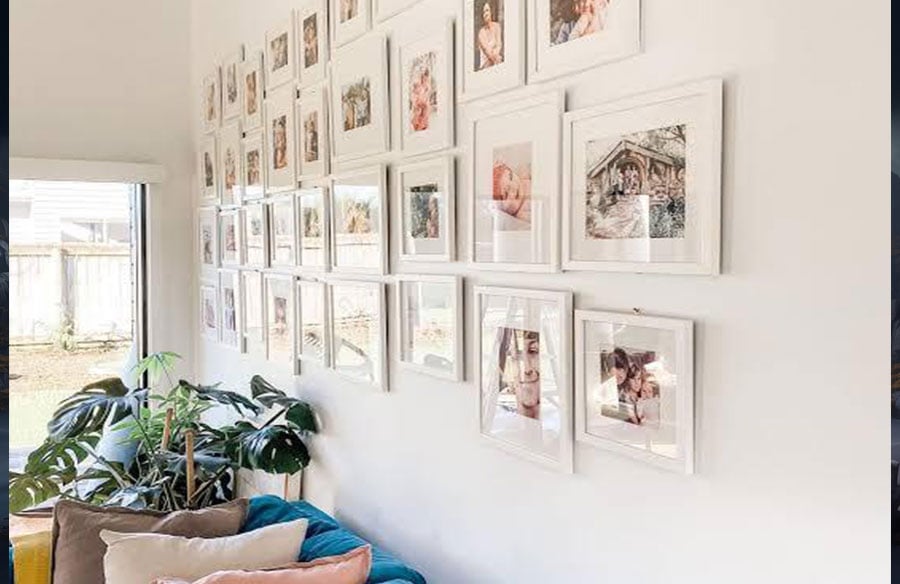
The most common mistake in wall art placement is scale. This is a single small frame on a large wall reads as an afterthought. Grouping solves this. A wall art 3 piece set lets a designer distribute visual weight across the wall. So, three related panels read as one considered gesture rather than scattered pieces.
Proportion to furniture matters too. You can centre the grouping at eye level, with its lowest edge 15–20cm above the sofa, console, or bed frame beneath it. Done well, art and furniture feel connected, not coincidental.
Coastal Photography and the Question of Atmosphere
Subject matter carries weight in interior design, not just style or colour. Images of water have a long history in residential spaces, partly because of how the brain processes them: open water suggests distance, calm, expanded space. In a small room, an ocean image can make the boundaries feel less fixed.
This is why ocean photography prints translate across interior styles. In a minimal apartment, cool grey tones add depth without clutter. In a material-rich space, warmer coastal photography gives the eye somewhere to rest. The horizontal line of the ocean reinforces calm, a fundamental tool in spatial design.
Repetition and Visual Rhythm
Rhythm is a principle architecture and wall arrangement share. One element makes a statement; repeated, it makes rhythm. A sequence of prints at consistent intervals, or a matched series of panels, gives a wall the order of intentional design rather than accumulated decoration.
Photography has a natural advantage here. A cohesive series, same subject, same palette, same framing, comes pre-built with rhythm. The eye moves through it the way it moves across a well-designed facade, finding the pattern first, then discovering the variation within it.
A Final Thought on Permanence
Buildings are meant to last. The objects placed inside them should be chosen with the same seriousness applied to the structure itself. Art that is selected carefully, placed deliberately, and scaled correctly doesn’t date the way trend-driven decoration does. A strong photograph – particularly one tied to something elemental like water, light, or landscape – holds its relevance across changing tastes.
Treating wall art as a design decision rather than a finishing touch is the difference between a space that is decorated and a space that is designed.