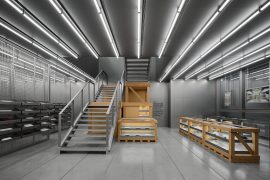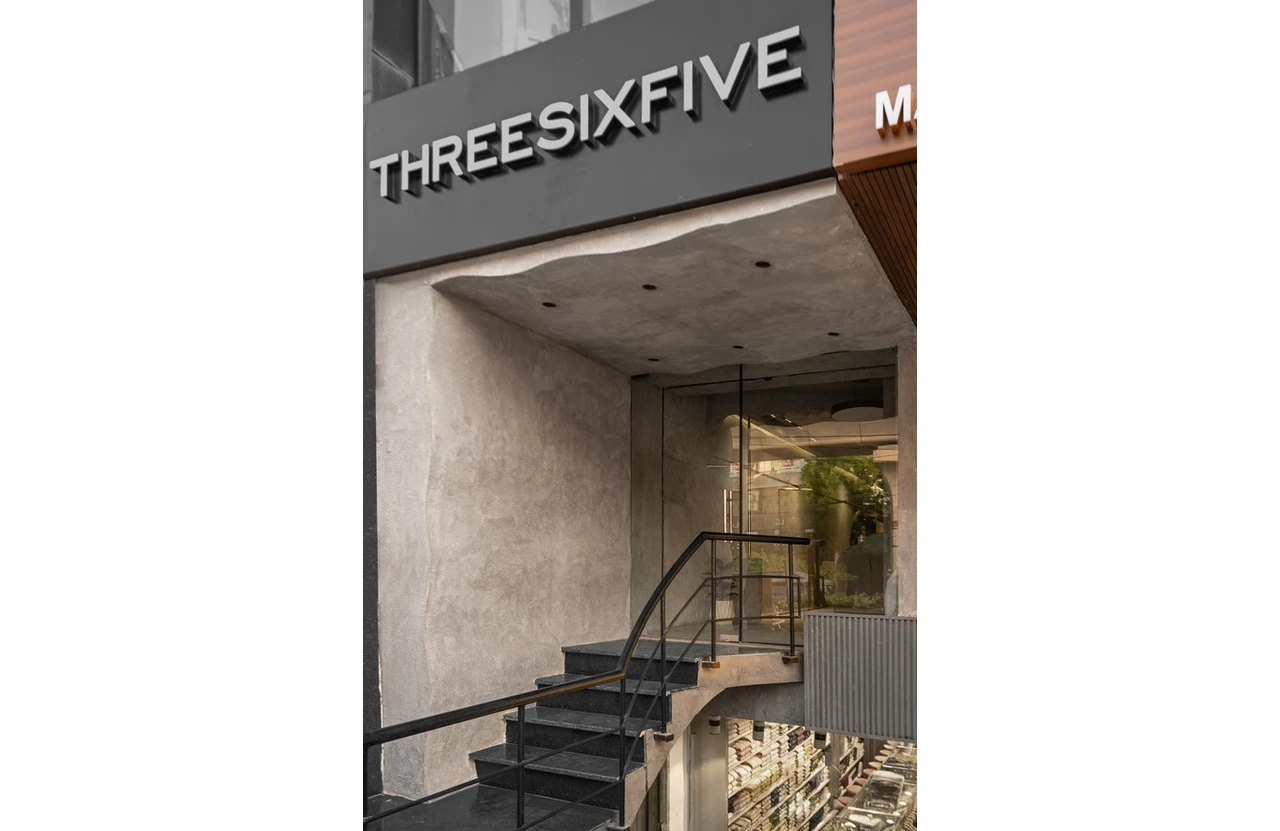
At first glance, 365 Store does not announce itself as retail. There is no gloss, no visual
invitation, no softened threshold. Instead, the space asserts weight—of material, of structure, of intent. Designed by Karigar Design Studio, led by Ar. Anjali Aggarwal, the men’s multi-designer streetwear store in Delhi presents architecture in its most direct form: exposed, uncompromising, and grounded in physical presence.
Project Name: Three Six Five
Studio Name: Karigar Design Studio
Location: Dhanmill, Delhi
Photography: Tarang Goyal
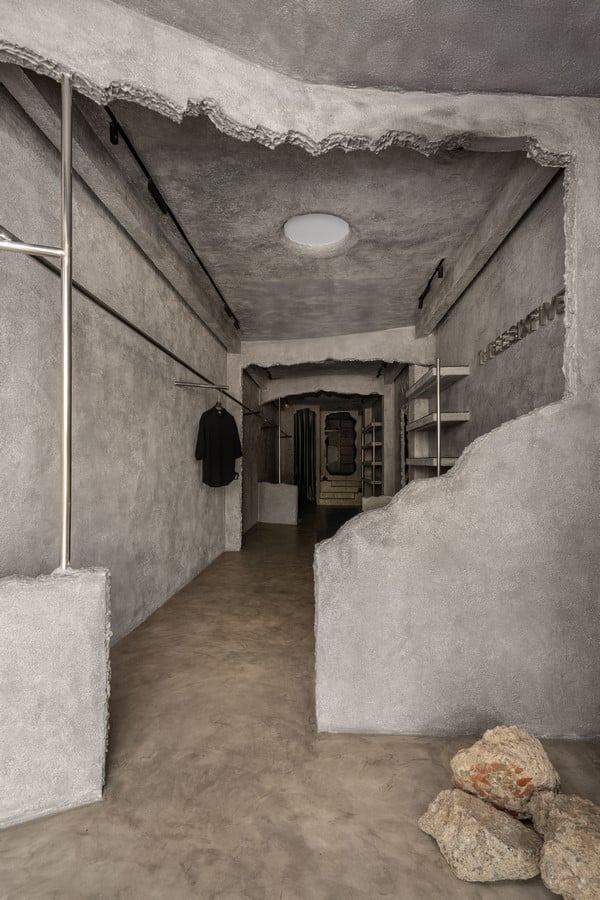
The interior unfolds as a sequence of carved volumes rather than applied surfaces. Walls
are treated as mass; cut, fractured, and eroded to create depth and movement. The plan
avoids symmetry, favouring spatial tension and irregular progression. Circulation feels
instinctive, guided by compression and release rather than signage or visual cues.
Brutalist principles inform the space structurally rather than stylistically. Construction remains visible and legible, allowing the interior to read as assembled rather than finished. Concrete dominates the envelope, but its treatment shifts across planes—roughened, chiselled, and recessed, creating a layered tactile experience. The architecture is felt as much as it is seen.
Light enters sparingly. Narrow openings and carved voids allow it to skim surfaces,
producing sharp contrasts between illumination and shadow. This restraint gives the space a measured rhythm, preventing the materiality from becoming overwhelming. The atmosphere remains controlled, introspective, and grounded.
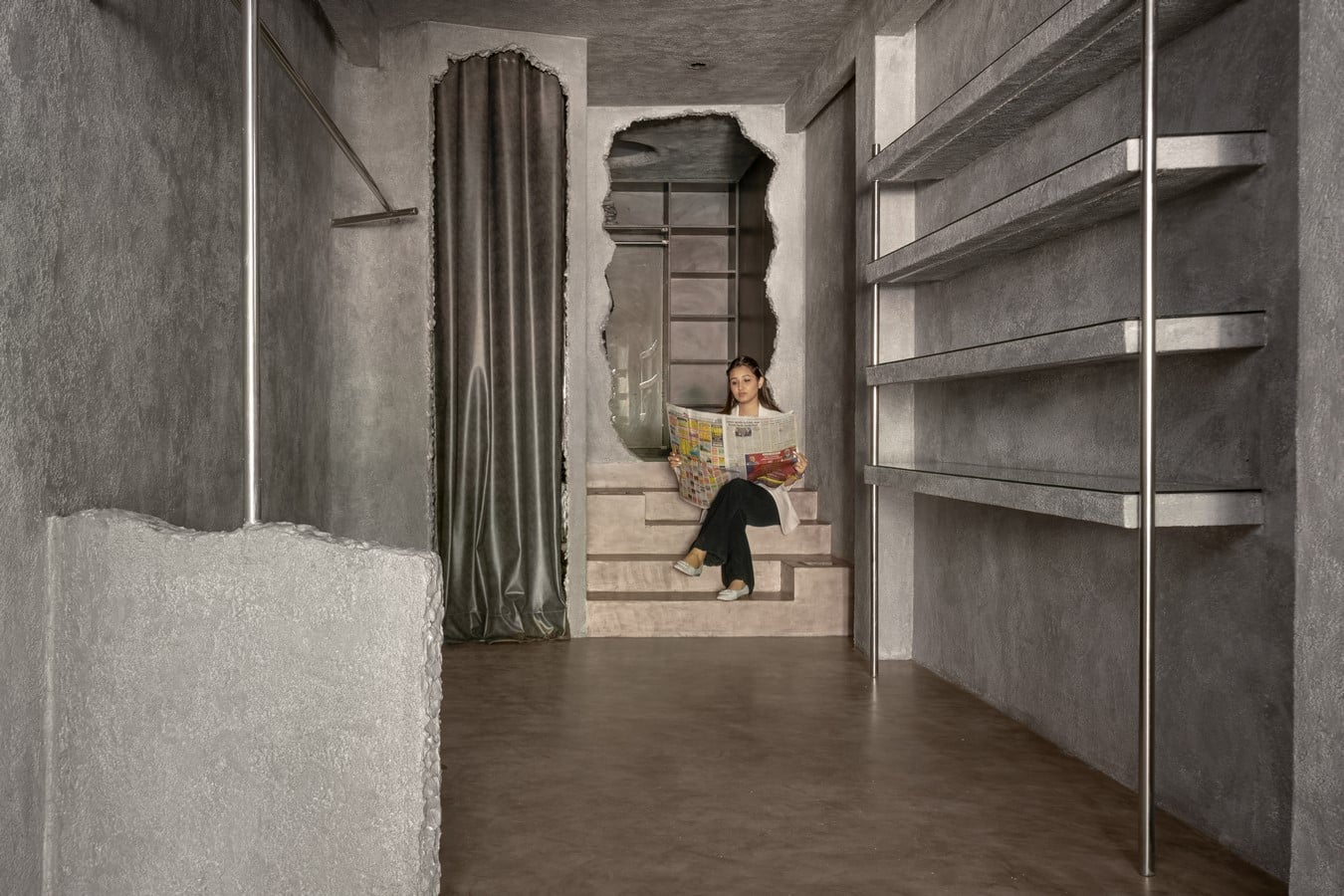
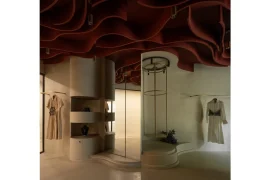
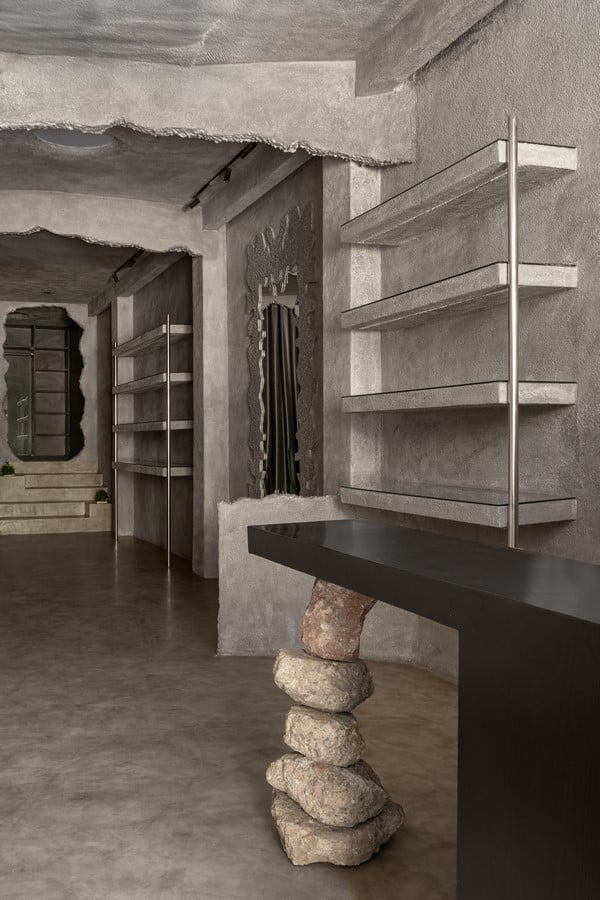
Furniture and fixtures are reduced to essentials. A heavy stone table anchors the interior, its uneven support left intentionally unresolved, blurring the line between functional object and sculptural mass. Slender metal rods cut cleanly through the space, introducing moments of alignment and precision. Mirrors are fractured and incomplete, disrupting reflection and reinforcing the interior’s resistance to visual perfection.
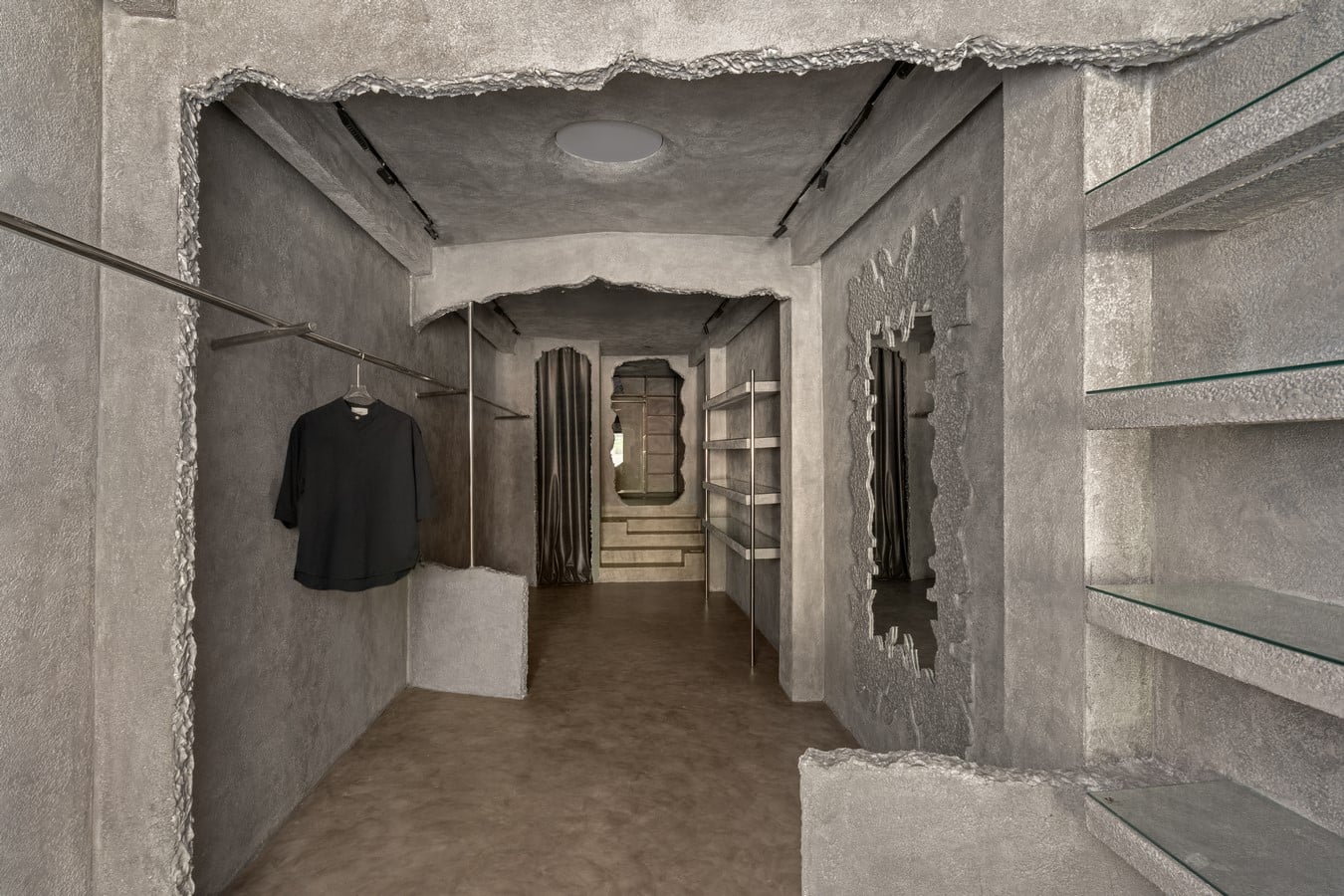
The palette remains muted, dominated by greys, stone tones, and metal—allowing texture
and form to lead. Clothing sits within this restrained framework without competition, framed by architecture that holds its ground rather than receding into neutrality.
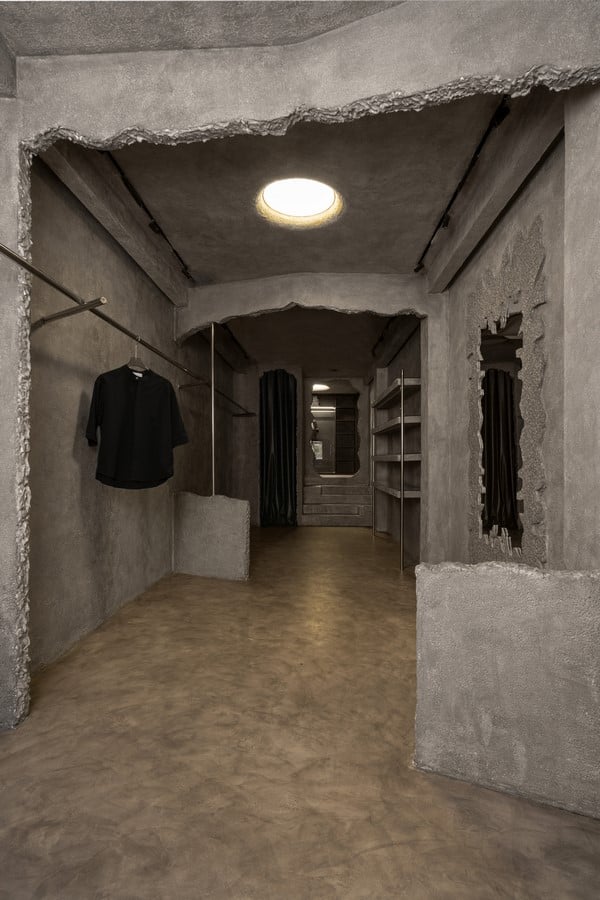
What distinguishes 365 Store is its relationship with time. The interior is not sealed or
preserved. Surfaces are expected to darken, accumulate marks, and shift with use. Wear is not treated as damage but as continuation. The store is designed to change, allowing occupation to become part of its authorship. Rather than delivering a finished image, 365 operates as a spatial condition—one that accepts exposure, weight, and imperfection as architectural strength. In a retail landscape driven by surface and speed, it offers something rarer: permanence through restraint.