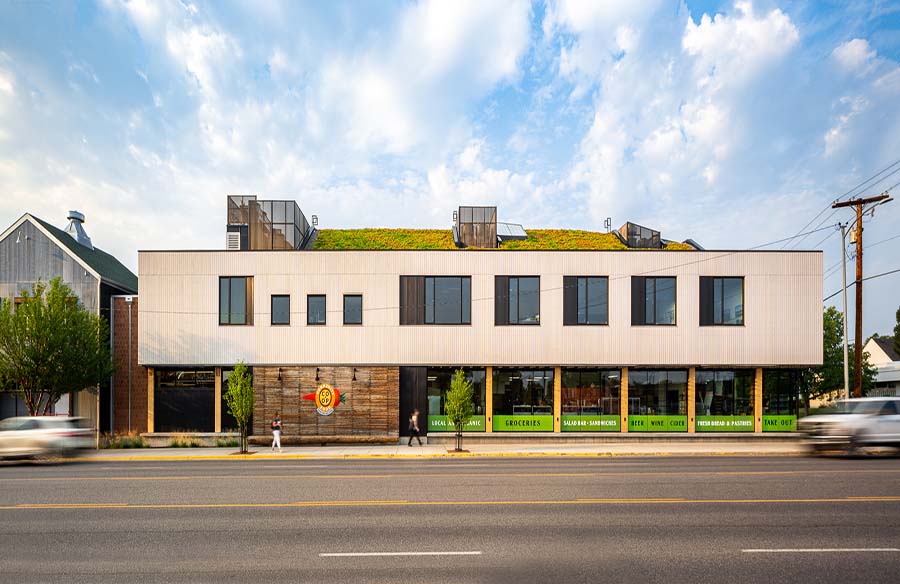
Bozeman’s Community Food Co-op has significantly expanded its West Main Street facility, nearly doubling in size. The two-story, 23,000-square-foot addition features a commercial kitchen, receiving area, high-bay storage, offices, and a large meeting room. This expansion results in a 39,000-square-foot building that consolidates all Co-op operations under one roof, eliminating the need for multiple off-site production facilities and offices.
Project Name: Bozeman Community Food Co-op
Studio Name: Hennebery Eddy Architects
Project Team
Interior Design: 1111 Design Studio
Contractor: Langlas & Associates
Civil Engineer: TD&H Engineering
Structural Engineer: Eclipse Engineering
Mechanical Engineer: Consulting Design Solutions, Inc.
Electrical Engineer: Consulting Design Solutions, Inc.
Food Service Design: H-C Design & Consulting
Client: Community Food Co-op
Photography: Cody Brown

The original 16,000-square-foot facility was inspired by local agrarian vernacular architecture, using reclaimed corrugated metal siding and an exposed wood structure. The new addition intentionally contrasts with the original structure, highlighting its iconic form. While it recalls the massing patterns of a traditional western downtown, it uses modern materials like acetylated wood on the second level. The original building continues to serve as the primary retail outlet, with the addition providing additional retail space as well as food production, storage, and office areas.


Design for Resources + Design for Ecosystems
Prioritizing grassroots sustainability over LEED certification, the Co-op has always embraced sustainable design and operations. The addition utilizes Cross Laminated Timber (CLT) sourced and manufactured within Montana, an eco-friendly alternative to steel and concrete that sequesters carbon. A solar array on the roof produces an estimated 22,000 kWh of energy annually, covering about one month of the Co-op’s electricity needs. The insulative sedum rooftop provides a direct connection to nature, reflecting less heat, creating oxygen, supporting bird and insect habitats, reducing storm water runoff, and lowering heating and cooling loads.

Design for Change
The addition’s structural system, building envelope, and mechanical pathways are designed to support various uses, allowing for easy reconfiguration as needs change. A large meeting room on the second floor, with flexible furniture, is available for community use, emphasizing the Co-op’s commitment to grassroots activism. The Co-op uses pooled resources for bulk and forward buying food purchases, which requires efficient power. A cogeneration power system provides on-site power and reclaims waste heat to preheat domestic hot water and warm outside air, ensuring reliable power during Bozeman’s harsh winters. In the event of a power outage, the system can provide emergency back-up power, protecting the Co-op’s resources.

Design for Well-being
Inside, exposed CLT panels add warmth to the commercial kitchen space. The Co-op features the same wood finishes in both retail and back-of-the-house areas, ensuring a cohesive design. Salvaged agricultural metal siding on the second floor reinforces the Co-op’s agrarian focus and adds colorful, whimsical elements. Skylights provide natural light to both stories, creating pleasant working spaces. Substantial glazing on the north side offers views to the outdoors and allows passersby to see into the central kitchen, connecting workers and the community. The Bozeman Community Food Co-op addition models a resilient, sustainable design that reflects the priorities and values of its members, ensuring the building remains relevant to the community for decades.