In architectural culture, the building is the hero. Renders frame it against empty skies, awards celebrate its form, and the conversation tends to stop at the property line. The landscape, meaning the ground the building sits in and the space between structures, is too often treated as the part you sort out at the end, a green wash applied once the real design is done. This is a mistake, and a costly one, because the experience of a place is shaped at least as much by what surrounds a building as by the building itself.
A serious design culture treats landscape as an equal partner in the work, not as decoration applied afterward. The space between buildings is where people actually move, gather, and dwell, and it deserves the same rigor, intention, and conceptual clarity we bring to the structures themselves.
The forgotten half of the project
Walk through almost any disappointing development and the failure is rarely the buildings alone. It is the leftover space between them: the awkward setbacks, the windswept plazas, the parking that swallows the approach, the planting that exists only to satisfy a council requirement. These spaces were not designed so much as left over, and people feel that absence even when they cannot name it.
The irony is that this in-between space is where most of life happens. We pass through it, pause in it, and form our lasting impression of a place from it. Leaving it to chance, or to the end of the budget, undermines the very architecture it surrounds.
Landscape as design, not garnish
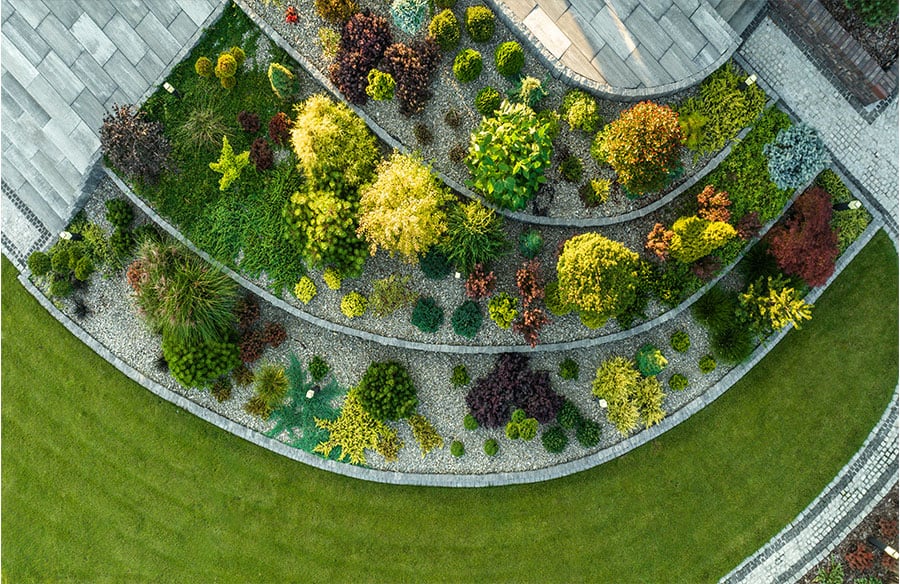
Treating landscape seriously means engaging it as a design discipline with its own logic, materials, and ideas, rather than as a garnish. A considered landscape has structure, sequence, and intent. It frames views, controls how a space is revealed, manages light and shade, and choreographs movement, all the things we praise in good architecture, performed in a different medium.
This is why ambitious projects increasingly bring landscape expertise in early and treat it as integral. A practice offering custom landscape designs in Perth, for instance, works from the site’s specific conditions and the client’s intent rather than applying a generic planting scheme, so the result is particular to the place rather than interchangeable. When landscaping is designed with that level of care, it stops being the background to the architecture and becomes part of the same coherent idea.
Site, climate, and the logic of place
Good landscape design begins where good architecture does: with the site. Topography, orientation, soil, water, prevailing wind, and existing vegetation are not constraints to be overcome but the raw material of the design. A scheme that ignores them fights the place forever; one that works with them feels inevitable.
Climate makes this even more pressing. A landscape designed for the conditions it actually sits in, with species and systems suited to local rainfall, heat, and soil, is both more beautiful and more resilient than an imported ideal that needs constant intervention to survive. Designing with the logic of place is not a stylistic choice. It is what allows a landscape to thrive rather than merely persist.
Landscape as infrastructure
There is also a performative dimension that pure aesthetics overlooks. A well-designed landscape is infrastructure as much as ornament. It manages stormwater, cools the microclimate around a building, shades glazing from the harsh afternoon sun, supports biodiversity, and softens the heat that hard urban surfaces radiate back at us. In an era of climate pressure, these are not optional extras but core responsibilities of responsible design.
Treating landscape with rigor therefore has consequences well beyond how a place looks. It shapes how a place performs, how comfortable it is to inhabit through the seasons, and how lightly it sits on its environment. Architecture that ignores its landscape tends to offload these problems onto its surroundings, relying on mechanical systems to compensate. Architecture designed together with its landscape resolves them in place, quietly and durably. The ground, handled well, does real work.
The threshold between inside and out
Some of the most powerful moments in architecture happen at the threshold, where building meets ground and inside meets outside. This is precisely where architecture and landscape must be designed together rather than handed off between disciplines. The way a floor plane extends into a terrace, the framing of a courtyard, the transition from shelter to sky: these depend on landscape and building speaking the same language.
When that conversation is genuine, the boundary between the two softens, and a project reads as a single continuous experience rather than a building with some plants around it. When it is not, the seams show, and the architecture feels marooned on its site.
Designing for time
Architecture is often imagined as complete on the day it opens. Landscape never is. It grows, shifts with the seasons, and matures over years, which means designing it well requires thinking in time, not only in space. A good landscape design anticipates how it will change, what it will become as it establishes, and how it will be cared for, so that it improves rather than degrades.
This temporal dimension is one of landscape’s great gifts to a project. A building can only weather; a landscape can flourish. Designed with that future in mind, it rewards a place for decades, deepening as the architecture ages.
Completing the idea
To treat landscape as an afterthought is to leave the project half-finished, however accomplished the building. The space between and around structures is not a buffer or a backdrop. It is where architecture meets life, and it deserves the same conceptual seriousness we reserve for the built form. When designers extend their rigor past the property line and into the ground itself, the result is not a building with a garden, but a complete idea, fully realized from the structure to the soil. That is the standard worth holding: not architecture and landscape as separate acts, but a single, considered place.