The best product designers for architectural firm websites do something most web designers cannot: they make the architecture the hero while quietly engineering the site to win clients. An architecture firm’s website is not a brochure. It is a portfolio, a credibility test, and a lead engine at once.
Getting it right takes a specific kind of product designer – one who understands heavy imagery, restraint, and conversion in equal measure. This guide breaks down exactly what separates the best product designers in this niche from generalists working off a template.
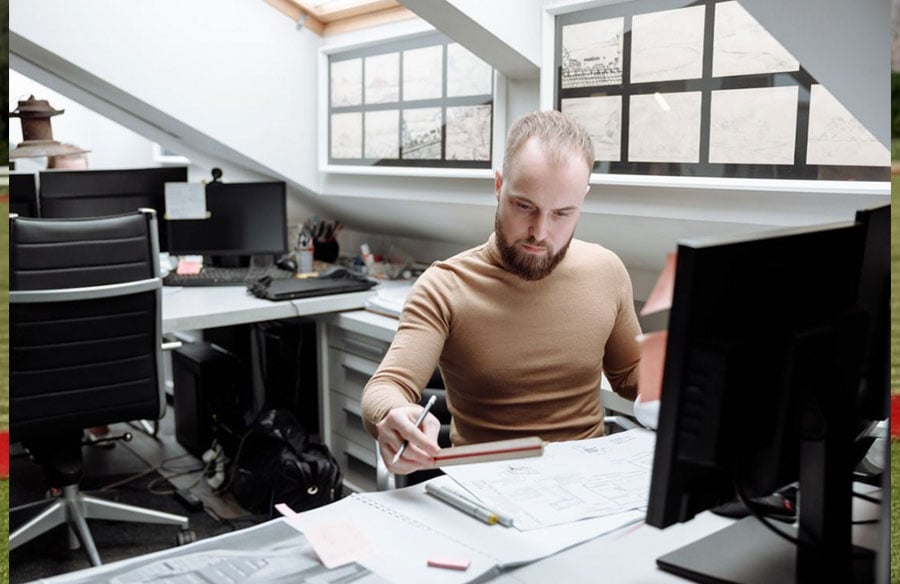
Photo by Thirdman on Pexels
Key Takeaways
- The best product designers for architectural firm websites balance visual restraint with conversion, letting the work lead while still capturing leads.
- Architecture sites are image-heavy portfolios, so performance and visual hierarchy matter more than decoration.
- The strongest candidates think in systems – like software product designers – so the site scales as the firm grows.
- Strategy beats generation: the best work starts with the client’s business problem, not a layout.
- Human judgment remains the dividing line between a designer who builds an experience and a tool that fills a template.
What Does a Product Designer for an Architectural Firm?
A product designer shapes the entire experience of a digital product, not just its surface. For an architecture firm, that means designing how a visitor moves through the work, understands the practice, and decides to make contact. This is broader than a web designer who styles pages. The best product designers for architectural firm websites combine user experience, visual design, and business logic into one coherent system.
The role overlaps with two adjacent disciplines. Like software product designers, they think in reusable components and scalable systems. And as a product designer for architecture specifically, they understand that the product is a story told mostly through images.
Why Architecture Websites Are Different
Architecture websites break the usual rules. They are image-heavy, with large renders and photography carrying most of the message. They are credibility-driven, since prospective clients judge the firm’s taste by the site itself. And they are conversion-sensitive, because a single high-value commission can justify the entire investment.
That combination creates real tension. Big visuals slow a site down. Minimal design can bury the contact path. Research suggests users form a first impression of a website in roughly 50 milliseconds, so the design has to earn trust instantly and then guide the visitor toward action. Balancing all of this is exactly the work the best product designers are built for.
The Qualities That Define the Best Product Designers
Not every talented designer thrives on architecture sites. These are the qualities that separate the best.
Restraint That Lets the Work Lead
The best designers know what to leave out. Generous whitespace, disciplined typography, and a quiet interface let the architecture breathe. Decoration competes with the work; restraint elevates it.
Performance Under Heavy Imagery
Large renders are non-negotiable, so image optimization is a core skill. The best product designers serve crisp visuals without punishing load times, using modern formats, lazy loading, and smart compression.
Portfolio UX and Storytelling
A project gallery is not a dump of thumbnails. Strong designers like Mila Pavlovic sequence projects into a narrative, control pacing, and make it effortless to move between the big picture and the detail.
Conversion Without the Hard Sell
Architecture clients dislike pushy sites. The best designers place the contact path where it feels natural, turning quiet interest into an inquiry without breaking the calm, premium tone.
Systems Thinking
Like skilled software product designers, they build with components and a design system. The firm can add projects, services, and pages for years without the site falling apart.
Accessibility and SEO Foundations
The best work is reachable. Semantic structure, alt text, and clean performance help both screen readers and search engines, so the site ranks and serves everyone.
Strategy Over Generation: The Human Edge
Here is where the field separates. AI tools can now generate a polished architecture layout in seconds. But generating a layout is not the same as designing an intentional experience. The difference is judgment – knowing why a choice works, not just that it looks good.
This is the core argument the best product designer makes when weighing automation against human craft: tools excel at speed and variation, but they recycle average solutions and miss the business logic underneath.
Senior designer and Veloura Solutions co-founder, Mila Pavlovic product designer, frames the divide as intention versus generation – a machine answers the question you give it, while a human decides which question to ask in the first place. For an architecture firm, that means a designer who interrogates the goal (more high-value commissions, a stronger brand, a specific audience) before touching a single screen.
That strategic instinct shows up in small, deliberate choices: where to add friction, where to remove it, when silence and negative space say more than another section. Those are human calls, and they are what the best product designers bring that a template never will.
Product Designer vs. Generic Template: What to Look For
| Signal | Generic Template / Generalist | The Best Product Designers |
| Starting point | A layout | The firm’s business goal |
| Imagery | Heavy, unoptimized | Crisp and fast |
| Project gallery | A grid of thumbnails | A paced, edited narrative |
| Conversion | A buried contact form | A natural, well-placed path to inquiry |
| Scalability | Breaks as the firm grows | A design system built to expand |
| Differentiation | Looks like every other firm | Reflects this firm’s specific identity |
How to Evaluate and Hire the Right Designer
Judging a product designer is easier when you measure the work against a clear website design checklist and know what to look for. Review the portfolio for image-heavy, content-led sites, not just flashy landing pages. Ask how they handle performance with large visuals.
Probe their process: the best designers ask about your business and clients before they talk about design. Check for systems thinking, since a one-off custom site that can’t grow is a liability. And look for restraint – a designer who adds less, on purpose, usually understands more.
The Takeaway
An architecture firm’s website is one of its most important pieces of design. The best product designers treat it that way: they let the work lead, keep the experience fast and calm, and engineer a quiet path from admiration to inquiry.
Tools will keep getting faster at generating layouts. But choosing the designer who brings strategy, restraint, and human judgment is still the decision that separates a memorable architecture website from a forgettable one.
FAQs
What does a product designer do for an architecture firm website?
A product designer shapes the full experience – how visitors explore the work, understand the firm, and decide to get in touch. The best product designers combine user experience, visual design, and business strategy into one system.
How is a product designer different from a web designer?
A web designer typically focuses on the look and layout of pages, while a product designer owns the whole experience and the business outcome behind it. For architecture sites, that broader, strategy-first view is what drives results.
Do software product designers work well on architecture websites?
Often, yes. Software product designers think in reusable components and scalable systems, which keeps an architecture site maintainable as the firm adds projects and services over time.
Can AI replace a product designer for an architecture website?
AI can generate layouts and speed up production, but it lacks the intention and business judgment a human brings. The best product designers use AI as a tool while making the strategic calls themselves.
What should I look for when hiring a product designer for architecture?
Look for image-heavy portfolio work, strong performance under heavy visuals, systems thinking, a natural path to conversion, and a process that starts with your business goals rather than a template.