Executive Summary
- Architects advocate ‘fabric-first’ methodologies, prioritizing highly insulated, airtight envelopes (the barrier between conditioned and unconditioned spaces) over surface-level green technology.
- Specifying advanced fenestration, especially triple-pane sliders, improves thermal resistance and minimizes heat loss. These windows reduce operational energy costs and enhance property value through improved efficiency.
- By replacing traditional mechanical units (such as conventional furnaces or boilers) with decarbonized air-source heat pumps, and by eliminating toxic indoor VOCs (volatile organic compounds), developers not only maximize asset resilience but also secure lasting value—making their properties more sustainable, attractive, and future-ready.
Introduction
Luxury real estate in 2026 demands environmental resilience, energy efficiency, and climate responsibility rather than simple square footage. High-risk coastal environments face rising long-term costs from sea-level rise and tidal flooding. These environmental threats force builders to prioritize extreme structural durability. Property owners seek shelters that can withstand severe natural forces. The market actively rewards homes built with robust, weather-resistant materials.
Constructing green homes may require approximately 10-15% more initial capital than conventional builds, but visionary investors consistently justify this by achieving substantial long-term operational savings. High-performance properties command higher market valuations from the outset, with lower utility bills quickly offsetting acquisition costs.
Buyers recognize specialized sustainable materials as strategic investments with clear financial advantages. In 2026, they will reject superficial green additions, called “eco-bling,” and favor rigorous, fabric-first specifications. They specify advanced structural materials for residential builds. High-performance fenestration is a key focus for temperature control. Decarbonized mechanical systems meet genuine zero-carbon standards.
The ‘Fabric-First’ Mandate: Structural Innovations and Insulation
Building surveyors warn against “eco-bling” and advise homeowners and businesses to adopt a ‘fabric first’ approach to energy-efficiency upgrades. Professionals target stringent U-values in line with UK building regulations during the design phase. They utilize 100mm-150mm PIR/phenolic boards to maximize wall thermal resistance.
Technicians frequently conduct whole-building thermal-imaging audits to pinpoint leaks. This structural integrity prevents wasted capital on renewable energy systems operating within poorly insulated buildings. Industrialized construction materials like VASO by Eco heavily reduce embodied carbon (the total carbon emissions from producing and transporting the material) by utilizing structural composite panels manufactured entirely from recycled waste glass. Supported by a £330,000 grant from South of Scotland Enterprise, this technology enables rapid, low-carbon modular scaling.
These panels undergo rigorous testing in live manufacturing environments. The resulting products directly address housing shortages across local regions. Builders meet stringent environmental targets while drastically accelerating construction timelines.
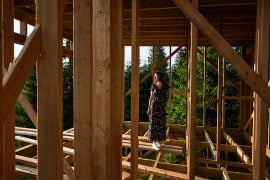
The Eco-materials Alliance aims to accelerate building decarbonization by 5% annually by 2030 through the specification of bio-based materials and sustainable timber. Ultra-low-energy timber structures, such as those built from slow-grown Nordic timber, exceed Passivhaus energy and air-tightness standards without imposing a cost premium. Builders rapidly assemble these prefabricated components directly on the construction site.
Additionally, replacing standard foundations with low-carbon concrete and engineered timber reduces embodied carbon by 30-40% without compromising durability. These advanced material choices permanently alter the baseline expectations for residential structural engineering.
Mastering the Thermal Envelope with High-Performance Fenestration
The global Sliding Luxury Doors market was recorded at $2,873.12 million in 2021 and is projected to reach $3,738 million by 2025, and $6,327.17 million by 2033. This expansion represents a 6.8% compound annual growth rate (CAGR) from 2025 on. Architects specify these systems to balance biophilic (nature-inspired) demand for natural light with thermal requirements.
Professionals consistently choose manufacturers like Clera Windows + Doors to supply residential fenestration needs. Clera offers ENERGY STAR-certified exterior glass sliding doors that permanently secure the building envelope using factory-upgraded multi-point locking mechanisms, tight aluminum seals, and highly durable tracks to prevent air leakage.
Installing ENERGY STAR-certified doors helps homeowners reduce their overall energy bills by approximately 12%. While windows and doors combined account for roughly 25% of the power used to heat and cool a building, windows are typically the primary source of energy waste. To mitigate these losses, high-performance sliding glass doors use at least two panes of glass separated by an inert gas (such as argon or krypton) to improve insulation. Additionally, advanced Low-E coatings can be applied to glass panels to reduce heat gain by up to 64% and block 95% of solar UV rays.
| Specification Type | Typical U-Factor | Solar Heat Gain Coefficient (SHGC) | Expected HVAC Energy Reduction | Primary Architectural Benefit |
| Standard Double-Pane Aluminum Sliders | 0.30 – 0.50 | 0.40 – 0.60 | Baseline | High visibility, lower initial capital cost |
| Triple-Pane Low-E Vinyl Sliders | ≤ 0.26 | ≤ 0.40 | ~12% | High thermal resistance and low conductivity |
| Triple-Pane Low-E Fiberglass Sliders | ≤ 0.26 | ≤ 0.40 | ~12% | Superior durability and lowest rate of conductivity |
System Decarbonization and the Elimination of Household VOCs
Modern air source heat pumps operate at three times the energy efficiency of traditional gas boilers. Architects routinely combine these advanced mechanical systems with solar PV arrays to push residential developments, such as the Leasow Reach collection of 47 zero-carbon homes, toward top EPC ‘A’ ratings. Electrified systems easily maintain comfortable interior climates without generating excessive operational carbon emissions. Builders eliminate reliance on fossil fuels by securing the building envelope prior to installation. This exact sequence of construction prevents the newly installed mechanical units from overworking.
Typical building materials release Volatile Organic Compounds (VOCs) that cause respiratory issues, headaches, and eye irritation. Architects deliberately specify natural alternatives such as bamboo, cork, solid wood, and clay finishes over synthetic alternatives. Investors treat these chemical-free interiors as highly valuable, future-proof physical assets. Buyers avoid the costly retrofits that conventional homes will eventually require as global environmental regulations tighten. Prioritizing material purity ensures long-term health benefits for the property’s final occupants.
- Embodied Carbon Metrics: Architects strictly calculate the total greenhouse gas emissions generated during the material’s manufacturing, transportation, and installation phases.
- VOC Emission Testing (Off-gassing rates): Professionals demand third-party laboratory verification proving materials emit zero or near-zero toxic chemicals into the home’s air supply over time.
- End-of-Life Recyclability (Circular economy potential): Specifiers prioritize building products that easily break down or re-enter the manufacturing supply chain rather than occupying landfill space permanently.
- Biophilic Impact: Designers evaluate how effectively the material connects occupants to nature, relying on exposed wood grains or natural earth textures to reduce psychological stress.
The Long-Term Valuation of Resilient Residential Architecture
The transition toward “fabric-first” structural framing, high-performance thermal envelopes, and electrified mechanical systems has become the standard for modern luxury development. Instead of relying on superficial additions, industry professionals must prioritize advanced components. These include triple-pane fenestration and bio-based insulation. This approach achieves genuine zero-carbon status and protects interiors from extreme temperature fluctuations.
The financial benefits of these engineering choices consistently outweigh initial construction premiums. Environmentally resilient structures may require more upfront capital. However, they mitigate long-term risks from rising energy costs and extreme weather. Insurance markets are increasingly responding to these reduced risks. Enhanced policy options are now available for sustainable assets.
For developers and investors, adopting advanced building methodologies is essential for maintaining portfolio competitiveness. Procurement strategies must now include rigorously tested composite materials. This helps avoid regulatory and financial risks linked with underperforming assets. Ultimately, sustainable architecture is the most stable long-term investment in a shifting economic landscape.