Good architecture criticism starts with looking. Not at the architect, but at the work itself — the proposals, the drawings, the ideas that survive the judgment of anonymous juries and peer review. When you look at the body of work associated with New York-based architectural designer Param Patel, a pattern becomes clear quickly. Across projects of different scales, programs, and geographies, the underlying question is always the same: what does space do to the people who move through it?
That is a deceptively simple question. Most architecture answers it incidentally, treating human experience as a byproduct of decisions made primarily about structure, cost, and appearance. The work here suggests a different priority. Experience appears to be the starting point, and everything else follows from it.
Reading the City
Patel’s graduate research at Pratt Institute, where he completed a Master of Science in Urban Design with academic distinction, was rooted in this concern at the scale of the city. The work investigated how the spatial organization of public space shapes the behavior of the people who occupy it — how design either enables or quietly suppresses the kind of spontaneous interaction that makes urban life feel alive.
That research sits within a tradition that Jane Jacobs established and Jan Gehl extended. Jacobs demonstrated that the vitality of a neighborhood depends not on grand planning gestures but on the conditions that bring people into contact with each other at street level. Gehl spent decades measuring what Jacobs observed intuitively, documenting the precise relationship between spatial decisions and human behavior in cities across the world. The conclusion in both cases was the same: the quality of urban experience is determined at the smallest scales, and those scales are routinely underestimated by the people responsible for designing them.
The graduate work produced within this tradition reflects a designer who takes that conclusion seriously. The thesis reads less as an architectural exercise than as a piece of behavioral research, asking what the evidence actually shows about how public space performs and what design can do to improve it.
The Cinematic Eye
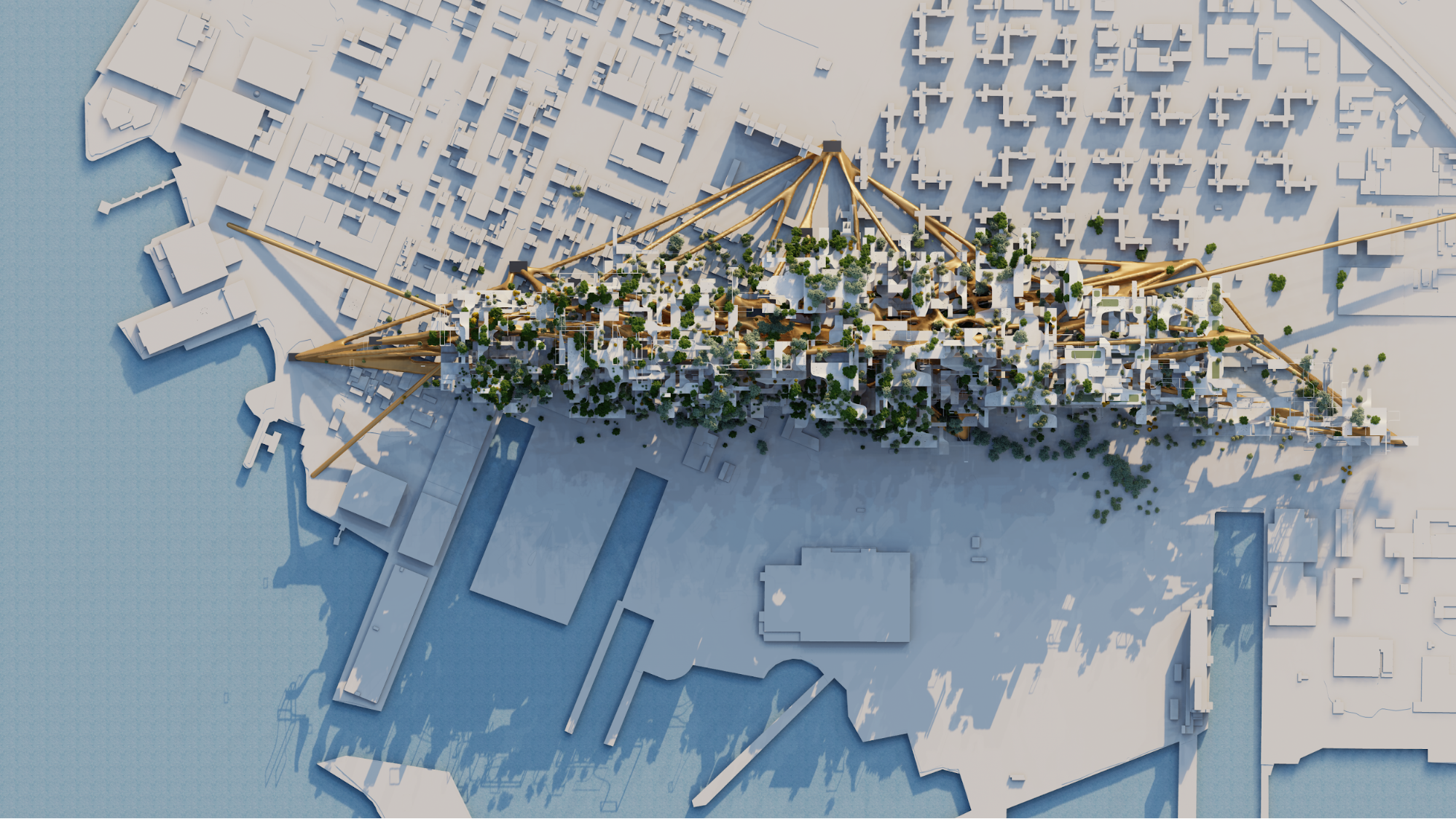
What distinguishes the visual output of this practice from much architectural work is a quality that is easier to feel than to describe. The renderings produced across competition submissions carry an atmospheric weight that goes beyond technical proficiency. Light arrives from specific directions for specific reasons. Spatial sequences are composed with attention to what is revealed and when. The experience of moving through these proposed environments feels considered in a way that suggests time has been given to how perception works, not just how space is organized.
That sensibility has a recognizable parallel in cinema. The way a cinematographer uses framing and depth to direct attention, or an editor uses sequence to build emotional experience over time, produces a similar effect: the viewer is guided without being aware of the guidance. The best architectural visualization works the same way, and the work here does. These are images that communicate spatial experience rather than merely spatial appearance, and that distinction matters when the image is the primary vehicle through which a proposal is judged.
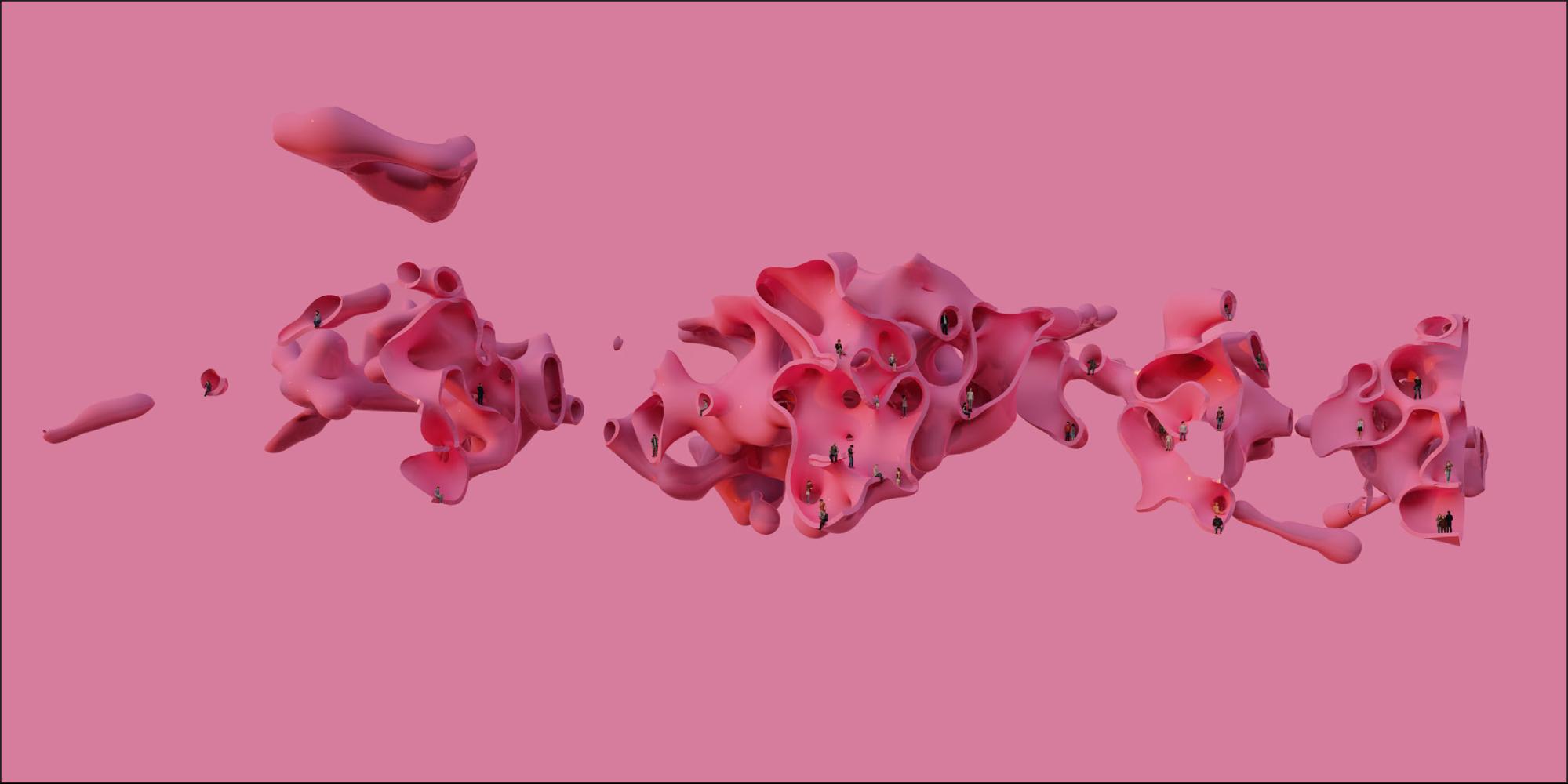
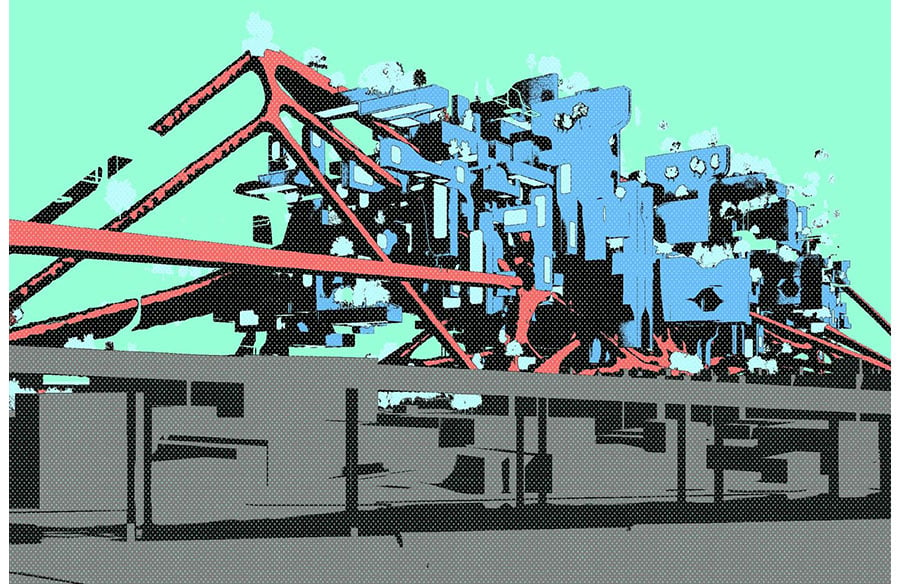
Meta Life Meta Truth | Digital Art | © Param Patel
Computation as Discipline
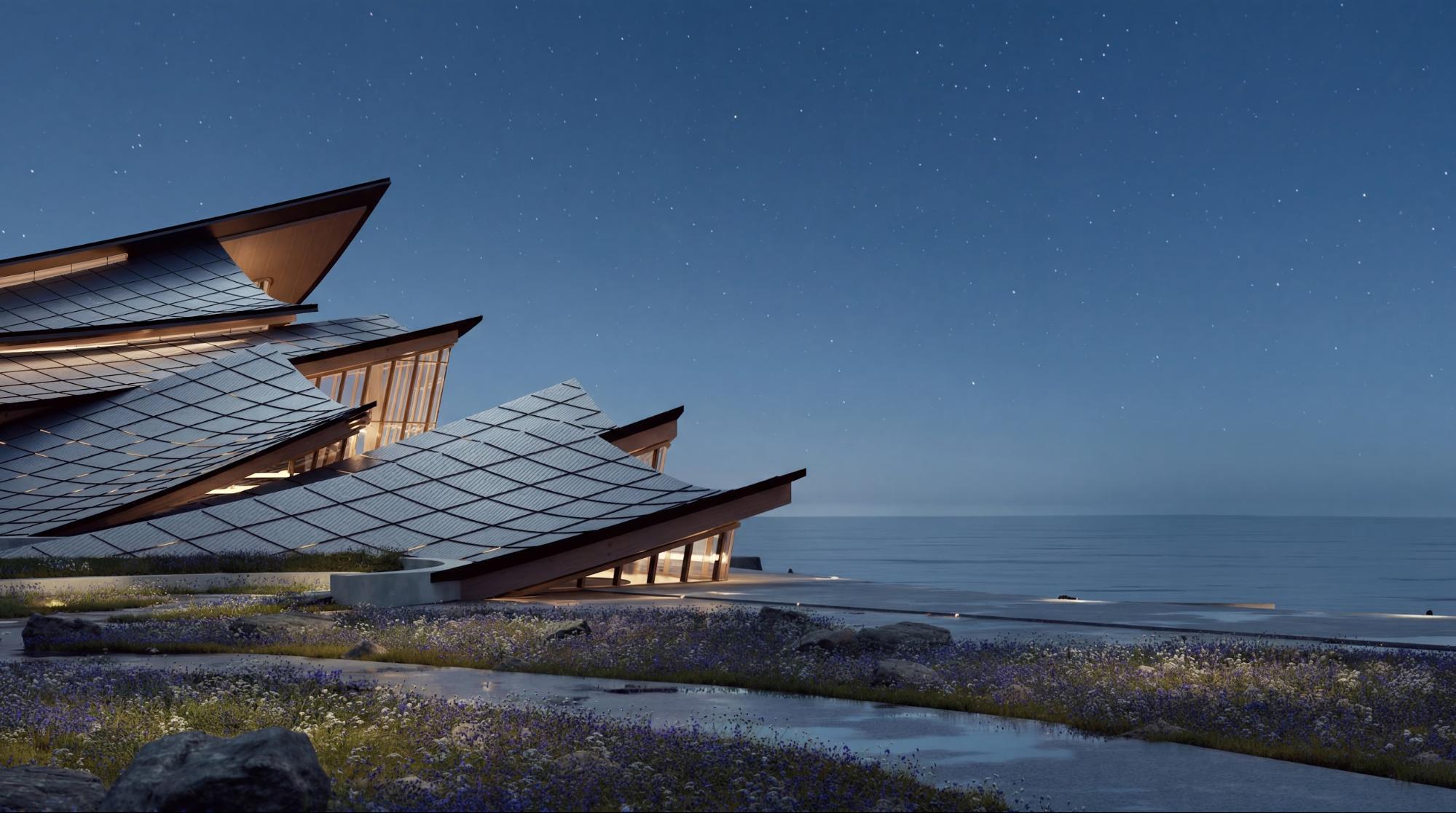
The competition projects also reveal a designer comfortable with computational thinking. The Violence of the Winds, a speculative renewable energy research center proposed for Reykjavik and developed with a collaborative team, uses the wind patterns of the site as a generative force. The geometry of the building, its rooflines bending and twisting in direct response to atmospheric data, is not decorative. It is the outcome of a design process in which environmental forces are treated as parameters rather than constraints to be resolved after the fact.
That approach reflects a working knowledge of parametric design methods. Tools like Grasshopper and Rhino allow designers to build rule-based systems that translate data directly into form, making explicit what is often left intuitive in conventional processes. The discipline required to use those tools well tends to produce more rigorous design thinking across the board, regardless of whether the final output looks parametric in any obvious sense.
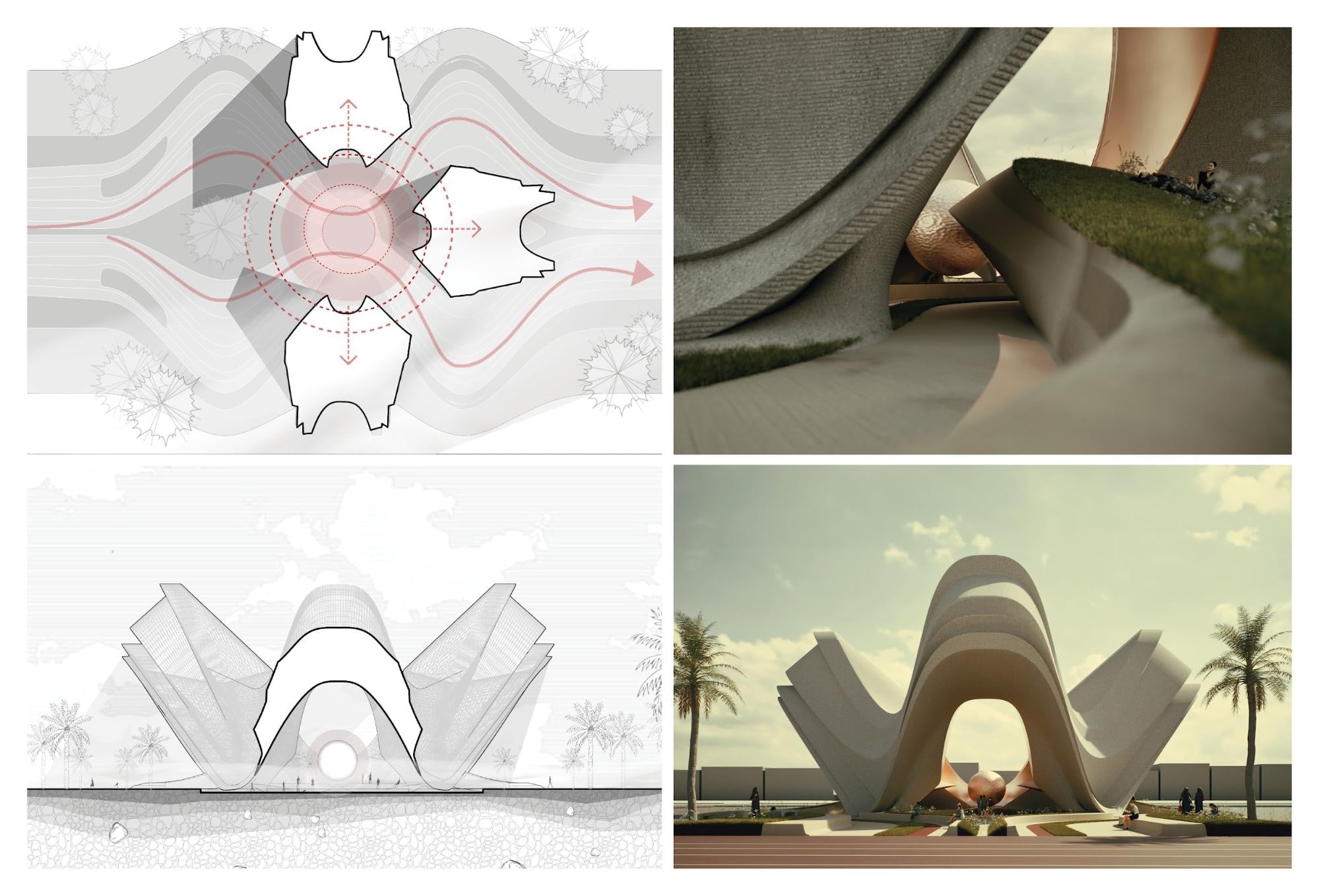
The Violence of the Winds earned an Honorable Mention No. 1 in the Design Unlimited international competition in 2024, assessed against a global field of anonymous submissions. A second collaborative project, the Museum of Emotions, a proposal exploring whether architecture can make emotional experience spatially legible, was shortlisted by Buildner in the same year.
The same visual logic surfaces in the digital art practice that runs alongside the architectural work. The independent artworks, some of which have been released as NFTs, share a visual language with parametric thinking: structured repetition, system-driven pattern, form that appears to follow rules rather than gestures. Whether the output is a competition proposal or a standalone digital piece, there is a consistency of underlying sensibility that suggests computational thinking is not a tool applied selectively but a lens through which the work is consistently produced.
Grounded in Practice
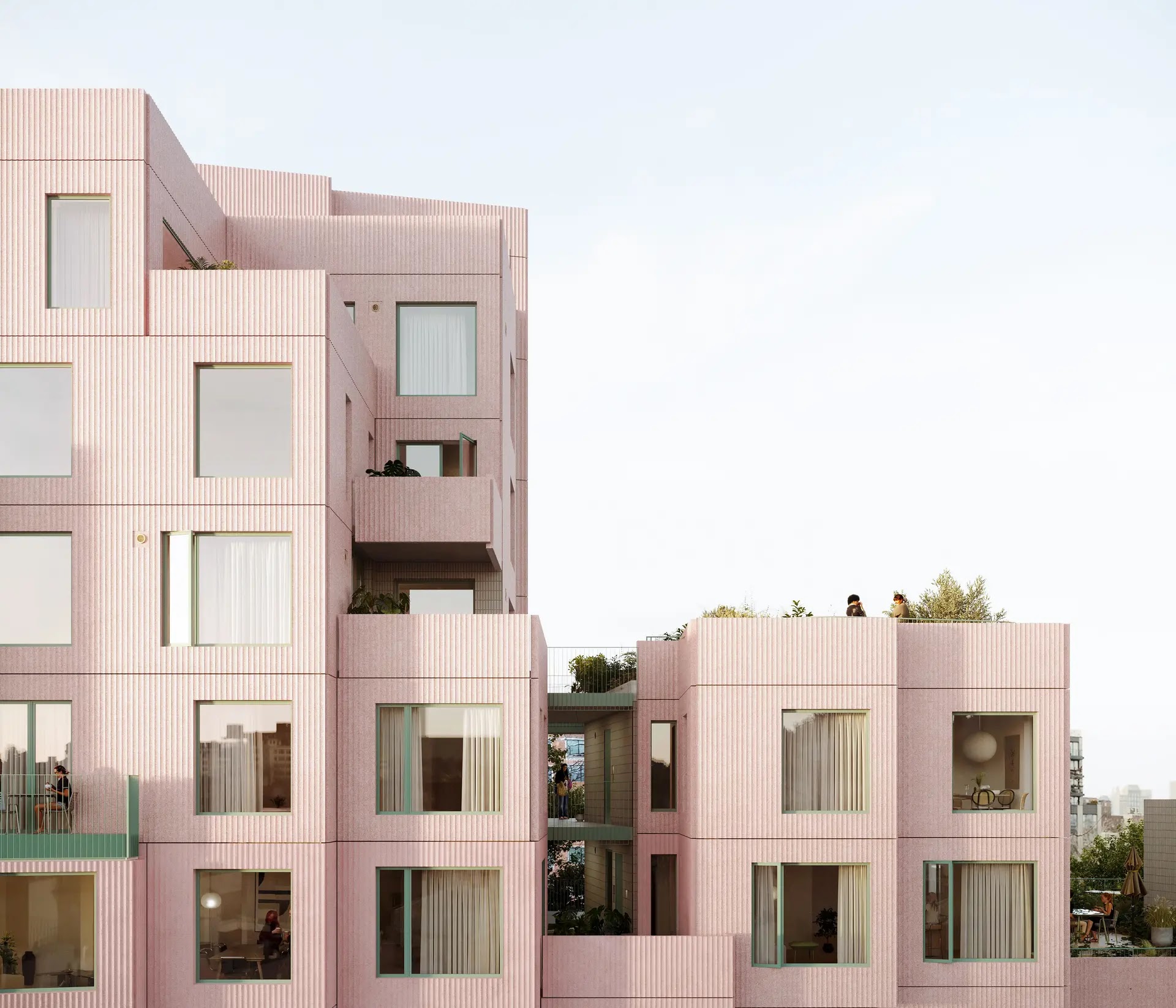
Alongside this speculative work, Patel has been active in professional practice at Kane Architecture and Urban Design in New York, contributing as part of the design team to residential and urban projects including 144 Vanderbilt and 9 Chapel, both Brooklyn developments that have received coverage in architectural publications. The firm’s team also contributed to Case Study 2.0, a design response to the housing lost in the Palisades fire.
That combination of rigorous professional work and independently pursued research is not common at this stage of a career. What the body of work as a whole suggests is a designer whose interest in how space shapes human experience is not confined to any single context. It runs through the urban research, the competition submissions, the visualization practice, and the day-to-day work of a busy New York architecture office. The consistency of that preoccupation, across such different kinds of output, is what makes the practice worth paying attention to.