The modern laboratory is changing rapidly. Advances in analytical instrumentation, sample preparation, automation, and laboratory consumables are allowing researchers to work with greater precision while processing increasingly complex samples and larger volumes of scientific data.
Across pharmaceutical research, environmental testing, food analysis, life sciences, chemistry, biotechnology, and industrial quality control, laboratory equipment plays a fundamental role in transforming physical samples into useful scientific information.
Growing Demand for Precision Laboratory Equipment
Accuracy and repeatability remain central requirements of laboratory research. As analytical methods become more sensitive, laboratories must pay greater attention not only to major instruments but also to the smaller components surrounding them.
Microscopes, chromatography systems, centrifuges, analytical balances, filtration systems, extraction equipment, laboratory glassware, autosampler vials, columns, syringes, and reference materials can all contribute to the performance of an analytical workflow.
A laboratory result is rarely determined by a single piece of equipment. Instead, it is produced through a connected process involving sample collection, preparation, separation, measurement, quality control, and data interpretation.
This has increased demand for equipment and consumables that can provide consistent performance across repeated analytical procedures.
Sample Preparation Takes a Central Role
Sample preparation has become one of the most important areas of laboratory workflow design.
Before researchers can analyze a material, samples may need to be filtered, diluted, extracted, purified, homogenized, concentrated, or transferred into specialized containers.
Choosing appropriate equipment for these procedures can influence both analytical efficiency and data quality.
For example, filtration equipment must be selected according to factors such as membrane material, pore size, solvent compatibility, and sample composition. Extraction methods must similarly account for the chemical characteristics of both the target compounds and the surrounding sample matrix.
Improved sample preparation can reduce unwanted interference and help protect sensitive analytical instruments from contamination.
Chromatography Continues to Drive Analytical Research
Chromatography remains an essential technology within analytical laboratories.
High-performance liquid chromatography (HPLC), ultra-high-performance liquid chromatography (UHPLC), and gas chromatography (GC) are widely used to separate and investigate chemical compounds.
These systems depend on multiple components working together.
Chromatography columns influence separation characteristics, while vials, caps, septa, filters, solvents, tubing, and sample-preparation products support the wider analytical process.
As methods become increasingly specialized, laboratories require a wider selection of compatible equipment and consumables.
Scientific suppliers such as Zwitsers Lab help support this environment by providing access to laboratory equipment, chromatography products, sample-preparation solutions, consumables, and related materials for research and analytical applications.
Microscopy Remains Fundamental to Scientific Observation
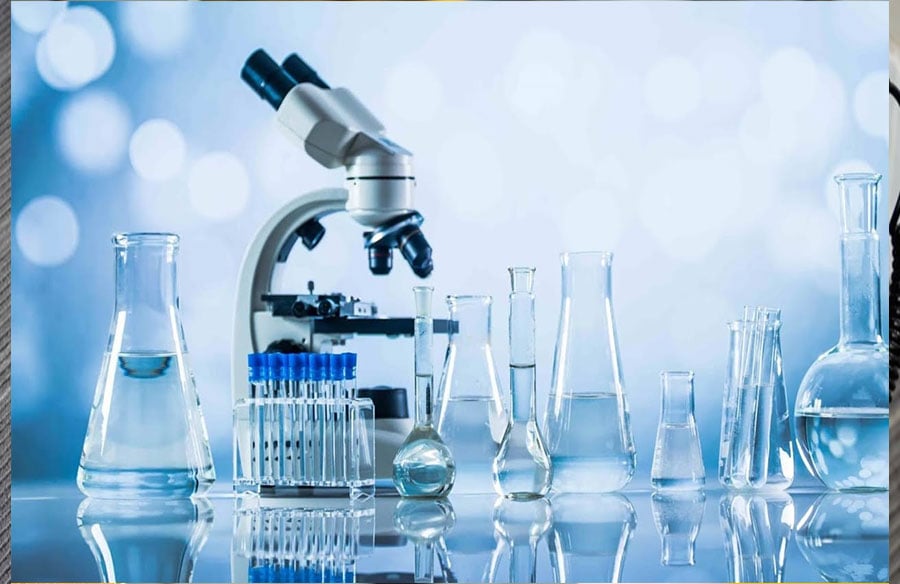
Despite major advances in automated analytical technologies, microscopy continues to be one of the most recognizable and important areas of laboratory science.
Modern microscopes allow researchers to investigate structures that cannot be properly examined with the unaided eye. Depending on the technology employed, microscopy can support research across biology, materials science, medicine, chemistry, education, and industrial analysis.
Digital imaging has further expanded the capabilities of microscopy.
Images can now be captured, processed, measured, stored, compared, and shared using specialized software. This combination of optical equipment and digital technology has transformed the microscope from a primarily visual instrument into an increasingly data-oriented research platform.
Laboratory Automation Is Expanding
Automation is another major development influencing laboratory equipment.
Automated liquid handling, autosamplers, robotic systems, digital sample tracking, and integrated analytical platforms can reduce repetitive manual tasks while allowing laboratories to process larger numbers of samples.
Automation can also help standardize procedures.
When repetitive steps are performed consistently, laboratories may reduce some sources of variation associated with manual processing. However, automated systems still require appropriate method development, calibration, maintenance, and quality-control procedures.
Rather than replacing scientific expertise, automation increasingly allows researchers to focus their attention on method design, interpretation, troubleshooting, and decision-making.
Consumables Are Becoming More Specialized
Laboratory consumables may appear less sophisticated than major analytical instruments, but their role should not be underestimated.
Autosampler vials, caps, septa, syringe filters, membranes, tubes, pipette tips, sample containers, extraction cartridges, and other disposable components frequently come into direct contact with analytical samples.
Their chemical and physical properties can therefore matter.
As analytical sensitivity improves, laboratories increasingly consider factors such as extractables, contamination, adsorption, chemical compatibility, temperature resistance, and dimensional consistency when selecting consumables.
This trend is encouraging manufacturers and laboratory suppliers to offer more specialized products designed for particular instruments and analytical methods.
Quality Control Connects the Entire Laboratory
Modern laboratory equipment is most effective when supported by a strong quality-control system.
Calibration materials, analytical standards, blanks, controls, replicate samples, and system-suitability procedures help laboratories evaluate whether instruments and methods are operating as expected.
Equipment maintenance is equally important.
A high-performance analytical instrument cannot deliver consistent results indefinitely without appropriate cleaning, inspection, calibration, and servicing.
For this reason, laboratories increasingly consider the complete lifecycle of their equipment—from initial selection and installation to routine operation, maintenance, and eventual replacement.
Digital Technology Is Changing Laboratory Management
Laboratory modernization extends beyond physical equipment.
Software platforms now connect instruments, sample records, analytical data, quality-control information, and laboratory documentation.
Laboratory information management systems can help researchers track samples from arrival through analysis and reporting. Instrument software can automatically collect and process large volumes of analytical information, while digital documentation improves traceability.
The result is a laboratory environment where physical equipment and digital systems increasingly operate as part of the same infrastructure.
The Future Is an Integrated Laboratory
The laboratory of the future is unlikely to depend on one revolutionary instrument. Instead, progress is emerging from better integration between equipment, consumables, automation, software, and scientific expertise.
A sample may move through preparation equipment, filtration, automated handling, chromatography, detection, software processing, and quality-control review before a final result is produced.
Each stage contributes to the reliability of the overall process.
As scientific research becomes more precise and data-intensive, laboratories will continue seeking equipment that offers accuracy, compatibility, efficiency, and reproducibility.
From microscopes and analytical instruments to chromatography columns and seemingly simple sample containers, laboratory technology remains fundamental to scientific discovery.
The continuing evolution of these tools is helping researchers examine smaller details, analyze more complex materials, process greater quantities of information, and develop more efficient scientific workflows—strengthening the connection between laboratory technology and the discoveries it enables.