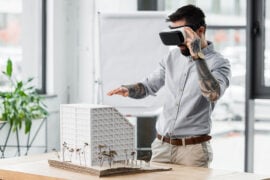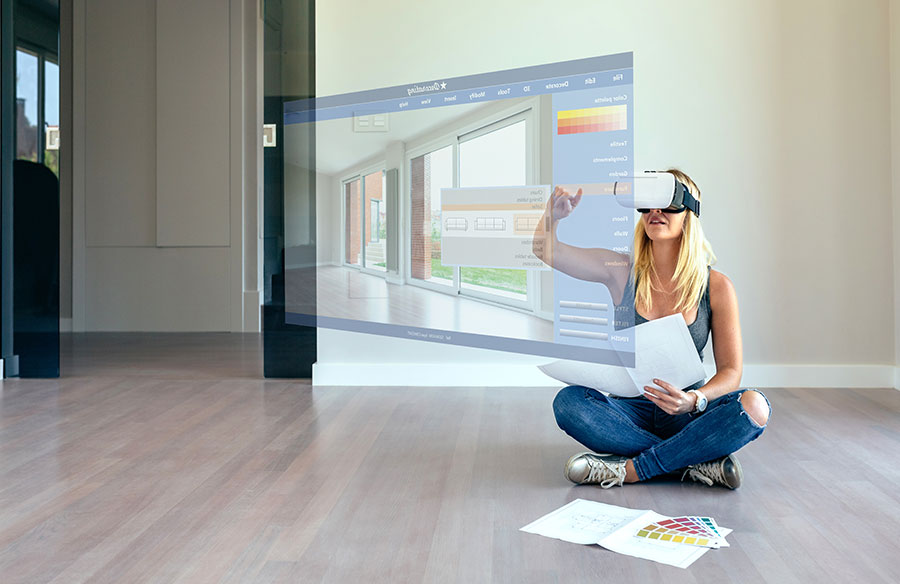
The way architects communicate their visions is undergoing fundamental transformation. For decades, the profession relied on progressively sophisticated tools—from hand-drawn perspectives to CAD renderings to photorealistic visualizations. Now, artificial intelligence introduces another evolutionary leap: dynamic video generation that brings static designs to life with unprecedented accessibility.
The Limitations of Static Visualization
Even the most stunning architectural render faces inherent limitations. A single image captures one moment, one angle, one lighting condition. Clients and stakeholders must imagine how spaces flow, how light changes throughout the day, how the human experience unfolds within designed environments.
Traditional video production addresses these limitations but introduces others. Professional architectural animations require substantial budgets, specialized software expertise, and significant time investment. For many projects—competition entries, early-stage concepts, smaller commissions—these requirements prove prohibitive.
AI Changes the Production Equation
Seedance 2.0 represents a new paradigm in architectural visualization. The AI-powered platform generates professional-quality video content from static images, transforming renders into dynamic presentations without traditional production requirements.
The implications for architectural practice prove immediately significant. Facade studies that once communicated through static diagrams now animate to show solar response and material behavior. Urban proposals gain cinematic quality that conveys experiential impact. Interior designs demonstrate spatial flow and lighting progression throughout daily cycles.
Practical Applications Across Design Phases
The technology integrates naturally across the design process. During conceptual phases, quick video generation enables rapid communication of spatial ideas to clients. Design development benefits from the ability to visualize multiple approaches dynamically without proportional time investment.
Competition submissions gain particular advantage. The visual impact differential between static renders and cinematic video presentations can influence jury perception significantly. When AI reduces the production barrier, more practices can compete on visual communication quality regardless of budget constraints.
Client presentations transform when designers can show rather than describe how spaces will feel. The emotional impact of experiencing a design through video—even AI-generated video—exceeds what static images alone can achieve.
Sustainability in Visualization Practice
The efficiency gains align with broader sustainability considerations. Traditional architectural animation requires substantial computational resources and professional time. AI generation compresses both requirements dramatically, reducing the environmental and economic costs of high-quality visualization.
This efficiency enables more iterative communication throughout design processes. Rather than reserving video visualization for final presentations, designers can incorporate dynamic content throughout client engagement, improving understanding and reducing costly miscommunication.
The Future of Design Communication
As AI visualization tools mature, the expectations around architectural communication will shift. Clients accustomed to dynamic presentations will expect them as standard. Designers who integrate these capabilities early gain advantage in meeting evolving communication standards.
The technology does not replace architectural judgment or design expertise. It removes production barriers that have historically limited how effectively architects could communicate their visions. The creative intelligence remains entirely human; the tools simply enable that intelligence to reach audiences more powerfully.
Rethinking Visualization Practice
For a profession built on visionary thinking, AI video generation offers tools aligned with architectural ambition. The ability to show what we imagine—dynamically, cinematically, accessibly—advances the fundamental project of architecture: shaping environments that enhance human experience.
The future of architectural visualization is moving. AI ensures every designer can participate in that motion.