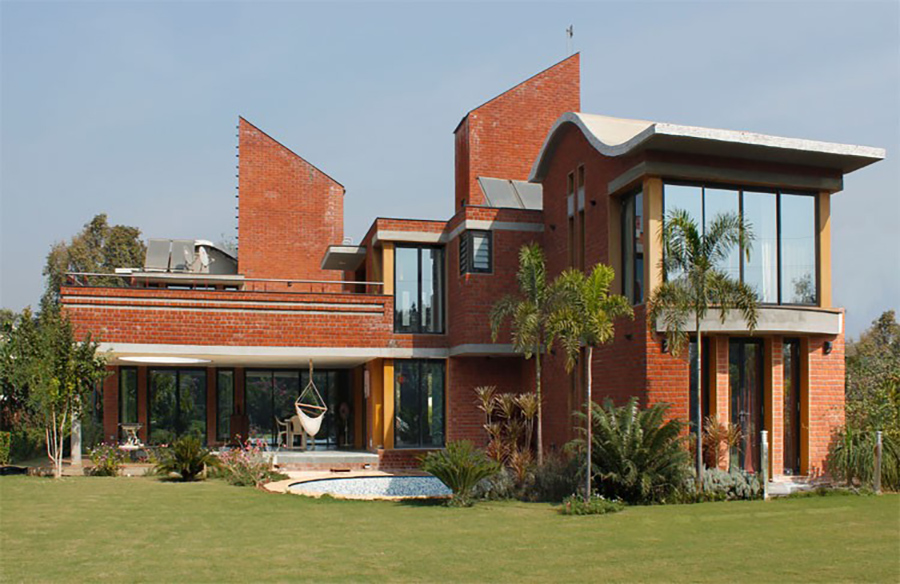
Footprints E.A.R.T.H – Architects in Ahmedabad
Footprints E.A.R.T.H, under the stewardship of Yatin Pandya, stands as a beacon of sustainable architectural innovation. With an unwavering commitment to contextual relevance, socio-cultural appropriateness, and affordability, this studio redefines architecture’s role in modern society.
Diverse Portfolio Reflecting Principles
The essence of Footprints E.A.R.T.H’s design philosophy encapsulates a diverse array of projects. From eco townships and institutional campuses to slum improvement initiatives and residences, each project embodies their commitment to sustainability and humaneness. The studio also ventures into interior design, exhibitions, and product designs, showcasing a holistic approach to architecture.
A Research-Driven Practice
At the core of their practice lies a rigorous research-driven methodology. Footprints E.A.R.T.H’s designs are not merely architectural solutions but reflections of a deep-rooted understanding of socio-cultural realities. Their focus on indigenous research and alternative technology empowers them to innovate within the context of India’s diverse cultural landscape.
Advocacy Beyond Architecture
Beyond architectural endeavors, Footprints E.A.R.T.H extends its influence to educational initiatives. By conducting design studios for national and international students, the studio nurtures the next generation of architects. Moreover, their commitment to cultural and architectural heritage is evident through their awareness campaigns and educational materials.
Yatin Pandya: The Visionary Architect
Yatin Pandya, the driving force behind Footprints E.A.R.T.H, is a multifaceted individual. As an author, activist, academician, and researcher, his contributions transcend architectural boundaries. His academic journey from CEPT University to McGill University has equipped him with a global perspective, evident in his innovative approach to architecture.
A Legacy of Urban Design and Advocacy
Yatin Pandya’s involvement in city planning, urban design, and mass housing reflects his dedication to the broader urban landscape. His legacy extends beyond architecture, advocating for barrier-free universal designs and championing the preservation of cultural heritage.