Choosing the right roofing material is an important investment for any property owner. A roof must withstand changing weather conditions, protect the building from moisture, and maintain its structural performance over time. Metal roofing has become a popular option for residential, commercial, and industrial properties because of its durability, versatility, and relatively low maintenance requirements.
Professional Metal Roofing offers a combination of long-term protection and modern design options. Whether you are installing a new roof, replacing an aging system, or upgrading an existing structure, understanding the available materials, installation methods, and maintenance requirements can help you make the right decision.
What Is Metal Roofing?
Metal roofing is a roofing system made from metal panels, sheets, shingles, or tiles designed to protect a building from environmental exposure. Common materials include steel, aluminum, copper, and zinc. Each offers different characteristics in terms of weight, appearance, corrosion resistance, and cost.
Modern metal roofing systems are available in various profiles, finishes, and colors. Some feature exposed fasteners, while others use concealed fastening systems for a cleaner appearance and reduced exposure of fasteners to weather.
When properly designed and installed, metal roofing can provide dependable protection for many years.
Types of Metal Roofing Systems
Different metal roofing styles are designed for different building requirements. Selecting the right system depends on the roof’s slope, architectural design, budget, and expected performance.
Standing Seam Metal Roofing
Standing seam roofing uses long metal panels connected by raised vertical seams. Many systems use concealed clips or fasteners, reducing the number of exposed fastening points.
This style provides a clean, modern appearance and is commonly selected for residential and commercial projects where weather resistance and appearance are important.
Corrugated Metal Roofing
Corrugated roofing features repeating ridges and grooves that provide structural rigidity to the panels. It is commonly used for agricultural buildings, garages, workshops, and certain residential applications.
Its relatively straightforward panel design makes it a practical option for projects where functionality and affordability are priorities.
Exposed Fastener Metal Roofing
Exposed fastener systems use screws installed through the metal panels to secure them to the supporting structure. They are available in several panel profiles and are often selected for their practical installation and cost advantages.
Fasteners and washers require periodic inspection because weather exposure and material movement can affect their condition over time.
Metal Shingle Roofing
Metal shingles are manufactured to resemble traditional roofing materials such as asphalt shingles, slate, or wood shakes. They provide homeowners with a more conventional roof appearance while using metal as the primary roofing material.
Metal Tile Roofing
Metal tiles offer decorative profiles that can replicate the appearance of traditional clay or concrete tiles. They are generally lighter than many conventional tile systems and are available in different finishes and designs.
Benefits of Metal Roofing
Metal roofing offers several advantages that make it an attractive option for different types of properties.
- Long service life: Quality metal roofing systems can provide decades of performance when properly designed, installed, and maintained.
- Weather resistance: Metal panels are designed to withstand exposure to rain, wind, and other environmental conditions when installed according to specifications.
- Low maintenance requirements: Compared with many roofing materials, metal systems generally require less frequent maintenance, although routine inspections remain important.
- Fire resistance: Metal roofing materials are noncombustible, although the fire performance of a complete roof assembly depends on its other components.
- Energy efficiency potential: Reflective finishes can reduce solar heat absorption and may help manage cooling demands in suitable climates.
- Design flexibility: Different panel profiles, colors, and finishes make metal roofing suitable for a wide range of architectural styles.
- Recyclability: Many metal roofing products contain recycled material and can be recycled at the end of their service life.
The actual performance of a metal roof depends on the selected material, coating, installation quality, building design, and local environmental conditions.
The Metal Roofing Installation Process
Proper installation is essential for achieving the expected performance of a metal roofing system. Each component must work together to provide structural support, weather protection, and appropriate drainage.
1. Roof Inspection and Assessment
The project begins with an evaluation of the existing roof structure, slope, dimensions, and overall condition. A roofing contractor checks for damaged decking, drainage concerns, and other issues that may affect the installation.
This assessment helps determine the appropriate panel type, fastening system, and installation requirements.
2. Selecting the Metal Roofing Material
After assessing the property, the contractor helps select a suitable roofing material. Steel and aluminum are common choices, while copper and zinc may be considered for specialized architectural projects.
The selection should account for durability, corrosion resistance, appearance, budget, and compatibility with the building structure.
3. Preparing the Roof Surface
For a replacement project, existing roofing materials may need to be removed before the underlying deck can be inspected. Damaged or deteriorated sections should be repaired before new materials are installed.
The contractor then prepares the surface according to the selected roofing system’s requirements.
4. Installing Underlayment and Flashing
Underlayment provides an additional protective layer beneath the metal panels. Flashing is installed around roof penetrations, chimneys, valleys, skylights, and other vulnerable areas.
Proper detailing is essential because these locations can become potential entry points for water if they are not correctly protected.
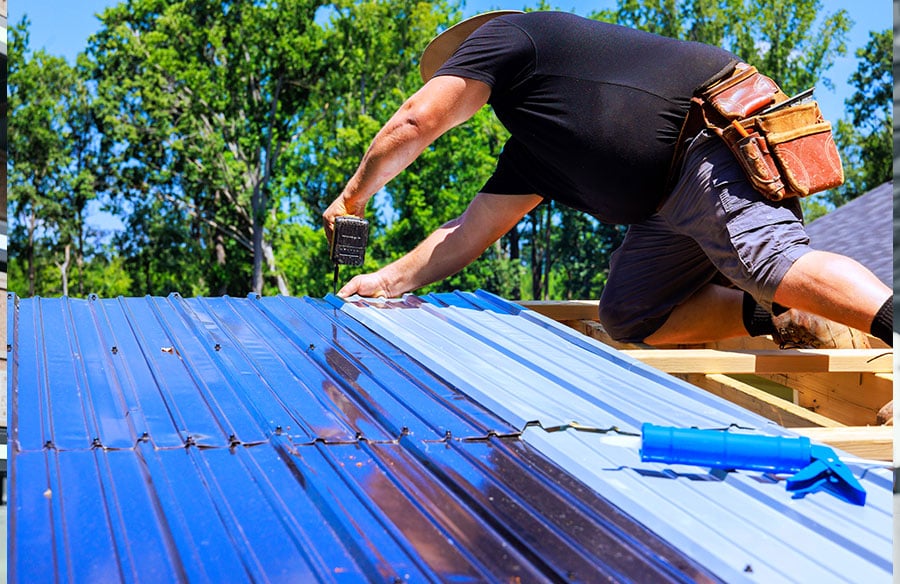
5. Installing Metal Panels
The panels are measured, positioned, and secured according to the manufacturer’s installation specifications. Correct fastening, panel alignment, seam connections, and allowances for thermal movement are important for long-term performance.
Metal expands and contracts as temperatures change, so the fastening system must accommodate the movement expected for the selected roofing design.
6. Final Inspection and Cleanup
After installation, the contractor checks the seams, fasteners, flashing, roof edges, and drainage details. The property should also be cleared of leftover materials and construction debris.
A final inspection helps confirm that the completed system meets the project’s requirements.
Common Metal Roofing Problems
Although metal roofs are designed for durability, they can develop problems when components deteriorate or installation details are incorrect.
Loose or Damaged Fasteners
Exposed fastener systems rely on screws and sealing washers to secure panels and protect against moisture. Over time, fasteners may loosen, corrode, or experience deterioration of their washers.
Routine inspections can help identify these issues before they contribute to leaks.
Corrosion and Rust
Metal roofing can experience corrosion when protective coatings become damaged or when incompatible metals come into contact. Moisture and environmental exposure may accelerate deterioration in vulnerable areas.
Selecting suitable materials and maintaining protective finishes can help reduce corrosion risks.
Leaks Around Roof Penetrations
Chimneys, vents, skylights, and other roof openings require appropriate flashing and sealing. Improper installation or deteriorated sealants can allow water to enter the building.
Scratches and Coating Damage
Impact, debris, or improper maintenance can damage the protective finish on metal panels. If the underlying metal becomes exposed, corrosion may develop depending on the material and environment.
Thermal Movement Issues
Metal naturally expands and contracts as temperatures change. Incorrect fastening or poorly designed panel connections can restrict movement and contribute to noise, stress, or joint problems.
Professional installation helps ensure that the roofing system can accommodate normal temperature-related movement.
How to Maintain a Metal Roof
Metal roofing generally requires less maintenance than many traditional roofing materials, but it should not be considered maintenance-free.
Homeowners and property managers should arrange periodic inspections to check for loose fasteners, damaged coatings, corrosion, and deteriorated sealants. Gutters and drainage areas should remain clear so rainwater can flow away from the building properly.
It is also important to remove accumulated debris when necessary and address damage around roof openings promptly. Cleaning methods should follow the manufacturer’s recommendations to avoid damaging the protective finish.
Avoid walking on unsecured panels or areas that are not designed to support foot traffic. Roof inspections and maintenance should be performed by professionals using appropriate fall protection.
Why Hire a Professional Metal Roofing Contractor?
Metal roofing requires specialized installation knowledge. Panel alignment, fastening methods, flashing details, and thermal movement must all be considered to achieve reliable performance.
Professional Metal Roofing Installation Services can help property owners select suitable materials, prepare the roof structure, install panels correctly, and address important weatherproofing details.
Before hiring a contractor, review their experience with metal roofing systems, qualifications, insurance coverage, references, and warranty terms. Ask for a detailed estimate covering materials, labor, underlayment, flashing, removal of existing roofing, and any necessary structural repairs.
Choosing a contractor familiar with the specific metal roofing system can help reduce installation errors and avoid preventable problems.
Is Metal Roofing Right for Your Property?
Metal roofing can be a practical investment for property owners who prioritize durability, design flexibility, and long-term performance. However, the best roofing option depends on the building’s structure, roof design, local climate, and available budget.
Consider the initial installation cost alongside expected service life, maintenance requirements, energy performance, and potential replacement expenses. A professional assessment can help determine whether metal roofing is suitable for your property and which system best meets its requirements.
Invest in Long-Term Protection With Metal Roofing
A dependable roofing system plays an essential role in protecting your property from weather exposure and moisture-related damage. Metal roofing offers several advantages, including durable materials, versatile designs, and relatively low maintenance requirements.
Professional Metal Roofing provides a practical solution for new installations, roof replacements, and property upgrades. With Professional Metal Roofing Installation Services, property owners can benefit from appropriate material selection, careful preparation, and installation techniques designed for long-term performance. Whether you prefer standing seam panels, corrugated sheets, or metal shingles, choosing the right roofing system and an experienced contractor can help protect your investment for years to come.