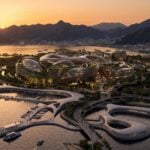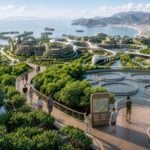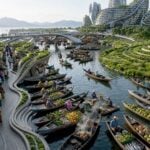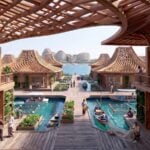
Standard planning often treats sinking coastlines with rigid concrete walls and defensive zoning, quickly writing off drowned land as lost territory. In Sayung, Demak, where the ground sinks 10 to 12 centimeters every year, more than 4,500 hectares of living heritage and productive ground have disappeared under the sea.
Project Name: RE-GROUNDING SAYUNG 2100 and the Seventy Year Framework for Coastal Spatial Adaptation
Studio Name: STUDIO R+CODES
Project location: Sayung, Demak, Indonesia
Completion Year (if applies): 2100
Gross Built Area: ±6.50 – 10.50km2
This ongoing crisis does more than flood neighborhoods. It wipes out the legal value of generational land deeds and leaves local families facing quiet, forced displacement from the only homes they have known.
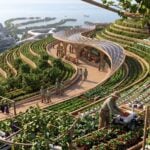
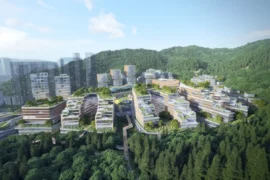
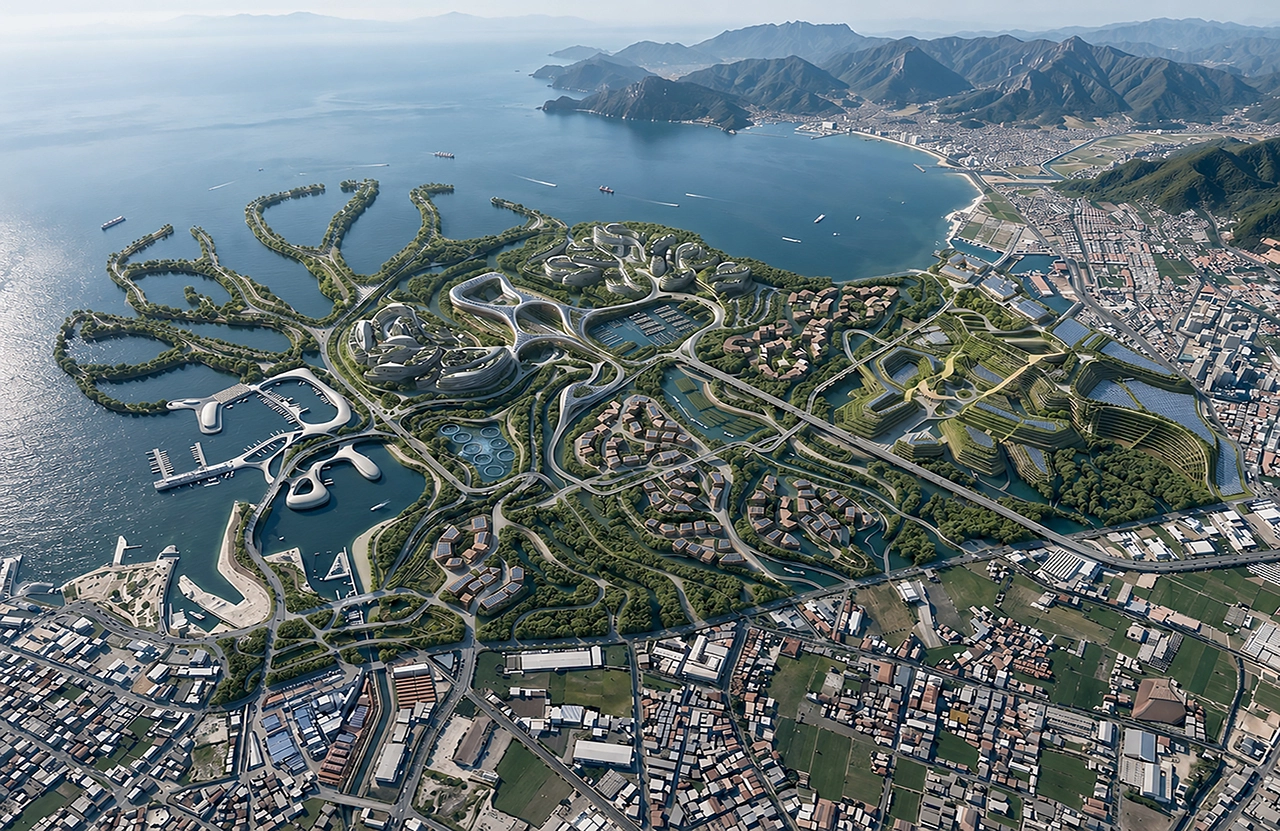
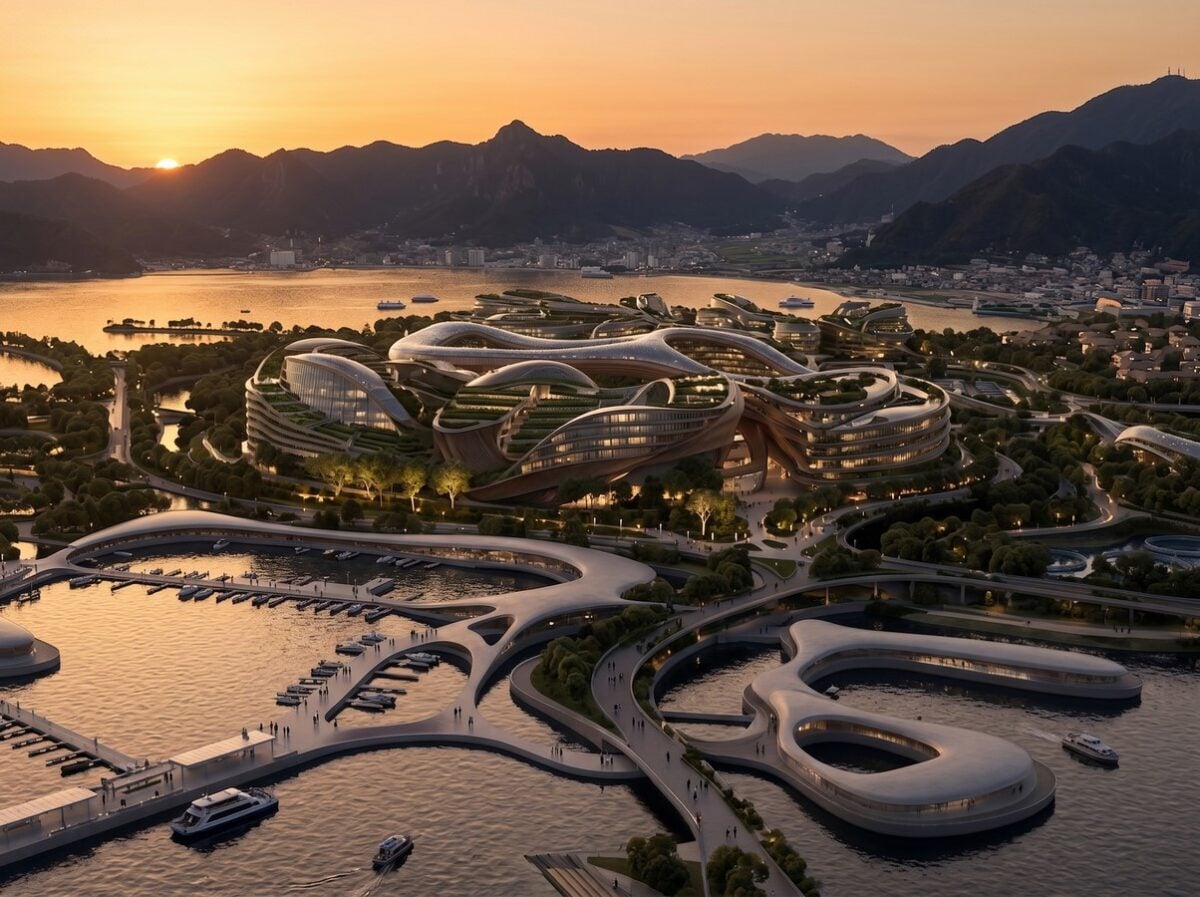
RE-GROUNDING SAYUNG 2100 answers this reality not by running away, but through an evolutionary spatial framework planned out to the year 2100. Instead of sudden evictions or rushed retreats inland, the coast transforms across decadal steps that move hand in hand with the water. The land shifts with purpose, moving from automated terraced farming into intertidal wetland bioswales, and eventually welcoming buoyant neighborhood clusters as the tide slowly claims the ground.
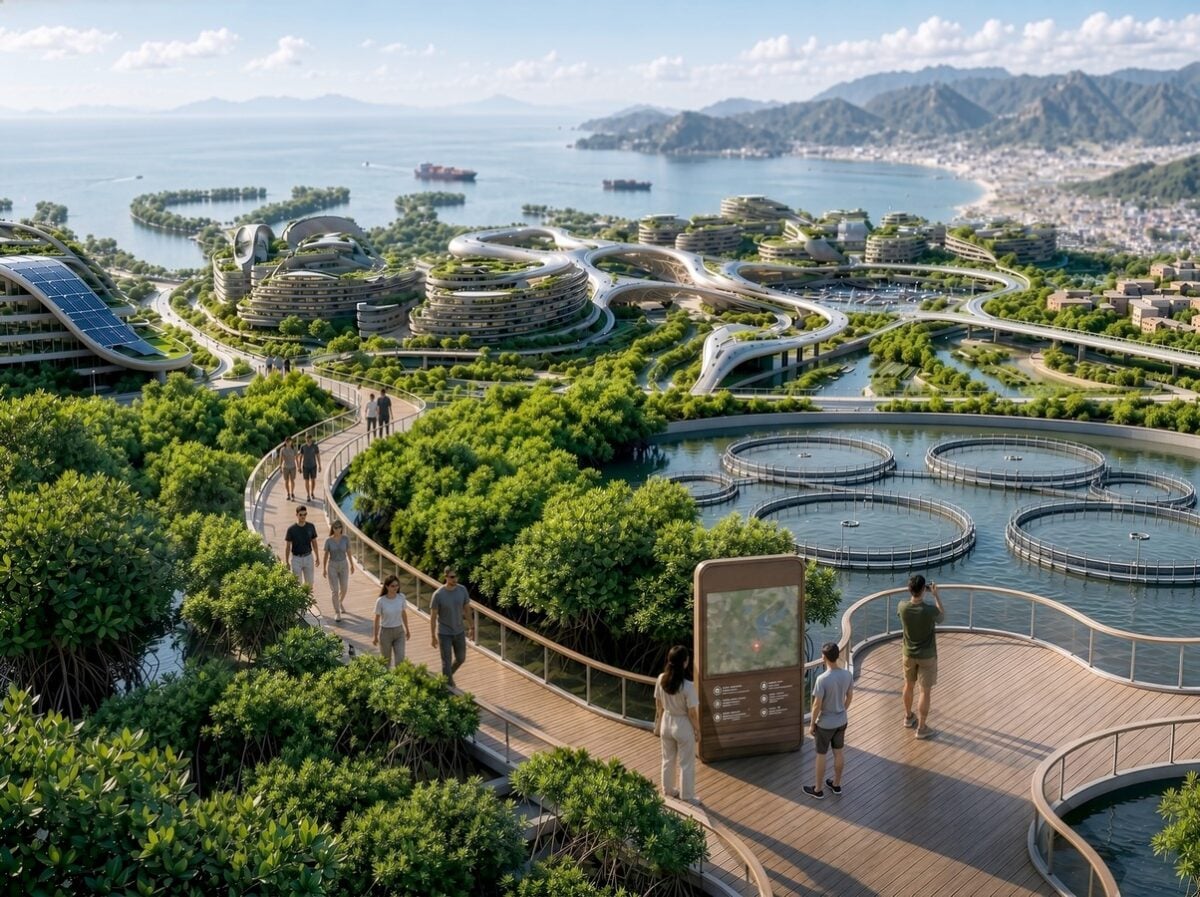
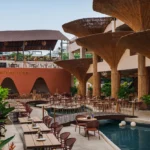
A five-layer ecological transect anchors this daily life. Underwater barriers offshore quiet the heavy waves, giving dense mangrove forests the quiet room they need to trap sediment and rebuild ground naturally. Up above, raised walkways and civic corridors keep people connected, supply clean energy, and offer shared open spaces, while letting the tidal waters wash beneath untouched. Within the neighborhoods, homes sit on buoyant pontoons and telescopic guide piles, rising naturally with heavy storm surges so families never have to spend their lives rebuilding from scratch after every major flood.
A closed-loop circular system keeps the entire territory alive and self-sufficient. Rooftop solar canopies generate reliable power across mixed neighborhoods and workshops. At the same time, wastewater filters through living wetlands to nourish productive aquaculture basins and restored farming terraces.
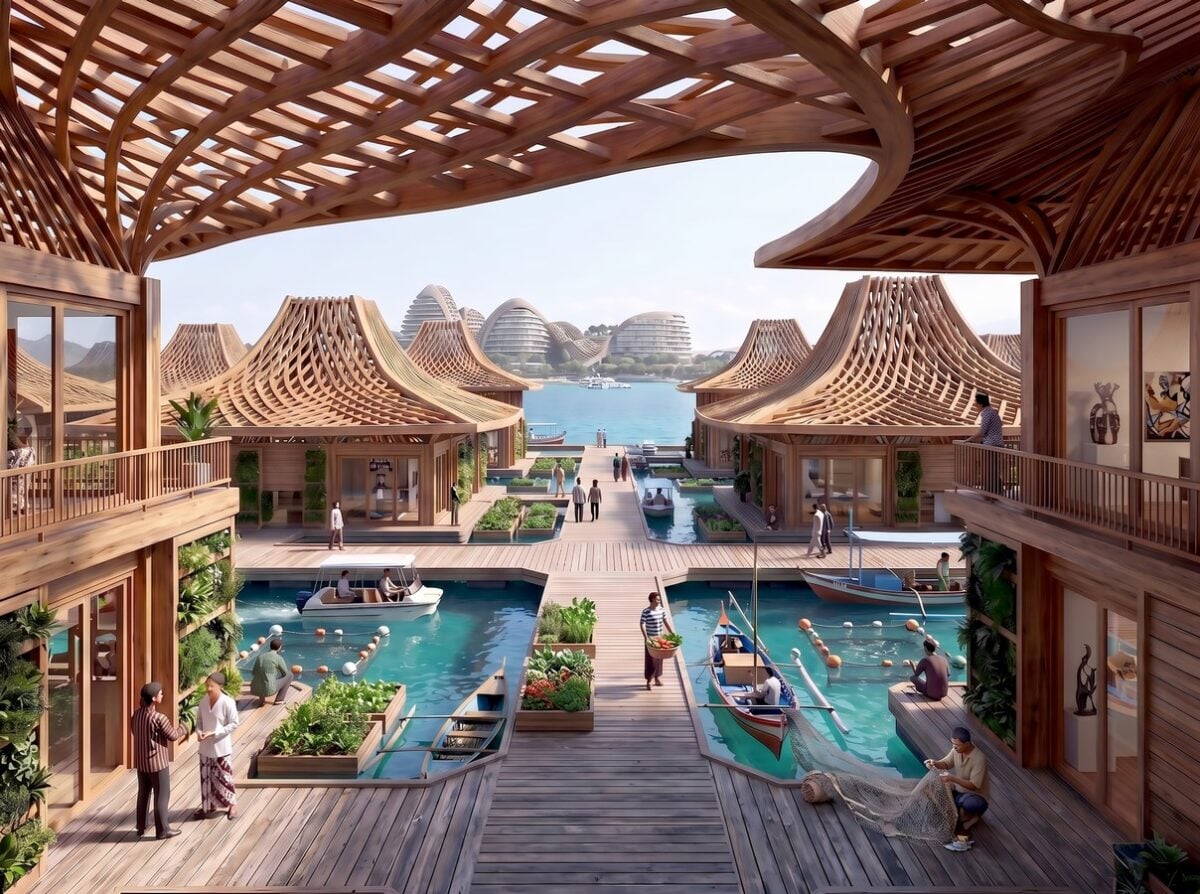
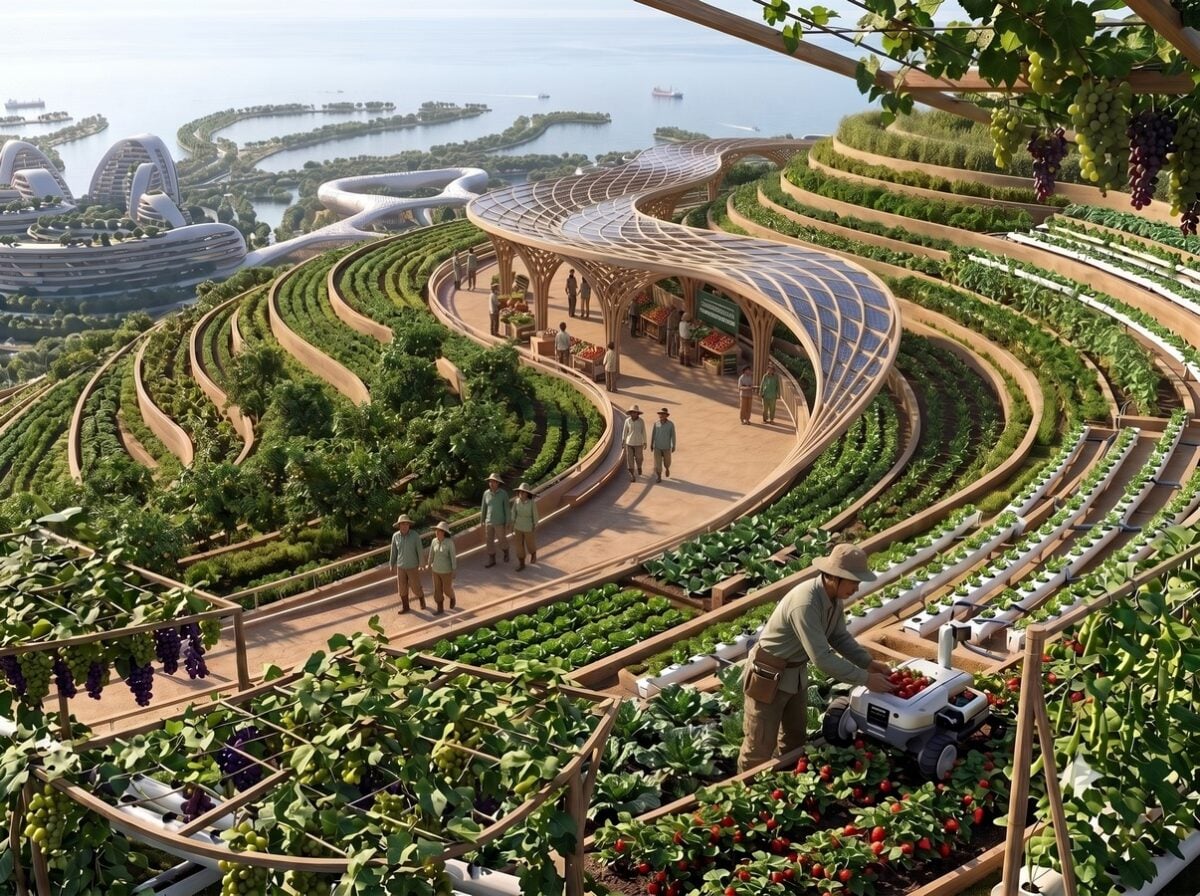
By tuning daily life to morning and evening tides, and long-term plans to decades of sinking ground, the design protects generational roots and livelihoods without displacement. RE-GROUNDING SAYUNG 2100 proves that true coastal survival is never about pouring taller concrete walls, but about learning to live with moving water, caring for the land, and keeping communities together through changing centuries.